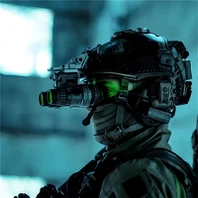


The night holds countless wonders that are often invisible to the human eye, and modern thermal imaging binoculars are changing the way we experience the dark. They detect the heat signatures of wildlife, objects, and terrain, allowing us to observe nature's nocturnal activities with unprecedented clarity. Whether you're a hunter stalking prey after sunset, a wildlife enthusiast studying nocturnal animals, or an outdoor adventurer who values safety in low-light conditions, thermal imaging binoculars open up a whole new world of possibilities. In this guide, we'll show you how these remarkable tools can enhance your nighttime outdoor experience while ensuring safety and success.

1. What is unique about thermal imaging binoculars for nighttime exploration?
2. Why do thermal imaging binoculars change the nighttime nature observation experience?
3. How do thermal imaging binoculars improve night hunting efficiency?
4. The safety value of thermal imaging binoculars in night exploration and rescue
5. Use thermal imaging technology to revolutionize night photography and videography
6. Best practices for night navigation using thermal imaging binoculars
7. How to maintain night vision when using thermal imaging binoculars
1. What is unique about thermal imaging binoculars for nighttime exploration?
Thermal imaging technology is the core of thermal imaging binoculars. Unlike traditional night vision devices, which rely on moonlight, starlight or infrared auxiliary lighting to work, thermal imaging devices use infrared radiation released by the object itself. Every organism or object emits heat energy according to its temperature, and thermal imaging binoculars are formed by detecting these tiny thermal differences.
The thermal maps generated by these devices usually use pseudo-color or grayscale images to express different temperature areas, allowing users to intuitively judge the temperature difference of objects and thus identify the outline and dynamics of organisms. This method not only improves the visual range, but also brings a leap in "perception" for nighttime observation.
2. Why do thermal imaging binoculars change the nighttime nature observation experience?
In the past, wildlife observation was often limited by lighting conditions. Thermal imaging binoculars completely break this limitation. In the dark, they can detect the presence of animals without sound or light, without disturbing their natural behavior. This is of great significance to ecological researchers and environmentalists.
For example, when studying nocturnal animals such as owls, raccoons, foxes or ocelots, traditional equipment often scares away the target due to lighting. Thermal imaging equipment makes these animals "nowhere to hide". Researchers can observe their real living conditions for a long time without disturbing them while keeping a distance.
In addition, these devices are also widely used to protect endangered animals, monitor illegal hunting and conduct ecosystem health assessments. Many nature conservation agencies use thermal imaging technology for infrared monitoring to more fully understand the dynamics of nocturnal ecosystems.
3. How do thermal imaging binoculars improve night hunting efficiency?
Night hunting requires extreme acuity and precision. Thermal imaging binoculars provide hunters with unparalleled heat signature detection capabilities, allowing them to observe target animals from a distance and accurately judge their size, posture and behavior. This not only improves the hit rate, but also reduces the possibility of non-target injuries.
In dense woodlands or grass, traditional optical equipment may have difficulty identifying animals, but thermal imaging can easily penetrate these visual obstacles. More importantly, when an animal escapes quickly after being injured, its body heats up due to stress, and the heat signature is easier to track, helping hunters to quickly collect the prey and avoid unnecessary pain to the animal.
Of course, users must understand local regulations to ensure that the use of thermal imaging equipment does not violate relevant hunting regulations and follow sustainable and ethical hunting principles.

4. The safety value of thermal imaging binoculars in night exploration and rescue
In addition to observation and hunting, thermal imaging equipment is also extremely valuable in night hiking, camping and even emergency rescue. They can help users quickly identify terrain obstacles, detect the location of team members, and even assist search and rescue personnel in locating targets when they are lost.
In cold or high-altitude areas, thermal imaging can also monitor people's body temperature and determine whether hypothermia and other conditions occur. This real-time feedback plays an irreplaceable role in improving safety in the wild at night.
5. Use thermal imaging technology to revolutionize night photography and videography
Thermal imaging binoculars are not only an observation tool, but also a new favorite for night photographers. Using thermal imaging equipment to capture the body temperature profile of nocturnal animals and rarely seen scenes in the dark, it brings a new perspective to image creation.
Photographers can use thermal imaging to capture the moments of animals hunting, foraging or socializing in the dark, which are usually not available with ordinary optical equipment. With post-processing technology, adjust color mapping, contrast and brightness to make the image more vivid and artistic, with great visual impact.
In addition, thermal imaging camera technology is widely used in wildlife documentary filming and security monitoring, helping to capture important ecological behaviors while ensuring the safety of filming personnel.
6. Best practices for night navigation using thermal imaging binoculars
Safety is the top priority for outdoor activities at night. Thermal imaging binoculars can help users "see" the undulating terrain, potential obstacles and wild animals in the dark, greatly reducing the risk of getting lost or injured.
Before traveling, be sure to charge the device and carry spare batteries, and use power saving mode to extend the use time. When using, keep scanning the environment regularly, pay attention to changes in the heat source in front, and adjust the path in time.
Thermal imaging equipment is best used in combination with GPS equipment. GPS provides precise positioning, and thermal imaging presents real-time information about the surrounding thermal environment. The complementary advantages ensure safety in the wild.
7. How to maintain night vision when using thermal imaging binoculars
While using thermal imaging equipment for observation, it is very important to keep your eyes adapted to the dark environment. It is recommended to observe the thermal imaging image with one eye and keep the other eye adapted to the dark, and exchange them regularly to avoid completely losing night vision.
In addition, you can wear an eye mask to protect one eye. When using a red light headlight for lighting, you should also choose a lamp with a longer red light band and less impact on night vision to minimize interference with dark adaptation.
8. Conclusion
As an innovative tool for modern night observation and exploration, thermal imaging binoculars are completely changing the way we perceive the dark world. They not only break through the dependence of traditional night vision devices on light, but can accurately detect temperature differences in complete darkness or even in complex weather conditions, providing users with clear and real-time thermal images. The advantages of this technology are reflected in many aspects: not only does it allow hunters to achieve more efficient and humane hunting, ensuring target identification and avoiding accidental injuries; it also provides wildlife researchers and ecological conservation workers with powerful observation and monitoring methods, making the protection of nocturnal animals more scientific and effective; at the same time, photographers use thermal imaging equipment to shoot amazing night visual works, expanding the boundaries of natural images.
More importantly, thermal imaging binoculars have greatly improved the safety and efficiency of outdoor activities at night. Whether hiking, camping or night navigation, they can help users accurately identify terrain and potential dangers and reduce unexpected risks. By reasonably matching other navigation tools and following best practices, thermal imaging technology makes outdoor adventures at night more controllable and safe.
In short, thermal imaging binoculars are not only a high-tech device, but also a bridge connecting humans and the natural world at night. It gives us the ability to "see" life in the dark, allowing us to more deeply understand and respect the natural mysteries hidden at night. With the continuous advancement and popularization of technology, I believe that thermal imaging telescopes will play a more important role in future nighttime outdoor activities, bringing more unlimited possibilities to enthusiasts and professionals.