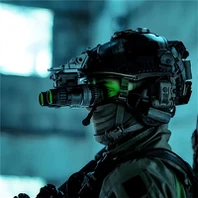


There's something so alluring about exploring the outdoors after nightfall. From the mysterious calls of nocturnal animals to the quiet that only night can bring, these nighttime adventures offer a unique sense of connection to nature. However, darkness also greatly limits your field of vision, making it difficult to navigate, observe, or stay safe. That's where thermal imaging binoculars come in handy-they illuminate darkness that the naked eye can't see, completely transforming your nighttime adventure experience.
1. Learn about thermal imaging binoculars
2. Why thermal imaging binoculars are essential for nighttime outdoor activities
3. How Thermal Binoculars Work: The Science Behind It
4. How to choose the right thermal imaging binoculars for your nighttime adventure
5. Practical application of thermal imaging binoculars in outdoor adventures
6. Tips for maximizing the use of thermal imaging binoculars

1. Learn about thermal imaging binoculars
Thermal imaging binoculars are optical devices that detect infrared radiation (heat) from objects, animals or people and convert it into a visible image. Unlike traditional night vision devices that amplify ambient light, thermal imaging relies on the heat emitted by the object itself, allowing the target to be seen even in total darkness, fog, smoke or even slight obstruction.
These devices provide users with a thermal image of the environment, allowing them to detect invisible creatures or warm objects at night. This capability opens up new possibilities for outdoor enthusiasts, hunters, campers, wildlife observers, and even search and rescue teams.
2. Why thermal imaging binoculars are essential for nighttime outdoor activities
2.1 Excellent night vision in complete darkness
Unlike ordinary binoculars or night vision devices that rely on moonlight or starlight, thermal imaging binoculars are completely unaffected by light. They detect heat signatures, allowing users to clearly see objects and animals in complete darkness.
This is especially important for night hikers or campers, who do not need to rely on flashlights or headlamps, which not only avoids disturbing the natural environment, but also reduces attracting unnecessary attention.
2.2 Enhanced wildlife observation and hunting
Nocturnal animals are active in limited light, and traditional observation methods are ineffective. Thermal imaging binoculars can detect and track animals by detecting body temperature, even when they are camouflaged or hidden in the bush.
This not only improves the success rate of observation, but also promotes ethical hunting, allowing hunters to act after clearly identifying the target.
2.3 Enhanced safety and navigation capabilities
Traveling through unfamiliar terrain at night presents many dangers, such as obstacles, uneven ground or the sudden appearance of wild animals. Thermal imaging binoculars help users detect potential dangers in advance, such as wild animals, steep slopes or other people.
This advance warning gives sufficient reaction time to avoid accidents. For personnel performing search and rescue missions at night, thermal imaging is a key tool to help quickly locate missing persons.
2.4 Versatility in various weather conditions
Another major advantage of thermal imaging binoculars is that they are still effective in adverse weather such as fog, smoke, rain or light snow. Ordinary optical or night vision equipment often fails in these conditions, while thermal imaging can penetrate these obstructions and maintain clear images.
This makes them ideal for outdoor enthusiasts who want to enjoy their time outdoors, no matter what the weather.
3. How Thermal Binoculars Work: The Science Behind It
Thermal binoculars use a sensor called a microbolometer to detect infrared radiation emitted by objects based on their temperature. The sensor converts the heat energy into an electronic signal, which is then processed by an internal processor to generate a visible image that is displayed on the binoculars screen.
Images are usually displayed in different color schemes, such as black and white, grayscale, or with rainbow tones to highlight the heat source, with hot objects appearing red and orange and cold environments appearing dark.
Modern thermal binoculars have the following features:
High-definition display for clear and sharp images
Long-range detection, with a range of hundreds of meters
Digital zoom for easy observation of details
Image and video recording capabilities
Built-in compass and GPS to assist navigation
Rechargeable batteries for long battery life
As thermal imaging sensor technology continues to improve, these devices are becoming increasingly small, affordable, and easy to use.
4. How to choose the right thermal imaging binoculars for your nighttime adventure
When choosing, you should consider the following factors according to your needs:
4.1 Detection distance
This is the maximum distance at which the device can detect heat sources. 200-300 meters is enough for ordinary hiking or observation, while hunting or search and rescue may require a longer distance of more than 500 meters.
4.2 Resolution and image quality
The higher the resolution, the clearer and more detailed the image, which helps to accurately identify the target. Thermal imaging resolution is usually 320×240 to 640×480 pixels or higher.
4.3 Magnification and field of view
The magnification allows you to see distant targets clearly, but too much magnification narrows the field of view and makes it difficult to track moving targets. Many devices support zoom, which is convenient for balancing field of view and details.
4.4 Size and weight
For long-term use, it is recommended to choose a lightweight and compact model that is easy to carry, but usually the detection distance or battery life of small devices may be slightly inferior.
4.5 Battery life
Choose a model with suitable battery capacity or support for battery replacement according to the length of use.
4.6 Additional features
Such as video recording, Wi-Fi connection, GPS positioning or waterproof and dustproof design can improve the user experience and device durability.

5. Practical application of thermal imaging binoculars in outdoor adventures
5.1 Night hiking and camping
Help to find animals or other people lurking at night, avoid disturbing nature and ensure personal safety.
5.2 Hunting
Help hunters find and track prey at night, accurately identify targets, and improve hunting efficiency and safety.
5.3 Wildlife observation and photography
Observe the natural behavior of nocturnal animals without using dazzling lights to avoid disturbing animals.
5.4 Search and rescue operations
Rescue personnel use thermal imaging to quickly locate missing or injured people, greatly improving search and rescue efficiency.
5.5 Security patrol and monitoring
Security personnel patrol at night to detect potential threats in time and improve regional security.
6. Tips for maximizing the use of thermal imaging binoculars
Practice during the day to familiarize yourself with the thermal imaging effect and the thermal imaging characteristics of the environment
Keep the lens clean to avoid stains or water mist affecting the image
Adjust the device settings and try different color schemes to get the best view
Save battery, turn off the device when not in use, and carry spare batteries with you
Combined with other equipment, such as GPS, maps, and traditional night vision equipment, to achieve all-round observation
7. Industry trends and future prospects
Thermal imaging technology is developing rapidly, and future trends include:
Higher resolution sensors for ultra-clear image quality
Decreasing equipment prices to benefit more outdoor enthusiasts
Integration with smartphones and apps for easy control and data sharing
Artificial intelligence automatically identifies and tracks targets
Lighter and more ergonomic design to improve comfort
These advances will continue to expand the possibilities of nighttime adventures, making thermal imaging binoculars an indispensable tool for nighttime exploration.
8. Conclusion
Outdoor activities at night are fascinating, but darkness also brings many challenges. Thermal imaging binoculars turn darkness into opportunities by revealing heat traces that are invisible to the naked eye, ensuring safety, improving observation, and assisting hunting and search and rescue.
Whether you are a nature-loving observer, a professional hunter, a hiking enthusiast, or a security guard, choosing a high-quality thermal imaging binocular will greatly enrich your nighttime adventure experience. As technology matures, equipment becomes lighter, more affordable, and more powerful, and the mysterious world of the night is waiting for you to explore with your thermal imaging eyes.
Embrace the darkness and join hands with thermal imaging vision to start a wonderful nighttime nature journey.