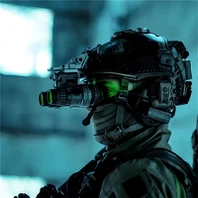


Night vision binoculars are a revolutionary technology that transforms pitch-black environments into clearly visible images in low-light environments. Whether it's a soldier performing a secret mission at night, a wildlife enthusiast tracking nocturnal animals, or a security guard protecting a facility, night vision binoculars allow users to see the world clearly beyond the natural limits of the human eye. But how do these devices work? What principles do they rely on to achieve "night vision"? This article will take a deep look at the working principles, types, key components, and application scenarios of night vision binoculars, and introduce companies that have a cutting-edge influence in the field of imaging technology.

1. What are night vision binoculars?
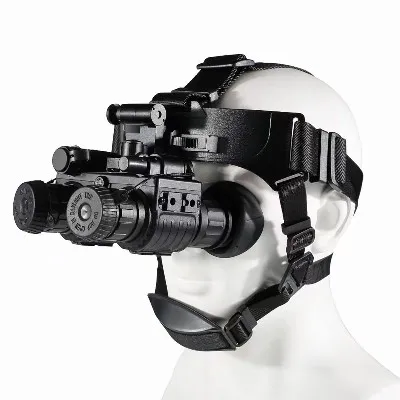
Night vision binoculars are optical devices that enhance visibility in low light or total darkness. Unlike thermal imaging devices that detect heat, night vision binoculars generate images by amplifying the weak light already in the environment (such as moonlight, starlight, or artificial light).
They are mostly used in environments where the light is low but not completely dark, and provide better depth perception and comfort through binocular observation, which is more suitable for long-term use than monocular night vision goggles.
2. The scientific principle of night vision technology
The core principle of night vision technology is light amplification. Even at night, there is still a certain amount of faint light in the environment, even including infrared light, which is imperceptible to the human eye, but can be captured and amplified by night vision equipment.
Key components:
1. Objective Lens
The front lens collects visible and infrared light and focuses it on the image intensifier.
2. Image Intensifier Tube
This is the core of the entire system. Its working steps are as follows:
Photoelectron conversion: light (photons) hit the photocathode and are converted into electrons;
Electron acceleration and multiplication: These electrons are accelerated by high voltage and enter the microchannel plate (MCP) to be multiplied;
Image reconstruction: The enhanced electrons hit the phosphor screen and are converted into visible light again, forming an image that is consistent with the original image but brighter.
The output image is usually green because the human eye is most sensitive to green and can be observed for a long time without fatigue.
3. Eyepiece
Through the eyepiece, the user can see the magnified bright image.
3. Generational development of night vision technology
Night vision equipment can be divided into several generations according to the development of image enhancement technology:
First generation (Gen 1)
Earliest, low cost
Use passive light amplification
Limited clarity, easy distortion of edges
Second generation (Gen 2)
Introduction of microchannel plate (MCP)
Higher resolution, clearer images
Applicable to law enforcement and professional scenes
Third generation (Gen 3)
Use gallium arsenide photocathode, greatly improved sensitivity
Applicable to extremely low light environment
Widely used in military fields
Fourth generation / white phosphorus technology
Improved brightness and contrast
Use white phosphorus screen, more natural image
Applicable to multi-light source mixed scenes
4. Digital Night Vision Technology
In recent years, digital night vision equipment has become a new trend. They convert light into digital signals through CMOS image sensors and present images on LCD or OLED screens.
Advantages include:
Can be used during the day and at night
Supports video recording and image capture
Can integrate zoom, GPS, Wi-Fi and AI functions
More cost-effective than high-end analog systems
However, digital night vision devices are still not as sensitive as Gen 3 analog systems in total darkness.
5. Application of night vision binoculars
As an optical device that breaks through visual limitations, night vision binoculars have a wide range of applications. From military tactics to civilian exploration, from basic security to high-end scientific research, it has become an indispensable key tool in night operations. The following will be classified by industry to introduce its main application scenarios and values in detail.
1. Military and special operations
Night vision technology was originally born for military needs. In modern warfare, "night combat capability" is regarded as a strategic advantage of a unit. Night vision binoculars help soldiers perform the following tasks at night:
Reconnaissance and stealth operations: observe enemy movements, identify terrain or deploy defenses without exposing the target position.
Night combat and positioning: Combined with weapon accessories such as red dot sights and laser rangefinders, improve the hit rate of night combat.
Navigation and communication: Cross complex terrain in an environment where flashlights cannot be used to ensure the safety of team operations.
Border patrol and anti-infiltration monitoring: Identify and track illegal immigrants or enemy scouts through long-distance observation at night.
Modern military night vision binoculars are usually equipped with third-generation or higher-level image intensifiers, with high-definition images, low noise, and resistance to strong light interference, which effectively improves combat effectiveness.
2. Public security and law enforcement
Police, special police, customs anti-smuggling and urban patrol units, when performing tasks at night, night vision binoculars provide great visual support:
Tracking and monitoring suspects: When tracking fugitives in urban alleys, open areas or mountainous areas, covert observation can be achieved.
Night search and evidence collection: Conduct search, investigation or search and rescue missions under unlit conditions to protect personnel safety and improve efficiency.
Stability maintenance and large-scale event security: Remote monitoring in large-scale night events (such as concerts and sports events) to identify abnormal situations in advance.
Some law enforcement departments also combine night vision equipment with drones to achieve coordinated air and ground monitoring and improve night control capabilities.
3. Wildlife observation and ecological research
For ecological researchers, photography enthusiasts and animal protection organizations, night vision binoculars provide great convenience:
Non-intrusive observation: Avoid using lights to disturb the natural activities of wild animals, which is conducive to collecting real ecological data.
Nocturnal animal research: such as observing the behavioral patterns and social habits of owls, wild wolves, foxes, night monkeys, etc. at night.
Safety protection of outdoor camps: Monitor whether there are wild animals approaching the camp to ensure the personal safety of campers and scientific workers.
More and more environmental protection organizations and nature reserves have also listed night vision technology as a "green scientific research tool" to improve data collection efficiency and animal protection quality.
4. Emergency rescue and disaster response
In the "golden search and rescue time" after an emergency, time is life. Night vision binoculars help rescuers quickly take action in complex environments:
Night search and rescue missions: Conduct personnel searches after disasters such as earthquakes, mudslides, and floods, even in areas without electricity.
Fire scene monitoring: Combined with infrared thermal imaging function, it can penetrate thick smoke or darkness to confirm whether people are still in the building.
Search for missing persons in the wild: Search for missing persons in mountains, grasslands or deserts, especially in areas where large lighting equipment cannot be deployed.
Night vision equipment is also suitable for night emergency tasks such as firefighting, traffic accident handling, and power inspections. It is an important technical means to improve the efficiency of disaster response.
5. Border and infrastructure security
Night vision binoculars are widely used for night inspections and security work of important infrastructure such as airports, ports, power stations, dams, and oil and gas pipelines:
Long-distance monitoring: Observe potential intrusion targets hundreds of meters away under dark conditions to improve the warning response speed.
Cooperate with cameras or automatic warning systems: Form a "human + AI" dual recognition mechanism to improve the level of security intelligence.
Prevent illegal entry and sabotage: Border checkpoints, restricted areas, storage centers and other places use night vision technology to strengthen the control management.
Compared with traditional surveillance equipment, night vision binoculars have the advantages of high flexibility, easy portability and rapid deployment, making them an ideal choice for protecting high-value assets.
6. Hangzhou Huirui Technology Co., Ltd--Global Solution Provider of Customized Thermal Imaging and Night Vision Technology
As the world's leading infrared imaging and night vision system manufacturer, Huirui is committed to providing high-performance, customized thermal imaging and night vision solutions to global customers. Headquartered in China, the company has a modern R&D center and advanced manufacturing base, integrating optical design, image algorithm, hardware R&D and system integration, with strong independent innovation and product delivery capabilities.
Huirui focuses on the development of night vision binoculars, monoculars, thermal imagers and multi-functional integrated systems. Its products are widely used in military reconnaissance, border patrol, security monitoring, industrial inspection, emergency rescue, field observation, traffic management and energy operation and maintenance. Its core technologies include:
High-sensitivity low-light CMOS sensor integration solution
Third-generation image intensification tube technology compatibility
Intelligent infrared thermal imaging algorithm (object recognition and temperature measurement analysis)
Modular optical system, supporting multiple zoom and long-distance detection
Multi-band composite imaging (visible light + infrared) integration platform
Support wireless image transmission, AI recognition, GPS positioning and data encryption
Huirui has established a high-quality and reliable brand image in the global market. Its products have been exported to more than 40 countries and regions including the United States, Germany, Russia, Israel, India, the Middle East and Southeast Asia, serving many government procurement, military and police units and high-end industry users. The company has passed the ISO9001 quality system certification, and its products comply with international standards such as CE, FCC, RoHS, and can be deeply customized for OEM/ODM according to customer project requirements.
In terms of innovation, Huirui continues to invest in R&D resources, maintains close cooperation with many universities and research institutions, promotes the integration of artificial intelligence and imaging technology, and develops a new generation of **"intelligent visual perception terminals"** to support a wider range of intelligent monitoring, automated inspections and emergency analysis applications.
Adhering to the mission of "making the dark world clearly visible", Hangzhou Huirui Technology Co., Ltd not only focuses on optical imaging itself, but also pays more attention to customer experience and system integration efficiency, providing partners with one-stop support services from hardware solutions, software interfaces to after-sales training. Whether you are from cutting-edge fields such as military defense, industrial automation, security monitoring or environmental protection, Huirui is your trusted infrared imaging technology partner.
7. Conclusion
Night vision binoculars use light enhancement and digital imaging technology to transform the invisible night into a clearly visible world. From battlefields and forests to hospitals and urban surveillance, its applications are continuing to expand and benefit more fields.
With the development of technology and demand, manufacturers like Huirui are constantly promoting the innovation and customization of night vision imaging. In this era where "seeing clearly" can change the results, night vision binoculars are illuminating every dark night when humans explore the unknown.