


Binocular Thermal Imaging Night Vision
Device for Security Monitoring

In today's society, the security and law enforcement fields face increasingly complex challenges. Especially at night and in low-light environments, traditional monitoring equipment often has difficulty providing clear images and accurate information. At this time, advanced technical equipment such as binocular thermal imaging night vision devices (Binocular Thermal Imagers) is particularly important. They not only improve the efficiency of surveillance and law enforcement, but also play an irreplaceable role in ensuring public safety. Binocular thermal imaging night vision devices are widely used in large-scale events. Large-scale events such as sports events, concerts, rallies, etc. often have dense crowds and are prone to safety hazards. Security personnel use thermal imaging night vision devices to monitor site conditions at night or in low-light environments and detect potential threats in a timely manner. When an abnormal heat source appears in the crowd, the device can quickly identify and locate it, helping security personnel respond quickly to prevent emergencies.
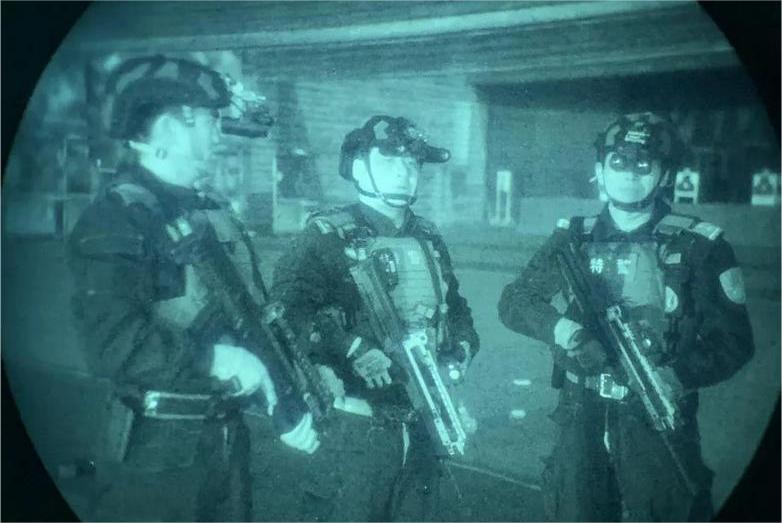
In law enforcement operations, the application of binocular thermal imaging night vision devices cannot be ignored. Nighttime is a time of high incidence of criminal activities, and traditional night vision equipment is often inadequate in this regard. Thermal imaging technology can work in a completely dark environment and accurately locate targets by detecting infrared radiation emitted by the human body. Law enforcement officers can use thermal imaging night vision devices to track the movements of fugitives, even if they are hiding in the dark or camouflaged in a complex environment. This not only improves pursuit efficiency but also reduces risk to law enforcement officers. In addition, thermal imaging night vision devices can also be used in search and rescue operations to help law enforcement officers quickly find missing persons or trapped persons in complex environments such as dense forests and wilderness, improving the success rate of search and rescue.

Hot Sale Thermal Imaging Product

Binoculars Thermal Vision
Thermal Vision Binoculars, a pinnacle of innovation and reliability in the realm of observation technology. Crafted with precision engineering and cutting-edge thermal imaging technology, our binoculars thermal vision redefine the way we perceive the world in low-light conditions.

Handheld Thermal Imaging Binocular
The standout feature of the Handheld Thermal Imaging Binocular lies in their dual functionality. They seamlessly integrate the clarity of binocular vision with the thermal imaging prowess, providing users with an unparalleled view of their surroundings.

Thermal Camera Monocular
Built with durability in mind, our Thermal Camera Monocular is constructed to withstand rugged use and is weather-resistant. Its robust design ensures reliability in challenging environments, allowing you to focus on your mission or activity without concerns about equipment performance.

Handheld Thermal Monocular Camera
Our Handheld Thermal Monocular Camera boasts advanced thermal imaging technology, providing users with a clear and detailed view of their surroundings, even in complete darkness. This thermal vision capability is invaluable for a wide range of applications, from outdoor enthusiasts to search and rescue teams.
FAQ
What are the key applications of a Thermal Imaging Device?
Thermal Imaging Devices are used across various industries and applications. In the field of medicine, they help in diagnosing conditions by detecting abnormal heat patterns in the body. In industrial maintenance, they identify overheating components in machinery, preventing potential failures. Firefighters use these devices to see through smoke and locate hot spots in burning buildings. Additionally, they are widely used in security and surveillance to detect intruders and monitor perimeters in low-light or no-light conditions. Wildlife researchers also employ thermal imaging to track and study animals in their natural habitats without disturbing them.
How does a Thermal Imaging Device differ from a regular camera?
Unlike regular cameras that capture images using visible light, Thermal Imaging Devices detect infrared radiation, which is emitted as heat by objects. This allows them to visualize temperature differences and create a thermal map, showing warmer areas as brighter and cooler areas as darker. Regular cameras are limited by the availability of light and cannot function effectively in total darkness, whereas thermal imaging devices can operate in complete darkness and are not affected by visual obstructions like smoke, fog, or foliage. This capability makes them indispensable in various applications where regular cameras would be ineffective.
What factors should be considered when choosing a Thermal Imaging Device?
When selecting a Thermal Imaging Device, several factors should be considered to ensure it meets the specific needs of the user. Resolution is crucial, as higher resolution provides more detailed images and better accuracy in identifying objects. The thermal sensitivity, or the ability to detect small temperature differences, is another important aspect. Users should also consider the device's range, ensuring it can detect heat signatures from the necessary distances. Additional features such as image and video recording, Wi-Fi connectivity, and durability in harsh environments can also be significant, depending on the intended application. Lastly, ease of use and ergonomic design can enhance user experience, especially during extended periods of use.