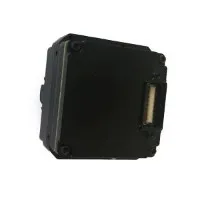

What materials are used to make cooled thermal cores?
As a leading supplier of cooled thermal cores, I often get asked about the materials that go into making these sophisticated components. Cooled thermal cores are at the heart of many high - performance thermal imaging devices, such as the Mini Thermal Camera, Cooled IR Camera, and Cooled Thermal Camera Module. Understanding the materials used in their construction is crucial for appreciating their capabilities and limitations.
Semiconductor Materials
One of the most critical materials in cooled thermal cores is the semiconductor material used for the detector array. The two main types of semiconductor materials employed are Mercury Cadmium Telluride (MCT) and Indium Antimonide (InSb).


Mercury Cadmium Telluride (MCT)
MCT is a ternary alloy semiconductor with the chemical formula Hg₁₋ₓCdₓTe. It is highly versatile because its bandgap can be precisely tuned by varying the value of x, the cadmium (Cd) mole fraction. This tunability allows MCT detectors to operate in different infrared spectral bands, including the mid - wave infrared (MWIR, 3 - 5 μm) and long - wave infrared (LWIR, 8 - 12 μm) regions.
The main advantage of MCT is its high detectivity, which means it can detect very small amounts of infrared radiation. This makes it suitable for applications where high sensitivity is required, such as military surveillance, scientific research, and industrial inspection. However, MCT detectors are also more expensive to manufacture compared to some other materials. They require a very low operating temperature, typically around 77 K (-196 °C), which necessitates the use of cryogenic cooling systems.
Indium Antimonide (InSb)
InSb is a binary compound semiconductor. It has a narrow bandgap, which enables it to operate in the MWIR region. InSb detectors are known for their high electron mobility, which results in fast response times. This makes them ideal for applications that require high - speed infrared imaging, such as missile guidance systems and high - speed thermal imaging cameras.
InSb detectors offer good performance in the MWIR band and have relatively high quantum efficiency. They also have a lower cost compared to MCT detectors in some cases. However, like MCT, InSb detectors also need to be cooled to low temperatures, usually around 77 K, to achieve optimal performance.
Optical Materials
In addition to the detector materials, the optical components in cooled thermal cores also rely on specific materials to transmit and focus infrared radiation.
Germanium (Ge)
Germanium is a widely used optical material in infrared optics. It has a high refractive index in the infrared region, which allows for the design of compact and efficient optical systems. Germanium lenses can be used to focus infrared radiation onto the detector array.
One of the challenges with germanium is its high absorption of visible light. This means that germanium lenses need to be coated with anti - reflection (AR) coatings to reduce reflection losses and improve the overall transmission of infrared radiation. Additionally, germanium has a relatively high thermal coefficient of expansion, which can cause changes in the optical properties with temperature variations.
Zinc Selenide (ZnSe)
ZnSe is another important optical material for infrared applications. It has good transparency in both the MWIR and LWIR regions. ZnSe lenses are often used in high - power laser systems and thermal imaging cameras because they can withstand high - energy infrared radiation without significant damage.
ZnSe has a lower refractive index compared to germanium, which can be an advantage in some optical designs. It also has better thermal stability than germanium in some cases. However, ZnSe is more expensive than germanium, and it requires careful handling due to its relatively soft and brittle nature.
Packaging Materials
The detector and optical components in cooled thermal cores need to be protected and housed in a suitable package. The packaging materials play a crucial role in maintaining the integrity of the system and ensuring its proper operation.
Ceramic Packages
Ceramic materials are commonly used for packaging cooled thermal cores. Ceramics have excellent thermal and electrical insulation properties. They can protect the detector from external mechanical shocks and environmental factors such as moisture and dust.
Ceramic packages can be designed with hermetic seals to prevent the ingress of contaminants. They also provide a stable platform for mounting the detector and other components. Additionally, ceramics can be metallized to facilitate electrical connections between the detector and the external circuitry.
Metal Packages
Metal packages are also used in some applications. Metals such as aluminum and stainless steel offer good mechanical strength and can provide electromagnetic shielding. They are often used in military and industrial applications where the thermal core needs to be protected from harsh environments and electromagnetic interference.
However, metal packages need to be carefully designed to avoid thermal conduction issues. If not properly insulated, the metal can conduct heat to the detector, which can degrade its performance.
Cooling System Materials
Cooled thermal cores require cryogenic cooling systems to maintain the low operating temperatures of the detectors. The materials used in these cooling systems are also essential for their proper functioning.
Cryogenic Coolants
The most common cryogenic coolant used in cooled thermal cores is liquid nitrogen (LN₂). LN₂ has a boiling point of 77 K (-196 °C), which is suitable for cooling MCT and InSb detectors. It is relatively inexpensive and widely available.
LN₂ is stored in cryogenic dewars, which are insulated containers designed to minimize heat transfer and prevent the rapid evaporation of the liquid nitrogen. However, the use of LN₂ requires regular refilling, which can be inconvenient in some applications.
In addition to LN₂, some advanced cooling systems use mechanical cryocoolers. These cryocoolers work on the principle of the Stirling cycle or the Pulse - Tube cycle. The materials used in mechanical cryocoolers include high - strength metals for the compressor components and low - thermal - conductivity materials for insulation.
Conclusion
The materials used to make cooled thermal cores are carefully selected to meet the specific requirements of different infrared imaging applications. The semiconductor materials, optical materials, packaging materials, and cooling system materials all play crucial roles in determining the performance, cost, and reliability of the thermal core.
As a supplier of cooled thermal cores, we are committed to using the highest - quality materials and the latest manufacturing technologies to provide our customers with products that meet their exacting needs. Whether you are in the military, scientific, industrial, or commercial sector, our cooled thermal cores, such as the Mini Thermal Camera, Cooled IR Camera, and Cooled Thermal Camera Module, offer excellent performance and reliability.
If you are interested in learning more about our cooled thermal cores or are looking to start a procurement discussion, we encourage you to reach out to us. Our team of experts is ready to assist you in finding the best solution for your specific application.
References
- Rogalski, A. (2011). Infrared detectors: status and trends. Journal of Infrared, Millimeter, and Terahertz Waves, 32(1), 1 - 105.
- Hanson, C. M. (2009). Infrared Detectors and Systems. SPIE Press.
- Smith, D. Y. (2002). Infrared Detectors and Emitters: Materials and Devices. CRC Press.