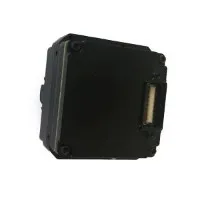

When it comes to selecting the right cooled IR camera for your specific needs, there are numerous factors to consider. As a supplier of Cooled IR Cameras, I understand the complexity of this decision and am here to guide you through the process. In this blog, I will delve into the key aspects that should influence your choice, ensuring that you make an informed decision that aligns with your requirements.
Understanding the Basics of Cooled IR Cameras
Before we dive into the selection process, it's crucial to have a basic understanding of cooled IR cameras. These cameras utilize a cooling mechanism to lower the temperature of the detector, which in turn enhances the camera's sensitivity and performance. The cooling process reduces the thermal noise in the detector, allowing for more accurate and detailed imaging in the infrared spectrum.
Cooled IR cameras are commonly used in a variety of applications, including military and defense, scientific research, industrial inspection, and surveillance. They are capable of detecting and imaging objects based on the heat they emit, making them invaluable tools in situations where visibility is limited or where traditional imaging methods are ineffective.
Key Factors to Consider When Choosing a Cooled IR Camera
1. Wavelength Range
The wavelength range of a cooled IR camera is one of the most important factors to consider. Different applications require different wavelength ranges, depending on the type of objects being detected and the environment in which the camera will be used.
- Short-Wave Infrared (SWIR): SWIR cameras operate in the wavelength range of approximately 1-3 microns. They are often used for applications such as spectroscopy, semiconductor inspection, and night vision.
- Mid-Wave Infrared (MWIR): MWIR cameras operate in the wavelength range of approximately 3-5 microns. They are commonly used for applications such as military and defense, thermal imaging, and gas detection.
- Long-Wave Infrared (LWIR): LWIR cameras operate in the wavelength range of approximately 8-14 microns. They are widely used for applications such as building inspection, industrial monitoring, and surveillance.
When choosing a cooled IR camera, it's important to select a camera with a wavelength range that is appropriate for your specific application. This will ensure that the camera is able to detect and image the objects of interest effectively.
2. Resolution
The resolution of a cooled IR camera refers to the number of pixels in the detector array. A higher resolution camera will provide more detailed and accurate images, but it will also be more expensive.
The resolution of a cooled IR camera is typically expressed in terms of the number of horizontal and vertical pixels. For example, a camera with a resolution of 640x512 has 640 pixels in the horizontal direction and 512 pixels in the vertical direction.
When choosing a cooled IR camera, it's important to consider the level of detail required for your application. If you need to detect and identify small objects or features, a higher resolution camera may be necessary. However, if you are only interested in detecting large objects or general thermal patterns, a lower resolution camera may be sufficient.
3. Sensitivity
The sensitivity of a cooled IR camera refers to its ability to detect small differences in temperature. A more sensitive camera will be able to detect smaller temperature differences, which can be important in applications such as medical imaging, scientific research, and industrial inspection.
The sensitivity of a cooled IR camera is typically expressed in terms of the Noise Equivalent Temperature Difference (NETD). The NETD is the smallest temperature difference that the camera can detect. A lower NETD value indicates a more sensitive camera.
When choosing a cooled IR camera, it's important to consider the level of sensitivity required for your application. If you need to detect small temperature differences, a camera with a low NETD value may be necessary. However, if you are only interested in detecting large temperature differences, a camera with a higher NETD value may be sufficient.
4. Frame Rate
The frame rate of a cooled IR camera refers to the number of images that the camera can capture per second. A higher frame rate camera will be able to capture more images per second, which can be important in applications such as high-speed motion analysis, surveillance, and military and defense.
The frame rate of a cooled IR camera is typically expressed in terms of frames per second (fps). For example, a camera with a frame rate of 30 fps can capture 30 images per second.
When choosing a cooled IR camera, it's important to consider the speed of the objects or events that you need to capture. If you need to capture high-speed motion, a camera with a high frame rate may be necessary. However, if you are only interested in capturing static or slow-moving objects, a lower frame rate camera may be sufficient.
5. Cooling Mechanism
The cooling mechanism of a cooled IR camera is another important factor to consider. There are several different types of cooling mechanisms available, each with its own advantages and disadvantages.
- Stirling Cooler: Stirling coolers are the most common type of cooling mechanism used in cooled IR cameras. They are relatively small, lightweight, and efficient, and they can provide cooling down to very low temperatures.
- Joule-Thomson Cooler: Joule-Thomson coolers are another type of cooling mechanism used in cooled IR cameras. They are typically smaller and lighter than Stirling coolers, but they are also less efficient and can only provide cooling down to a limited temperature range.
- Thermoelectric Cooler: Thermoelectric coolers are a type of cooling mechanism that uses the Peltier effect to cool the detector. They are relatively small, lightweight, and inexpensive, but they are also less efficient than Stirling and Joule-Thomson coolers and can only provide cooling down to a limited temperature range.
When choosing a cooled IR camera, it's important to consider the type of cooling mechanism that is most suitable for your application. If you need a camera that can provide high levels of cooling and operate in a wide range of environments, a Stirling cooler may be the best choice. However, if you need a camera that is small, lightweight, and inexpensive, a thermoelectric cooler may be sufficient.
6. Size and Weight
The size and weight of a cooled IR camera can be important factors to consider, especially if you need to use the camera in a portable or mobile application. A smaller and lighter camera will be easier to carry and operate, but it may also have limited features and performance.
When choosing a cooled IR camera, it's important to consider the size and weight requirements of your application. If you need to use the camera in a portable or mobile application, a smaller and lighter camera may be necessary. However, if you are using the camera in a fixed or stationary application, the size and weight of the camera may not be as important.
7. Cost
The cost of a cooled IR camera can vary widely depending on the features and performance of the camera. A higher-end camera with advanced features and high performance will be more expensive than a lower-end camera with basic features and lower performance.
When choosing a cooled IR camera, it's important to consider your budget and the level of performance that you need. If you have a limited budget, you may need to compromise on some of the features and performance of the camera. However, if you need a camera with high levels of performance and advanced features, you may need to invest in a more expensive camera.
Our Cooled IR Camera Products
As a supplier of Cooled IR Cameras, we offer a wide range of products to meet the needs of different applications. Our products include Ir Camera Core, Cooled Thermal Camera System, and Cooled Ir Camera Module.


Our cooled IR cameras are designed to provide high levels of performance, reliability, and durability. They are equipped with advanced features such as high resolution, high sensitivity, and fast frame rates, making them suitable for a wide range of applications.
In addition to our standard products, we also offer custom solutions to meet the specific needs of our customers. Our team of experienced engineers can work with you to design and develop a cooled IR camera system that is tailored to your requirements.
Conclusion
Choosing the right cooled IR camera for your needs can be a complex and challenging decision. However, by considering the key factors discussed in this blog, you can make an informed decision that aligns with your requirements and budget.
If you have any questions or need further assistance in choosing the right cooled IR camera for your application, please do not hesitate to contact us. Our team of experts is here to help you find the best solution for your needs. We look forward to working with you and providing you with the highest quality cooled IR cameras and services.
References
- "Infrared Imaging Systems: Design, Analysis, Modeling, and Testing" by Daniel C. Hamilton
- "Thermal Imaging: Principles, Algorithms, and Applications" by Jorg M. Reichardt
- "Infrared Technology and Applications XXXVII" edited by Richard C. Anderson and Michael G. Munger