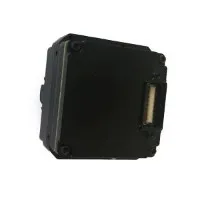

Hey there! As a supplier of LWIR (Long-Wave Infrared) Camera Cores, I often get asked about the latency of these amazing devices. So, let's dive right in and break down what latency means in the context of LWIR Camera Cores.


First off, what's latency? In simple terms, latency is the time it takes for a system to respond to an input and produce an output. For LWIR Camera Cores, it's the time between when the camera captures an infrared image and when that image is available for viewing or further processing. It's kind of like the delay you experience when you click a button on your phone and the app takes a second to open.
Now, why does latency matter? Well, in applications where real-time monitoring or quick decision-making is crucial, low latency is a must. Think about security and surveillance. If there's a long delay between when a potential threat is detected by the LWIR camera and when the security personnel can see the image, it could be too late to take action. Similarly, in industrial inspection, a high-latency camera might miss a fleeting defect or anomaly, leading to quality control issues.
There are several factors that can affect the latency of LWIR Camera Cores. One of the main ones is the sensor technology. Different types of sensors have different response times. For example, uncooled sensors, which are commonly used in many LWIR cameras, have a certain level of inherent latency due to the way they detect infrared radiation and convert it into an electrical signal. These Uncooled Infrared Camera Core are popular because they're more cost - effective and require less maintenance compared to cooled sensors. However, they typically have a slightly higher latency.
The processing power of the camera's internal electronics also plays a big role. The captured infrared data needs to be processed to form a usable image. If the processor is slow, it will take longer to perform tasks like image enhancement, noise reduction, and compression. This can add significant latency to the overall system. A more powerful processor can handle these tasks more quickly, reducing the time between image capture and output.
Another factor is the data transfer rate. Once the image is processed, it needs to be transferred to an external device, such as a monitor or a computer for further analysis. If the data transfer interface is slow, like an old - fashioned serial port, it will take longer to send the image, increasing the latency. Modern LWIR Camera Cores often use high - speed interfaces like USB 3.0 or Gigabit Ethernet to minimize this issue.
Let's talk a bit about how latency is measured. Usually, it's measured in milliseconds (ms). A lower number means less latency and a more responsive camera. For most applications, a latency of less than 100 ms is considered good. In high - speed applications, like automotive collision avoidance systems, where split - second decisions are required, the latency needs to be even lower, often in the range of 10 - 20 ms.
At our company, we've been working hard to reduce the latency of our Thermal Camera Cores. We use the latest sensor technologies and high - performance processors to ensure that our cameras can provide near - real - time images. Our Thermal Imaging Module are designed with high - speed data transfer interfaces to get the images to you as quickly as possible.
We understand that different applications have different latency requirements. For example, in wildlife monitoring, a slightly higher latency might be acceptable because the animals' movements are usually not extremely fast. But in military or high - end industrial applications, every millisecond counts. That's why we offer a range of LWIR Camera Cores with different latency profiles to meet the diverse needs of our customers.
If you're in the market for LWIR Camera Cores, it's important to consider the latency along with other factors like resolution, sensitivity, and cost. Don't just focus on getting the lowest latency at all costs, as it might come with a higher price tag. Instead, find the right balance that suits your specific application.
We're always happy to help you find the perfect LWIR Camera Core for your needs. Whether you're a small business looking for a cost - effective solution for basic surveillance or a large corporation in need of high - performance cameras for critical applications, we've got you covered. If you're interested in learning more about our products or have any questions about latency or other technical aspects, don't hesitate to reach out to us. We can have a detailed discussion about your requirements and recommend the best product for you. Let's work together to find the ideal LWIR Camera Core solution for your project.
References:
- Infrared Imaging Systems Handbook, Second Edition
- Journal of Infrared, Millimeter, and Terahertz Waves articles on thermal imaging technology