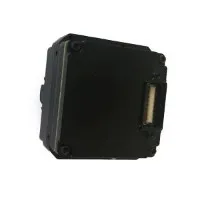

In recent years, 3D printing technology has revolutionized the manufacturing industry, enabling the creation of complex and customized devices with unprecedented precision. One area where 3D printing holds great promise is in the development of thermal imaging devices. As a leading supplier of Cooled Thermal Cores, I am excited to explore the opportunities and challenges of integrating these advanced components into 3D - printed devices.
Opportunities of Using Cooled Thermal Cores in 3D - Printed Devices
Customization and Design Freedom
One of the most significant advantages of 3D printing is the ability to create highly customized designs. With traditional manufacturing methods, the design of thermal imaging devices is often limited by the constraints of molds and machining processes. However, 3D printing allows for the creation of unique geometries and internal structures that can optimize the performance of cooled thermal cores.
For example, we can design 3D - printed enclosures that are specifically tailored to the size and shape of our Cooled Thermal Imaging Core. These enclosures can provide better heat dissipation, protection from environmental factors, and improved mechanical stability. Additionally, 3D printing enables the integration of other components, such as lenses and electronics, directly into the device, reducing the overall size and weight of the final product.
Rapid Prototyping and Iteration
Another key opportunity is the ability to rapidly prototype and iterate on designs. In the development of thermal imaging devices, it is often necessary to test different configurations and materials to optimize performance. With 3D printing, we can quickly produce prototypes of our devices and test them in real - world conditions.
This rapid prototyping process allows us to identify and address any design flaws or performance issues early in the development cycle. We can make adjustments to the design and print new prototypes within a matter of hours or days, rather than weeks or months as with traditional manufacturing methods. This significantly reduces the time and cost associated with product development and enables us to bring new products to market more quickly.
Cost - Effective Production for Small Batches
3D printing is particularly well - suited for the production of small batches of customized devices. For applications where only a limited number of thermal imaging devices are required, such as in research and development or specialized industrial applications, traditional manufacturing methods can be prohibitively expensive.
In contrast, 3D printing eliminates the need for expensive tooling and setup costs. The cost of producing a single 3D - printed device is relatively constant, regardless of the batch size. This makes it a cost - effective solution for small - scale production, allowing customers to obtain high - quality thermal imaging devices at a reasonable price.
Integration of Advanced Features
Cooled thermal cores offer high - performance imaging capabilities, such as high resolution, sensitivity, and fast frame rates. By integrating these cores into 3D - printed devices, we can take advantage of the design flexibility of 3D printing to incorporate advanced features.
For instance, we can design 3D - printed devices with built - in cooling systems that are optimized for the specific requirements of the cooled thermal core. These cooling systems can improve the performance and reliability of the device by maintaining the core at an optimal operating temperature. Additionally, 3D printing allows for the integration of wireless communication modules, data storage, and other advanced electronics, enhancing the functionality of the thermal imaging device.


Challenges of Using Cooled Thermal Cores in 3D - Printed Devices
Material Compatibility
One of the main challenges is ensuring material compatibility between the 3D - printed components and the cooled thermal core. The cooled thermal core operates at very low temperatures, and the materials used in the 3D - printed enclosure and other components must be able to withstand these low temperatures without cracking, warping, or losing their mechanical properties.
In addition, the materials must have good thermal conductivity to ensure efficient heat transfer from the core to the environment. Finding materials that meet these requirements while also being suitable for 3D printing can be a difficult task. We need to carefully select and test different materials to ensure that they are compatible with the cooled thermal core and can provide the necessary performance.
Precision and Tolerance
Cooled thermal cores require high levels of precision and tolerance in the manufacturing process. Any misalignment or deviation from the specified dimensions can significantly affect the performance of the device. 3D printing technology has made great strides in recent years, but achieving the same level of precision as traditional manufacturing methods can still be a challenge.
The layer - by - layer nature of 3D printing can introduce small variations in the dimensions of the printed parts. These variations can accumulate over time and lead to misalignment of the components, such as the lens and the cooled thermal core. To overcome this challenge, we need to optimize the 3D printing process parameters, such as layer thickness, printing speed, and temperature, to ensure the highest possible precision and tolerance.
Heat Dissipation
Although 3D printing offers design flexibility for heat dissipation, it also presents some challenges. The materials used in 3D printing may not have the same thermal conductivity as traditional metals or ceramics. This can make it more difficult to dissipate the heat generated by the cooled thermal core effectively.
In addition, the complex geometries created by 3D printing can sometimes impede the flow of air or other cooling fluids, reducing the efficiency of the cooling system. To address these issues, we need to design innovative cooling solutions that take advantage of the unique features of 3D - printed structures. For example, we can use internal channels or fins to improve heat transfer and enhance the overall cooling performance of the device.
Quality Control
Ensuring consistent quality in 3D - printed devices is another challenge. Unlike traditional manufacturing methods, where quality control can be relatively straightforward, 3D printing involves a complex set of variables that can affect the final product quality.
The quality of the 3D - printed parts can be influenced by factors such as the type of 3D printer, the printing material, the printing process parameters, and the operator's skill level. To maintain high - quality standards, we need to implement a comprehensive quality control system that includes in - process inspections, post - processing testing, and calibration of the 3D - printed devices.
Addressing the Challenges
To overcome the challenges associated with using cooled thermal cores in 3D - printed devices, we are constantly investing in research and development. We are working on developing new materials that are specifically designed for use with cooled thermal cores and 3D printing. These materials offer improved thermal conductivity, mechanical strength, and compatibility with low - temperature environments.
In addition, we are improving our 3D printing processes to achieve higher levels of precision and tolerance. We are using advanced software and calibration techniques to ensure that the printed parts meet the exact specifications of the design. For heat dissipation, we are collaborating with experts in thermal management to design innovative cooling solutions that are optimized for 3D - printed structures.
Our quality control system is also evolving to keep pace with the growing demand for high - quality 3D - printed thermal imaging devices. We are implementing automated inspection systems and using advanced testing equipment to ensure that every device meets our strict quality standards.
Conclusion
The integration of cooled thermal cores into 3D - printed devices offers a wide range of opportunities, including customization, rapid prototyping, cost - effective small - batch production, and the integration of advanced features. However, it also presents several challenges, such as material compatibility, precision, heat dissipation, and quality control.
As a leading supplier of Cooled Thermal Cores, we are committed to overcoming these challenges and providing our customers with the highest - quality 3D - printed thermal imaging devices. We believe that the combination of our advanced cooled thermal cores and the design flexibility of 3D printing will open up new possibilities in the field of thermal imaging.
If you are interested in exploring the potential of using our cooled thermal cores in your 3D - printed devices, we invite you to contact us for further discussion and to start a procurement negotiation. Our team of experts is ready to work with you to develop customized solutions that meet your specific requirements.
References
- "Additive Manufacturing Technologies: 3D Printing, Rapid Prototyping, and Direct Digital Manufacturing" by Ian Gibson, David W. Rosen, and Brent Stucker.
- "Thermal Imaging: Fundamentals, Research, and Applications" by Mahmoud Abdel - Rahman.
- Industry reports on 3D printing and thermal imaging technology from leading market research firms.