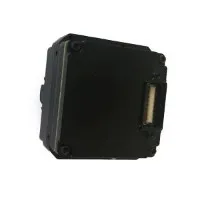

In the realm of security systems, night vision technology plays a pivotal role in ensuring safety and surveillance around the clock. One of the key components that have been gaining significant attention in recent years is uncooled camera cores. As a leading supplier of Uncooled Camera Cores, I am often asked whether these cores can be effectively used for night vision in security systems. In this blog post, I will delve into the technical aspects, advantages, and limitations of using uncooled camera cores for night vision in security applications.
Understanding Uncooled Camera Cores
Before we discuss their applicability in night vision for security systems, let's first understand what uncooled camera cores are. Uncooled camera cores are based on microbolometer technology. Unlike cooled infrared detectors, which require cryogenic cooling to extremely low temperatures to function effectively, uncooled camera cores operate at room temperature. This is achieved by using a microbolometer array that detects the infrared radiation emitted by objects based on their temperature differences.
The microbolometer elements in an uncooled camera core change their electrical resistance when exposed to infrared radiation. This change in resistance is then converted into an electrical signal, which is processed to create a thermal image. The simplicity of the uncooled design eliminates the need for complex and expensive cooling systems, making them more cost - effective, compact, and reliable.
Technical Feasibility for Night Vision in Security Systems
From a technical perspective, uncooled camera cores are well - suited for night vision in security systems. At night, when visible light is scarce, infrared radiation becomes the primary source of information for surveillance. Uncooled camera cores can detect the infrared radiation emitted by warm objects such as humans, animals, and vehicles, even in complete darkness.
The resolution of uncooled camera cores has improved significantly over the years. For instance, our 640 Thermal Camera Cores offer a high - resolution imaging capability, which is crucial for identifying and tracking objects in a security scenario. With a 640x512 pixel array, these cores can provide clear and detailed thermal images, allowing security personnel to detect potential threats accurately.
Moreover, uncooled camera cores have a wide field of view and can cover large areas. This is essential for security systems that need to monitor expansive perimeters, such as industrial sites, airports, and military installations. They also have a fast response time, which means they can capture moving objects without significant blurring, enabling real - time surveillance.
Advantages of Using Uncooled Camera Cores for Night Vision
Cost - Effectiveness
One of the most significant advantages of uncooled camera cores is their cost - effectiveness. As mentioned earlier, the absence of a cooling system reduces the manufacturing cost, which in turn translates into a lower price for the end - user. This makes it more feasible for security system integrators to deploy multiple cameras across a large area, enhancing the overall security coverage without breaking the budget.


Low Maintenance
Uncooled camera cores are relatively maintenance - free compared to their cooled counterparts. Cooled infrared detectors require regular maintenance of the cooling system, which can be time - consuming and expensive. In contrast, uncooled camera cores have fewer moving parts and do not require cryogenic cooling, resulting in lower maintenance costs and less downtime.
Compact Size
The compact size of uncooled camera cores allows for easy integration into various security devices. They can be incorporated into small - form - factor cameras, such as Infrared Thermal Camera and Thermal Camera Module, which can be discreetly placed in different locations. This is particularly useful for covert surveillance operations where the camera needs to be hidden from view.
All - Weather Performance
Uncooled camera cores can operate in a wide range of environmental conditions. They are not affected by fog, smoke, or dust as much as visible - light cameras. In adverse weather conditions, such as heavy rain or snow, visible - light cameras may lose their effectiveness, but uncooled camera cores can still provide clear thermal images, ensuring continuous security monitoring.
Limitations and Challenges
While uncooled camera cores offer many advantages for night vision in security systems, they also have some limitations.
Lower Sensitivity
Compared to cooled infrared detectors, uncooled camera cores have lower sensitivity. This means they may not be able to detect very small temperature differences, which could be a problem in scenarios where subtle thermal variations need to be detected. However, advancements in microbolometer technology are continuously improving the sensitivity of uncooled camera cores.
Limited Detection Range
The detection range of uncooled camera cores is relatively limited compared to some high - end cooled infrared systems. In long - range surveillance applications, such as border security, the performance of uncooled camera cores may be affected by factors such as atmospheric absorption and scattering of infrared radiation. However, for most medium - range security applications, the detection range of uncooled camera cores is sufficient.
Real - World Applications in Security Systems
Uncooled camera cores are already being widely used in various security applications. In perimeter security, they can be used to detect intruders attempting to breach a fence or wall. The thermal images can clearly show the presence of a human body, even if the intruder is trying to hide in the shadows.
In industrial security, uncooled camera cores can monitor the temperature of critical equipment, such as transformers and motors. Any abnormal temperature rise can be detected early, preventing potential equipment failures and security risks.
In urban surveillance, uncooled camera cores can be installed on streetlights or rooftops to monitor public areas. They can help in detecting criminal activities, such as theft and vandalism, even at night.
Conclusion
In conclusion, uncooled camera cores can be effectively used for night vision in security systems. Their cost - effectiveness, low maintenance, compact size, and all - weather performance make them a viable option for a wide range of security applications. While they have some limitations, continuous technological advancements are addressing these issues.
If you are in the market for reliable and cost - effective night vision solutions for your security system, our Uncooled Camera Cores are an excellent choice. We offer a wide range of products, including 640 Thermal Camera Cores, Infrared Thermal Camera, and Thermal Camera Module. Contact us to discuss your specific requirements and explore how our products can enhance the security of your premises.
References
- "Infrared and Electro - optical Systems Handbook", SPIE Press.
- "Thermal Imaging: Fundamentals, Research and Applications", Springer.
- Technical papers on uncooled infrared detector technology from leading research institutions.