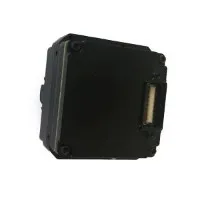

In the realm of modern military technology, the demand for advanced imaging solutions has never been higher. Long-Wave Infrared (LWIR) camera cores have emerged as a crucial component in meeting these needs, offering unparalleled capabilities in various military applications. As a leading supplier of LWIR Camera Cores, I am excited to explore the potential of these remarkable devices in the military sector.
Understanding LWIR Camera Cores
LWIR camera cores operate in the long-wave infrared spectrum, typically ranging from 8 to 14 micrometers. This part of the electromagnetic spectrum is particularly useful for military applications because it allows for the detection of heat signatures. Unlike visible light cameras, which rely on ambient light, LWIR cameras can function effectively in complete darkness, through smoke, fog, and other obscurants.
The technology behind LWIR camera cores is based on the principle of thermal radiation. All objects above absolute zero emit infrared radiation, and the intensity of this radiation is directly related to the object's temperature. LWIR camera cores are designed to detect these subtle differences in thermal radiation and convert them into visible images. This ability to "see" heat makes LWIR cameras invaluable in a wide range of military scenarios.
Military Applications of LWIR Camera Cores
Surveillance and Reconnaissance
One of the primary military applications of LWIR camera cores is surveillance and reconnaissance. In both land and naval operations, the ability to monitor enemy movements and activities without being detected is crucial. LWIR cameras can provide continuous, long-range surveillance, even in low-light or adverse weather conditions.
For example, in border security, LWIR cameras can be installed on fixed or mobile platforms to detect intruders at night or in areas with poor visibility. They can also be used on unmanned aerial vehicles (UAVs) for aerial reconnaissance, allowing military forces to gather intelligence on enemy positions and movements without putting personnel at risk.


Target Detection and Identification
LWIR camera cores are also essential for target detection and identification. In combat situations, being able to quickly and accurately identify enemy targets is critical for mission success. LWIR cameras can detect the heat signatures of vehicles, weapons, and personnel, even when they are camouflaged or hidden.
For instance, in urban warfare, LWIR cameras can help distinguish between friendly and enemy forces by detecting the heat signatures of their equipment and vehicles. They can also be used in anti-aircraft and anti-ship systems to detect and track incoming threats.
Navigation and Situational Awareness
In addition to surveillance and target detection, LWIR camera cores play a vital role in navigation and situational awareness. In low-visibility environments, such as at night or in foggy conditions, LWIR cameras can provide clear images of the surrounding terrain, helping military vehicles and aircraft navigate safely.
For example, LWIR cameras can be integrated into the cockpits of fighter jets and helicopters to provide pilots with enhanced vision during night missions. They can also be used on ground vehicles to improve driver visibility and reduce the risk of collisions.
Advantages of Using LWIR Camera Cores in Military Applications
High Sensitivity and Resolution
LWIR camera cores offer high sensitivity and resolution, allowing for the detection of even the smallest temperature differences. This makes them ideal for detecting and identifying targets at long ranges.
Passive Operation
Unlike radar and other active sensing technologies, LWIR cameras operate passively, meaning they do not emit any signals that can be detected by the enemy. This makes them less vulnerable to countermeasures and allows for stealthy operations.
All-Weather Capability
LWIR cameras can operate effectively in all weather conditions, including rain, fog, and snow. This makes them reliable in a wide range of military environments.
Low Maintenance
Modern LWIR camera cores are designed to be highly reliable and require minimal maintenance. This reduces the overall cost of ownership and ensures continuous operation in the field.
Our LWIR Camera Core Solutions
As a supplier of LWIR Camera Cores, we offer a wide range of products to meet the diverse needs of the military sector. Our LWIR camera cores are based on the latest uncooled technology, which offers several advantages over traditional cooled cameras.
Uncooled Camera Cores
Our Uncooled Camera Cores are designed to be compact, lightweight, and energy-efficient. They do not require cryogenic cooling, which makes them more reliable and easier to maintain. These camera cores are suitable for a variety of military applications, including surveillance, target detection, and navigation.
OEM Thermal Camera Modules
In addition to our camera cores, we also offer OEM Thermal Camera Modules that are ready for integration into military systems. These modules are pre-configured and tested, allowing for quick and easy integration into existing platforms. They are available in a range of resolutions and formats to meet the specific requirements of different military applications.
Conclusion
LWIR camera cores have proven to be an indispensable tool in modern military operations. Their ability to provide high-quality thermal imaging in all conditions makes them ideal for surveillance, reconnaissance, target detection, and navigation. As a leading supplier of LWIR camera cores, we are committed to providing the military with the most advanced and reliable imaging solutions.
If you are interested in learning more about our LWIR camera cores or discussing potential applications for your military needs, please do not hesitate to contact us. We look forward to working with you to provide the best imaging solutions for your mission.
References
- "Thermal Imaging Technology: Fundamentals, Research, and Applications" by J. G. Webster
- "Infrared and Electro-Optical Systems Handbook" by SPIE Press
- "Military Surveillance and Reconnaissance Systems" by Richard P. Hallion