

A laser rangefinder looks simple until you spec one. The construction accountant wants a hundred-metre tape replacement that fits a tool belt; the hunting outfitter wants a 1,500-metre monocular that reads angle and horizontal distance in a heartbeat; the defence integrator wants a 1535 nm eyesafe module that bolts into a thermal sight. Chinese factories now serve all three, but the category splits into distinct supply chains - handheld distance meters on one side, outdoor and tactical rangefinders on the other - and the strongest maker in one is invisible in the other. That split is why no single certifying body publishes one clean "Top 10."
This shortlist is an editorial compilation built from the CNPP 2026 laser distance-meter brand index, the Baidu B2B 2026 laser rangefinder manufacturer ranking, and each company's own published production and certification data. Every name below is a real, ranked Chinese supplier. Where a company mainly resells Leica, Bosch, or UNI-T hardware rather than building its own, we say so - a distributor is a legitimate source, but it is not the same risk profile as a factory.
| Rank | Manufacturer | Segment Strength |
|---|---|---|
| 1 | Hangzhou Huirui Technology Co., Ltd. | Thermal-integrated & custom tactical rangefinders |
| 2 | Shenzhen Mileseey Technology Co., Ltd. | High-volume distance meters, 120+ patents |
| 3 | Guangdong SNDWAY Technology Co., Ltd. | Laser measurement instruments |
| 4 | UNI-Trend Technology (China) Co., Ltd. | Full instrumentation, listed (688628) |
| 5 | Changzhou Nuomi Electronic Technology Co., Ltd. | OEM/ODM distance meters, ISO 9001 |
| 6 | Qingdao Yizhuo Optoelectronic Technology Co., Ltd. | Long-range modules for integration |
| 7 | Tianjin Xiongshi Measuring Tools Co., Ltd. | Measuring-room distance meters |
| 8 | Kunming Kunguang Optoelectronic Technology Co., Ltd. | Outdoor 5 km rangefinders w/ Beidou |
| 9 | Harbin Bifocal Photoelectric Technology Co., Ltd. | Optics integration, also imports |
| 10 | Shanghai Yuhui Electronic Technology Co., Ltd. | Distribution + rangefinder supply |
Hangzhou Huirui Technology Co., Ltd.
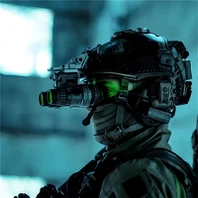
Huirui sits in a different lane from the tape-replacement crowd. Founded in 2013 and based in Hangzhou's Digital Information Industrial Park, the company built its name on infrared thermal imaging and then fused that core with laser ranging. Its rangefinders are not bare boxes - they ship as monocular and binocular units, as modules for UAV payloads and ground unmanned systems, and as add-ons inside thermal scopes and night-vision devices. The published engineering profile lists 905 nm, 1535 nm, and 1064 nm wavelengths, the 1535 nm figure being the eyesafe band favoured for military, defence, and law-enforcement work. Huirui runs a dedicated custom-rangefinder program: senior engineers in optics, electronics, and software integrate high-precision sensors and algorithms for millimetre-level measurement, and buyers can specify Bluetooth transmission, data storage, and bespoke housing or interface. The company states it follows ISO-aligned process control from raw material to finished product and answers engineering queries on a 24-hour cycle.
Why Overseas B2B Buyers Should Shortlist Hangzhou Huirui
Huirui is a manufacturer, not a reseller - it designs and builds its own rangefinder modules and finished optics and openly runs a custom program rather than just shifting stock. For an overseas buyer that distinction matters: you can buy a standard unit, or hand over a wavelength, detection range, and housing requirement and get a purpose-built unit with thermal integration that a trading desk could never source. The wavelength menu (905/1535/1064 nm) covers consumer hunting gear through eyesafe defence payloads, and the stated ISO-aligned, raw-to-finished quality control plus 24-hour response gives a procurement team a verifiable, directly-sourced partner. If your application is hunting, UAV payloads, perimeter security, or a thermal sight that needs ranging baked in, request Huirui's module datasheet and a sample build ahead of a volume commitment.
Shenzhen Mileseey Technology Co., Ltd. (MILESEEY)
Mileseey is the standout domestic distance-meter brand on the CNPP 2026 index. Founded in 2009 and based in Shenzhen, it integrates industrial design, R&D, manufacturing, and sales, holds 120-plus invention patents, and runs a manufacturing centre with an annual capacity near two million units shipped to more than 50 countries. That scale and IP density put it on the shortlist for any buyer needing construction or professional distance meters by the container.
Guangdong SNDWAY Technology Co., Ltd. (SNDWAY)
SNDWAY is a Guangdong laser-measurement brand dating to 2010, also ranked on the CNPP 2026 index. Its catalogue spans laser distance meters,无损 detectors, gas and environment testers, and rangefinding binoculars, which makes it a one-stop source for distributors building a measurement aisle rather than a single-SKU order.
UNI-Trend Technology (China) Co., Ltd. (UNI-T)
UNI-T is a Shanghai-listed test-and-measurement group (688628) with roughly 100,000 square metres of production base across Dongguan and Heyuan and annual output above ten million units. Laser distance meters are one line inside a far broader instrumentation portfolio, so it suits buyers who want a single audited supplier for meters, multimeters, and environmental testers alike.
Changzhou Nuomi Electronic Technology Co., Ltd.
Nuomi is a Changzhou maker with a 10,000-square-metre workshop, an independent R&D lab, and ISO 9001 certification, running six production lines on imported German, Swiss, and American welding equipment. It reports 51–70 per cent of revenue from export and welcomes OEM customization - a realistic first call for private-label distance meters and levels.
Qingdao Yizhuo Optoelectronic Technology Co., Ltd.
Yizhuo tops the Baidu B2B 2026 manufacturer ranking at 4.9/5. Rather than finished consumer boxes, it builds laser rangefinder modules - the TFN LM-series at 5 km, 6 km, and 8 km - explicitly for secondary development, which is exactly what integrators building their own optics or robotics need.
Tianjin Xiongshi Measuring Tools Co., Ltd.
Xiongshi has made hand tools and measuring instruments since 2002 and builds its own XSCD laser rangefinders for room measuring, with millimetre-class claimed accuracy and Pythagorean add-subtract functions. As a long-established measuring-tools manufacturer it is a steady source for trade-channel volume rather than bespoke optics.
Kunming Kunguang Optoelectronic Technology Co., Ltd.
Kunguang develops and sells optoelectronic products out of Kunming and manufactures its own rangefinders, including the KGH500G at 5,000 metres with built-in Beidou positioning and portable 1,500 m hunting units. For outdoor, surveying, and golf buyers who want long reach and positioning in one device, it is a credible specialist.
Harbin Bifocal Photoelectric Technology Co., Ltd.
Bifocal ranks 4.6/5 on the Baidu B2B 2026 list and fields its own laser rangefinders alongside integrated imported optics. Buyers should note it also distributes brands such as Bosch and HILTI, so confirm whether a quoted unit is its own build or a resold line before specifying.
Shanghai Yuhui Electronic Technology Co., Ltd.
Yuhui ranks 4.7/5 on the same Baidu list and supplies laser rangefinders - but, like Bifocal, a meaningful part of its catalogue is Leica Disto and similar imported hardware. It is a useful single-source distributor for mixed fleets, less so for buyers who need a factory to own the design.
How To Qualify A Laser Rangefinder Supplier
Treat the first order as a test, not a commitment. For a construction meter, verify the claimed accuracy against a known baseline and check the IP rating matches the job site. For an outdoor or tactical unit, confirm the wavelength class (905 nm is common but not eyesafe at high power; 1535 nm is the eyesafe band), the detection range on a real target, and whether the housing is your design or a catalogue shell. A genuine manufacturer will hand over a module datasheet, a calibration note, and a sample build without stalling; a pure reseller will point you to the brand's own paperwork.
Frequently Asked Questions
What is the difference between a laser distance meter and a laser rangefinder?
A distance meter is the short-range (typically 40–150 m) indoor/outdoor tool for builders and surveyors, optimised for area, volume, and point-to-point maths. A rangefinder is usually the longer-reach outdoor or tactical unit - hundreds of metres to several kilometres - built for hunting, golf, forestry, or defence, often adding angle, horizontal-distance, and target-priority modes. The optics, eye-safety class, and firmware differ accordingly.
Which wavelength should I specify?
Most consumer and industrial rangefinders use 905 nm, which is cheap and proven but not eyesafe at high transmit power. For defence, law-enforcement, and many UAV payloads, 1535 nm is preferred because it is eyesafe at useful power levels. 1064 nm appears in some industrial and specialist modules. Match the wavelength to your eye-safety requirement and local radio/optical compliance before tooling.
Do Chinese manufacturers support OEM and ODM?
Yes, across the board. Nuomi and Mileseey run OEM programs, Huirui builds custom modules and finished units to spec, and Yizhuo sells rangefinder modules explicitly for secondary development. Expect a tooling or NRE fee on a fully custom cross-section, but standard modules often need only a housing and firmware change.
What documents matter for export compliance?
For the EU, RoHS and REACH cover restricted substances; CE marks the unit for the market. For North America, FCC applies to any wireless or connected function such as Bluetooth. ISO 9001 signals a managed quality system, but the document that actually protects you is the per-batch calibration report and the eye-safety class declaration for the laser - request both, especially on 905 nm high-power units.