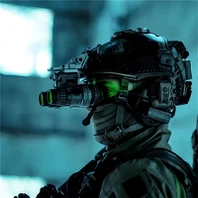


The global infrared thermal imaging market is projected to grow from USD 9.0 billion in 2026 to USD 12.6 billion by 2031, expanding at a compound annual growth rate (CAGR) of 6.4% (Wissen Research, 2026). Driven by AI-powered analytics, edge computing, and falling sensor costs, thermal imaging is rapidly shifting from a niche sensing tool into a strategic technology layer across security, industrial, and defense operations.
Multiple independent forecasts confirm the same trajectory. ResearchAndMarkets estimates the infrared imaging market at USD 9.05 billion in 2026, reaching USD 12.58 billion by 2032 (CAGR 5.59%), while MarketsandMarkets projects the broader infrared and thermal imaging systems market to reach USD 16–18 billion by 2036 (CAGR 7–8%). Fortune Business Insights places 2026 at USD 8.90 billion, growing to USD 13.23 billion by 2034. The consensus: thermal imaging demand is durable and broadening.
What Is Driving the Thermal Imaging Market in 2026?
Four forces are converging to push thermal imaging from periodic inspection into continuous, intelligent monitoring:
- AI-enabled thermal analytics that turn raw heat signatures into automated anomaly detection and object classification.
- Edge computing that processes thermal data on the device, cutting latency and bandwidth dependency.
- Uncooled microbolometer cost declines that make compact, affordable thermal cameras mainstream.
- SWIR (short-wave infrared) expansion opening new industrial inspection use cases beyond traditional LWIR.
AI-Powered Thermal Analytics Move From Imagery to Decisions
Historically, interpreting thermal data required a trained specialist to review footage and spot meaningful patterns-a labor-intensive process that limited deployment. Modern thermal imaging cameras now embed AI algorithms capable of detecting abnormal heat patterns, classifying objects in low-visibility settings, and prioritizing alerts in real time. This removes the manual-review bottleneck and lets non-specialist operators act on thermal data immediately, materially raising the technology's operational value beyond visualization into continuous intelligence.
Edge Computing Brings Real-Time Intelligence to the Camera
Edge processing lets infrared cameras analyze data locally, reducing response time and supporting privacy-sensitive deployments. For time-critical applications-industrial automation, perimeter security, and smart-city operations-on-device inference is becoming the default architecture. Embedded AI also lowers connectivity dependence, a key advantage for remote sites such as substations, pipelines, and border zones where reliable bandwidth is unavailable.
Uncooled Sensors and SWIR Expand Industrial Inspection
Uncooled infrared cameras now dominate commercial and industrial adoption thanks to lower cost, compact design, and minimal maintenance. At the same time, SWIR imaging-capable of penetrating silicon and select plastics-is gaining traction in semiconductor, electronics, and battery manufacturing quality control, detecting internal defects invisible to conventional inspection. For integrators building custom systems, thermal imaging cores offer a fast path to embed thermal capability into drones, security equipment, and specialized terminals.
Where Demand Is Concentrated: Security, Industrial, and Defense
Adoption is strongest where visibility, temperature measurement, and non-contact inspection create measurable value:
- Security & surveillance: Perimeter detection, critical infrastructure protection, and thermal imaging drones for wide-area overnight patrol.
- Industrial inspection: Predictive maintenance for power, steel, and manufacturing assets-detecting overheating components before failure.
- Defense & border monitoring: Long-range EO/IR systems for reconnaissance and target tracking.
- Firefighting & search and rescue: thermal night vision and handheld devices to locate concealed targets through smoke and darkness.
Regional dynamics reinforce this: North America held a 37.7% market share in 2025 (Fortune Business Insights), while Asia-Pacific is the fastest-growing region, supported by industrial automation and public-safety investment. China's OEM base-including established players such as Hikvision and Guide Infrared-continues to scale domestic capability.
What This Means for Buyers and System Integrators
For procurement and integration teams, three practical implications stand out. First, prioritize systems that combine detector performance with reliable, explainable AI analytics-not sensors alone. Second, evaluate edge-processing capability for latency- and privacy-sensitive sites. Third, plan for interoperability: standardized data formats and cloud dashboards are becoming prerequisites for fleet-level monitoring and predictive maintenance platforms.
Huirui Infrared's Position in the Market
Founded in 2013 and headquartered in Hangzhou, China, Huirui Infrared is a manufacturer of infrared thermal imaging solutions spanning uncooled and cooled imagers, thermal binoculars, thermal imaging cameras, laser rangefinders, EO/IR systems, and thermal imaging drones. The company delivers custom thermal solutions for industrial inspection, security, and defense, with project cases spanning urban security (Germany), energy-facility protection (Saudi Arabia, Ukraine), and remote search-and-rescue operations (Alaska). As the market shifts toward intelligent, edge-enabled thermal systems, Huirui's integrated product range positions it to serve buyers seeking both standardized modules and application-specific designs.
Frequently Asked Questions
What is the thermal imaging market size in 2026?
The global infrared thermal imaging market is estimated at approximately USD 9.0 billion in 2026, according to Wissen Research. Other analysts place the figure between USD 8.9 billion (Fortune Business Insights) and USD 9.05 billion (ResearchAndMarkets) for the same year.
What is driving thermal imaging market growth?
Growth is driven primarily by rising demand for AI-powered thermal analytics, edge computing, falling uncooled microbolometer costs, SWIR industrial inspection, predictive maintenance adoption, and expanding security and defense modernization programs.
Which industries use thermal imaging the most?
The largest end-use sectors are security and surveillance, military and defense, industrial inspection and predictive maintenance, automotive driver-assistance, firefighting, and building/energy infrastructure monitoring.
What is AI thermal analytics?
AI thermal analytics refers to machine-learning models embedded in thermal cameras that automatically detect abnormal heat patterns, classify objects, track changes over time, and prioritize alerts-reducing reliance on manual image review and enabling real-time operational decisions.
Sources: Wissen Research (2026), ResearchAndMarkets (2026), MarketsandMarkets (2026), Fortune Business Insights (2026). Market figures are analyst estimates and subject to revision.