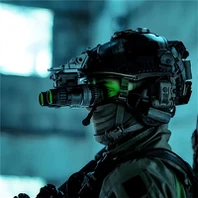


Thermal imaging technology is a tool that can "see temperature". It helps us observe the surrounding environment in darkness, smoke, or when there is insufficient visible light by detecting infrared radiation emitted by objects. Today, thermal imaging is widely used in military reconnaissance, medical screening, industrial testing, fire rescue, building energy consumption analysis and many other fields. With the advancement of science and technology, this technology, which once belonged to the professional military field, is gradually entering more industries and daily life.
1. The scientific principle of thermal imaging
2. Core components of thermal imaging cameras
3. The workflow of thermal imaging cameras
4. Application scenarios of thermal imaging technology
5. Hangzhou Huirui Technology Co., Ltd. - Representative in the field of thermal imaging
6. Advantages and limitations of thermal imaging
7. Future trends of thermal imaging technology
8. Conclusion

1. The scientific principle of thermal imaging
Infrared radiation basis
Any object with a temperature above absolute zero (-273.15°C) will emit infrared radiation. The higher the temperature, the stronger the infrared energy radiated and the wavelength will also change. This physical property provides the basis for thermal imaging technology.
Human vision vs. thermal imaging
The human eye can only perceive visible light, while thermal imaging cameras can detect invisible infrared bands (usually 8–14 microns) and convert them into visible images. This means that thermal imaging devices can "see" targets in a completely dark environment.
2. Core components of thermal imaging camera
The performance of a thermal imaging camera is closely related to its internal key components. The following are the main core parts of a thermal imaging camera and their functions:
1. Infrared detector
The infrared detector is the "eye" of the thermal imager, and its quality directly determines the sensitivity and clarity of the image.
Microbolometer: This is an uncooled infrared sensor widely used in industry, power detection, security and other fields. It generates images by absorbing infrared radiation to cause temperature changes and measuring the resistance changes caused by this change. This type of sensor has a moderate response speed, low cost and long life.
Photon Detector: Used in cooled thermal imaging cameras, it needs to be combined with a low-temperature cooling system (such as a Stirling cooler or a thermoelectric cooler) to reduce thermal noise. This detector is more sensitive to weak infrared signals and has a faster response speed. It is suitable for tasks that require high resolution and high temperature difference resolution, such as scientific research, military, precision medicine, etc.
2. Special material lens
The material of the thermal imaging lens must have good infrared transmittance. Common materials include:
Germanium: has good infrared transmittance and mechanical strength, and is one of the most common materials in thermal imaging lenses, but it is expensive.
Chalcogenide Glass: has lower cost, is suitable for mid- and low-end devices, and has slightly lower transmittance than germanium.
Silicon and calcium fluoride (CaF₂): used for infrared imaging in specific bands.
These materials can effectively focus infrared radiation to ensure imaging accuracy and energy collection efficiency.
3. Signal processing system
The infrared signal processor is the brain of the thermal imager. It amplifies, reduces noise, and digitizes the electrical signal received by the detector, and converts it into an intuitive thermal image through complex algorithms.
Modern processors usually have:
Non-uniformity correction (NUC): compensates for image defects caused by inconsistent pixel response of the detector.
Dynamic range optimization: automatically adjusts the contrast to highlight temperature difference details.
Image enhancement algorithms: such as edge sharpening and noise reduction, to improve image readability.
4. Display system
Thermal images are output through built-in or external display screens, and the temperature distribution is generally represented in pseudo-color:
Low temperature: displayed in cool colors such as blue, green, and purple;
High temperature: displayed in warm colors such as red, orange, and white;
It can also switch between black and white mode, isotherm display and other functions, suitable for different scenarios.
High-end thermal imagers also support image storage, video recording, Wi-Fi transmission and other functions, which facilitates data retention and remote monitoring.
3. The workflow of thermal imaging cameras
Although the workflow of thermal imaging cameras looks simple in appearance, it involves complex photoelectric conversion and image processing processes.
1: Infrared radiation collection
Every object continuously releases infrared radiation. The thermal imaging lens gathers and directs this radiation to the detector, similar to the way an ordinary camera lens focuses visible light.
2: Convert infrared radiation into electrical signals
The detector array samples the infrared radiation of each pixel and converts thermal energy into electrical signals related to temperature intensity. This process is the energy conversion link at the core of the thermal imager.
3: Signal digitization and image processing
The electrical signal is transmitted to the processing unit and converted into digital data through an analog-to-digital converter, and then various algorithms are processed, such as:
Temperature difference enhancement: improve the contrast between high and low temperature areas in the image;
Image equalization: smooth temperature changes and remove noise;
Temperature measurement algorithm: accurately calculate the temperature of each pixel in conjunction with the calibration table.
4: Generate and display thermal images
The final system maps the temperature information into different colors or grayscale levels to generate a color thermal map. The image is displayed on the screen in real time, making it easy for the operator to intuitively analyze the thermal distribution status.
Some devices are also equipped with temperature labels, maximum/minimum value display, automatic alarm and other functions to improve on-site diagnosis efficiency.

4. Application scenarios of thermal imaging technology
1. Military and law enforcement
Night vision reconnaissance, target locking, battlefield monitoring, etc.
2. Medical field
Such as temperature screening during the COVID-19 pandemic, it can also be used for diagnostic assistance such as inflammation and circulatory disorders.
3. Industry and electricity
Detect potential faults such as overheating of electrical equipment, mechanical wear or pipe blockage.
4. Fire rescue
Can penetrate smoke to detect fire sources and quickly locate trapped people.
5. Building inspection
Used to detect energy consumption hazards such as building insulation problems, thermal bridges, and air leakage in doors and windows.
5. Hangzhou Huirui Technology Co., Ltd. - Representative in the field of thermal imaging
With the rapid development of Thermal Imaging Camera technology, Hangzhou Huirui Technology Co., Ltd. has become a high-tech enterprise in this field with its advanced infrared technology and professional customization capabilities. Founded in 2013, the company is located in Hangzhou, a famous science and technology city in China, and focuses on providing reliable thermal imaging solutions to global customers.
Advantages of Hangzhou Huirui Technology Co., Ltd.:
Professional team: more than 29,000 experts worldwide, with rich project management experience, to ensure efficient progress of the entire project process;
Global service network: 27 cities around the world, with 50 delivery centers, supporting more than 200 languages, providing customers with 7x24 hours online support;
Customized solutions: From handheld devices to industrial monitoring systems, Huirui Technology can tailor thermal imaging systems according to customer needs, covering security, power, medical, intelligent manufacturing and other fields.
The company deeply integrates AI technology with infrared thermal imaging to promote intelligent recognition of thermal images, automatic alarm and data analysis, helping customers improve efficiency and safety.
6. Advantages and limitations of thermal imaging
Advantages:
Can work in complete darkness;
Can detect heat sources at a distance without contact;
Can detect problems that are invisible to the naked eye, such as overheated wires or potential leaks.
Limitations:
Cannot penetrate glass because glass reflects infrared;
Image resolution is slightly lower than that of optical cameras;
High-performance equipment is more expensive, especially refrigeration equipment.
7. Future trends of thermal imaging technology
Miniaturization: Thermal imaging chips will be increasingly integrated into smartphones, wearable devices and drones;
AI-assisted analysis: Automatically identify abnormal temperature points and generate reports through artificial intelligence technology;
High sensitivity + low cost: With the advancement of sensor materials and manufacturing technology, thermal imaging will become more sensitive, more affordable, and more popular.
Thermal imagers detect infrared radiation emitted by objects and visualize temperature information, helping us to discover hidden dangers and problems. Whether it is industrial inspection, medical screening, or safety prevention and control, thermal imaging technology plays an irreplaceable role in all walks of life with its unique advantages.
As companies like Hangzhou Huirui Technology Co., Ltd. continue to promote the development and popularization of Thermal imaging cameras technology, Thermal imaging cameras will demonstrate their value in more scenarios in the future, making "seeing temperature" an intelligent daily means.