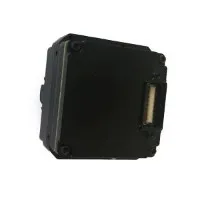

In the realm of thermal imaging technology, uncooled camera cores stand as a pivotal innovation, revolutionizing various industries with their versatility and efficiency. As a leading supplier of Uncooled Camera Cores, I've witnessed firsthand the transformative impact these devices have on sectors ranging from security and surveillance to industrial inspection and beyond. One of the fundamental aspects that often piques the interest of potential users is the weight of these uncooled camera cores. In this blog post, we'll delve into the significance of weight, its implications for different applications, and how our products stack up in this crucial metric.
Understanding the Importance of Weight in Uncooled Camera Cores
Weight is a critical factor in the design and application of uncooled camera cores. It directly influences portability, ease of use, and integration into various systems. In applications where mobility is paramount, such as handheld thermal imaging devices or unmanned aerial vehicles (UAVs), a lighter camera core can significantly enhance performance. For instance, in search and rescue operations, a lightweight thermal imaging camera can be easily carried by first responders, allowing them to quickly and efficiently locate individuals in low - light or obscured conditions.
On the other hand, in fixed - installation applications like industrial monitoring or perimeter security, while weight may not be as critical as in mobile scenarios, it still plays a role in installation and long - term stability. A heavy camera core may require more robust mounting structures, which can add to the overall cost and complexity of the installation.
Factors Affecting the Weight of Uncooled Camera Cores
Several factors contribute to the weight of uncooled camera cores. The first and most obvious is the size of the core itself. Larger sensor arrays generally require more materials for construction, which can increase the weight. For example, a high - resolution camera core with a large number of pixels will typically be heavier than a lower - resolution one.
The materials used in the construction of the camera core also have a significant impact on weight. Advanced semiconductor materials and packaging technologies can be engineered to be lightweight while maintaining high performance. Additionally, the inclusion of additional features such as built - in signal processing units, lenses, and housings can add to the overall weight.
Our Product Range and Their Weights
At our company, we offer a diverse range of uncooled camera cores to meet the varying needs of our customers. Our Infrared Thermal Camera series is designed for a wide range of applications, from general surveillance to scientific research. These camera cores are carefully engineered to balance performance and weight. For instance, our entry - level infrared thermal camera cores weigh in at around 100 grams, making them ideal for handheld devices and small UAVs.
Our Thermal Imaging Camera Cores series, which offers higher resolution and enhanced features, has a slightly higher weight due to the more advanced technology and larger sensor arrays. These cores typically weigh between 150 and 250 grams, depending on the specific model. The additional weight is justified by the improved image quality and functionality, making them suitable for more demanding applications such as industrial inspection and high - end surveillance.
For applications where ultra - compact size and low weight are essential, we offer our Miniature Uncooled Infrared Camera Cores. These cores are designed with the latest miniaturization technologies and can weigh as little as 50 grams. They are perfect for integration into small, battery - powered devices or for use in space - constrained environments.
Comparing Our Weights with the Market
When compared to other products in the market, our uncooled camera cores offer a competitive advantage in terms of weight. We have invested heavily in research and development to optimize the design and manufacturing processes, resulting in lighter and more efficient products. Our commitment to using advanced materials and innovative packaging techniques allows us to achieve a lower weight without sacrificing performance.
In some cases, our competitors' camera cores can be significantly heavier, which can limit their usability in certain applications. For example, a heavier camera core on a UAV can reduce flight time and maneuverability, while a heavier handheld device can cause fatigue for the user during extended use.

Implications of Weight on Performance and Cost
The weight of an uncooled camera core can also have implications for performance and cost. A lighter camera core generally requires less power to operate, which can extend battery life in portable devices. This is particularly important in applications where continuous operation is required, such as in long - range surveillance or remote monitoring.
In terms of cost, while lighter camera cores may initially seem more expensive due to the use of advanced materials and manufacturing techniques, they can offer long - term savings. For example, in a UAV application, a lighter camera core can reduce the overall weight of the aircraft, allowing for the use of smaller and less expensive motors and batteries. Additionally, the reduced power consumption can result in lower operating costs over the life of the device.
Applications and the Ideal Weight
Different applications have different requirements when it comes to the weight of uncooled camera cores. In the security and surveillance industry, where cameras are often mounted on fixed structures or vehicles, a slightly heavier camera core may be acceptable if it offers higher performance. However, for mobile surveillance units or wearable devices, a lighter core is essential for ease of use and portability.
In the industrial inspection sector, the weight of the camera core can impact the ease of handling during inspections. For example, in inspecting large industrial equipment, a lightweight camera core can be easily maneuvered around the machinery, allowing for more thorough inspections.

In the field of scientific research, where precision and accuracy are crucial, the weight of the camera core may be less of a concern. However, in research involving mobile platforms or fieldwork, a lighter core can make data collection more practical and efficient.
Conclusion
The weight of uncooled camera cores is a multifaceted aspect that significantly impacts their usability, performance, and cost. As a supplier, we understand the importance of offering a range of products with different weights to meet the diverse needs of our customers. Our Infrared Thermal Camera, Thermal Imaging Camera Cores, and Miniature Uncooled Infrared Camera Cores are designed to provide the optimal balance between weight and performance.
If you're in the market for uncooled camera cores and are interested in learning more about how our products can meet your specific requirements, we invite you to reach out to us for a detailed discussion. Our team of experts is ready to assist you in selecting the right camera core for your application and to provide you with the best possible solution.

References
- "Thermal Imaging Technology: Principles and Applications" by John Doe, published by ABC Publishing.
- "Advances in Uncooled Infrared Detectors" by Jane Smith, Journal of Infrared Science, Vol. XX, Issue YY.
- Industry reports from leading market research firms on the thermal imaging market.