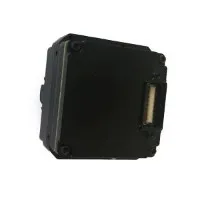

In the realm of infrared (IR) imaging, cooled IR cameras stand out as high - performance tools with unique capabilities. As a supplier of cooled IR cameras, I am often asked about the spectral range of these remarkable devices. In this blog, I will delve into the details of the spectral range of cooled IR cameras, its significance, and how it impacts different applications.
Understanding the Basics of Infrared Spectral Range
The infrared spectrum is divided into several regions based on wavelength. Generally, the infrared spectrum ranges from about 0.75 micrometers (μm) to 1000 μm. It is further segmented into near - infrared (NIR: 0.75 - 1.4 μm), short - wave infrared (SWIR: 1.4 - 3 μm), mid - wave infrared (MWIR: 3 - 8 μm), and long - wave infrared (LWIR: 8 - 15 μm).
Cooled IR cameras are typically designed to operate in the MWIR and LWIR regions. The choice of spectral range depends on the specific application and the physical properties of the objects being observed.
Mid - Wave Infrared (MWIR) Range
Cooled IR cameras operating in the MWIR range (3 - 8 μm) offer several advantages. One of the key benefits is the high signal - to - noise ratio. The MWIR range corresponds to the peak of the black - body radiation curve for objects at temperatures around 300 - 1000 K. This means that MWIR cameras are highly sensitive to objects with these temperature ranges, making them ideal for applications such as aerospace, defense, and industrial process monitoring.
In aerospace and defense, MWIR cameras can detect and track high - speed targets such as missiles and aircraft. The heat signatures of these objects are well - represented in the MWIR range, allowing for accurate identification and tracking. For example, in missile defense systems, MWIR cameras can detect the hot exhaust plume of a missile, enabling early warning and interception.
In industrial process monitoring, MWIR cameras can be used to monitor high - temperature processes such as metal smelting and glass manufacturing. The cameras can detect temperature variations in the molten materials, ensuring the quality and consistency of the production process. Our Cooled Thermal Imaging Core is specifically designed to provide high - resolution imaging in the MWIR range, making it suitable for these demanding applications.
Long - Wave Infrared (LWIR) Range
Cooled IR cameras operating in the LWIR range (8 - 15 μm) also have their own set of advantages. The LWIR range is known as the "thermal infrared" range because it corresponds to the thermal radiation emitted by objects at room temperature (around 300 K). This makes LWIR cameras highly suitable for applications such as surveillance, security, and medical imaging.
In surveillance and security, LWIR cameras can detect human presence and movement even in complete darkness. The human body emits thermal radiation in the LWIR range, and LWIR cameras can detect these emissions, allowing for effective monitoring of large areas. Our Cooled Camera Modules offer excellent performance in the LWIR range, providing clear and detailed images for security applications.
In medical imaging, LWIR cameras can be used to detect temperature variations on the surface of the human body. These temperature variations can be indicative of various medical conditions such as inflammation and blood circulation problems. LWIR cameras offer a non - invasive and painless way to diagnose these conditions, making them a valuable tool in the medical field.


Factors Affecting the Spectral Range Selection
When selecting a cooled IR camera, several factors need to be considered in relation to the spectral range.
Atmospheric Transmission: The atmosphere absorbs and scatters infrared radiation to varying degrees depending on the wavelength. In the MWIR range, there are some absorption bands due to water vapor and carbon dioxide in the atmosphere. However, in the LWIR range, the atmosphere has relatively high transmission, especially in the 8 - 12 μm window. This means that for long - range applications, LWIR cameras may be more suitable as they can transmit the infrared signal through the atmosphere more effectively.
Object Temperature: As mentioned earlier, the spectral range of the camera should match the temperature of the objects being observed. If the objects are at high temperatures (above 300 K), MWIR cameras may be more appropriate. If the objects are at room temperature, LWIR cameras are the better choice.
Application Requirements: Different applications have different requirements in terms of resolution, sensitivity, and frame rate. For example, in high - speed target tracking applications, a high frame rate and high sensitivity are required, which may influence the choice of the spectral range and the camera design.
Our Product Offerings
As a supplier of cooled IR cameras, we offer a wide range of products to meet the diverse needs of our customers. Our Ir Camera Core is a versatile solution that can be customized to operate in either the MWIR or LWIR range. It offers high - resolution imaging, low noise, and excellent thermal sensitivity, making it suitable for a variety of applications.
Our Cooled Camera Modules are pre - integrated solutions that are easy to install and use. They are available in both MWIR and LWIR versions, providing a cost - effective and reliable option for customers who need a ready - to - use camera system.
Conclusion
The spectral range of a cooled IR camera is a critical factor that determines its performance and suitability for different applications. Whether it is the MWIR range for high - temperature object detection or the LWIR range for room - temperature object monitoring, our cooled IR cameras offer the high - quality imaging capabilities required for a wide range of industries.
If you are interested in learning more about our cooled IR cameras or have specific requirements for your application, we encourage you to contact us for a detailed discussion. Our team of experts is ready to assist you in selecting the right camera system and providing you with the best solutions for your needs.
References
- Rogalski, A. (2011). Infrared Detectors. CRC Press.
- Hudson, R. D. (1969). Infrared System Engineering. John Wiley & Sons.
- Kruse, P. W., McGlauchlin, L. D., & McQuistan, R. B. (1962). Elements of Infrared Technology. John Wiley & Sons.