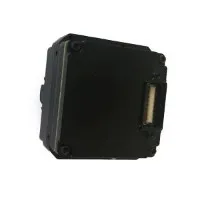

In the realm of thermal imaging technology, the signal - to - noise ratio (SNR) of thermal camera cores stands as a pivotal metric that significantly influences the performance and utility of thermal cameras. As a dedicated supplier of [Thermal Camera Cores], understanding the intricacies of SNR is not only essential for us but also crucial for our customers who rely on high - quality thermal imaging solutions.
Defining Signal - to - Noise Ratio
The signal - to - noise ratio is a fundamental concept in electronics and imaging. In the context of thermal camera cores, the "signal" represents the useful information that the camera is trying to capture, which is the infrared radiation emitted by objects in the scene. This radiation is converted into an electrical or digital signal that forms the basis of the thermal image. On the other hand, "noise" refers to any unwanted random fluctuations or interference in the signal. These can arise from various sources, such as the internal electronics of the camera core, thermal fluctuations within the detector itself, or external electromagnetic interference.
Mathematically, the SNR is defined as the ratio of the power of the signal to the power of the noise, often expressed in decibels (dB). A higher SNR indicates that the signal is stronger relative to the noise, resulting in a clearer and more detailed image. For example, if the power of the signal is (S) and the power of the noise is (N), the SNR in decibels is calculated as (SNR = 10\log_{10}(\frac{S}{N})).
Importance of SNR in Thermal Imaging
The SNR of a thermal camera core has a direct impact on the quality of the thermal images produced. In applications where precise temperature measurements are required, such as industrial inspections, medical diagnostics, and scientific research, a high SNR is essential. A low SNR can lead to inaccurate temperature readings, as the noise can distort the signal and make it difficult to distinguish between different temperature levels.
In security and surveillance applications, a high - SNR thermal camera core can provide clear images even in low - light or adverse weather conditions. This allows for better detection of intruders, animals, or other objects of interest. For example, in a perimeter security system, a thermal camera with a high SNR can detect a person hiding in the shadows more effectively than one with a low SNR.
Factors Affecting the SNR of Thermal Camera Cores
Several factors can influence the SNR of thermal camera cores. One of the primary factors is the detector technology. There are two main types of detectors used in thermal cameras: cooled and uncooled detectors. Cooled detectors, which operate at very low temperatures, generally have a higher SNR compared to uncooled detectors. This is because the low operating temperature reduces the thermal noise within the detector. However, cooled detectors are more expensive and require complex cooling systems, which limits their widespread use.
Uncooled detectors, on the other hand, are more cost - effective and easier to maintain. They operate at room temperature, but they are more susceptible to thermal noise. Advances in uncooled detector technology, such as improved microbolometer designs, have significantly improved the SNR of uncooled thermal camera cores in recent years. For more information about our [Uncooled Thermal Imaging Core], please visit Uncooled Thermal Imaging Core.
Another factor that affects the SNR is the integration time of the detector. The integration time is the period during which the detector accumulates the infrared radiation. A longer integration time allows the detector to collect more signal, which can increase the SNR. However, a longer integration time also means that the camera has a slower frame rate, which may not be suitable for applications where fast - moving objects need to be captured.
The optical system of the thermal camera also plays a role in the SNR. A high - quality optical system can focus the infrared radiation onto the detector more efficiently, increasing the signal strength. Additionally, the optical system can help to reduce the amount of stray light and external interference, which can improve the SNR.
Measuring the SNR of Thermal Camera Cores
Measuring the SNR of thermal camera cores is a complex process that requires specialized equipment and techniques. One common method is to use a blackbody source, which emits a known amount of infrared radiation at a specific temperature. The thermal camera is then pointed at the blackbody source, and the signal and noise levels are measured.
The signal level can be measured by taking the average value of the pixels in the image that correspond to the blackbody source. The noise level can be measured by calculating the standard deviation of the pixel values in a region of the image where there is no significant signal change. Once the signal and noise levels are measured, the SNR can be calculated using the formula mentioned earlier.
Our Solutions for High - SNR Thermal Camera Cores
As a leading supplier of thermal camera cores, we are committed to providing our customers with high - quality products that offer excellent SNR. We offer a wide range of [Thermal Camera Module] that are designed to meet the diverse needs of our customers. Our [Uncooled Infrared Camera Core] is based on the latest microbolometer technology, which provides a high SNR at a competitive price.
Our thermal camera cores are rigorously tested to ensure that they meet the highest quality standards. We use state - of - the - art testing equipment and techniques to measure the SNR and other performance parameters of our products. This allows us to provide our customers with accurate and reliable information about the performance of our thermal camera cores.
In addition to our high - quality products, we also offer excellent customer support. Our team of experts is available to assist our customers with product selection, installation, and troubleshooting. We understand that every customer has unique requirements, and we are committed to providing customized solutions that meet their specific needs.


Conclusion
The signal - to - noise ratio of thermal camera cores is a critical factor that determines the performance and quality of thermal images. A high SNR is essential for applications where accurate temperature measurements, clear images, and reliable detection are required. As a supplier of thermal camera cores, we are dedicated to developing and providing products that offer excellent SNR.
If you are interested in our thermal camera cores or have any questions about the SNR or other performance parameters, please feel free to contact us. We look forward to discussing your requirements and providing you with the best thermal imaging solutions.
References
- "Thermal Imaging Handbook", by Michael Vollmer and Gerhard Möllmann.
- "Infrared Detectors and Systems", by Paul R. Norton.
- Technical documents and research papers from leading thermal imaging manufacturers.