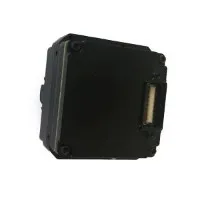

In the realm of thermal imaging technology, uncooled camera cores play a pivotal role in a wide array of applications, from industrial inspections to security surveillance. One of the key performance metrics that significantly impacts their usability is the response time. As a leading supplier of Uncooled Camera Cores, we understand the importance of this parameter and are dedicated to providing in - depth insights into what response time means for these cutting - edge devices.
Understanding Response Time
Response time in an uncooled camera core refers to the time it takes for the detector to react to a change in the infrared radiation incident on it and generate a corresponding electrical signal. In simpler terms, it is the duration between the moment a thermal event occurs in the field of view and the time when the camera core can accurately capture and represent that event in the output image.
There are several factors that influence the response time of uncooled camera cores. The first and perhaps most crucial is the detector material. Different materials have varying thermal properties, such as specific heat capacity and thermal conductivity. For instance, microbolometers, which are commonly used in uncooled camera cores, have a certain thermal mass associated with them. A lower thermal mass generally allows for a faster response time because less energy is required to change the temperature of the detector element, and thus it can react more quickly to changes in infrared radiation.
Another factor is the design of the read - out integrated circuit (ROIC). The ROIC is responsible for amplifying and processing the electrical signals generated by the detector. A well - designed ROIC can reduce the time it takes to read out the data from the detector array, thereby improving the overall response time of the camera core. Additionally, the sampling rate of the ROIC also plays a role. A higher sampling rate means that the ROIC can capture and process the detector signals more frequently, enabling a more real - time representation of the thermal scene.
Importance of Response Time in Different Applications
Industrial Inspections
In industrial settings, uncooled camera cores are often used for predictive maintenance. For example, they can detect overheating components in electrical systems or machinery. A fast response time is essential in these applications because it allows for the timely detection of sudden temperature changes. If a component starts to overheat rapidly, a camera core with a slow response time may not be able to capture the initial spike in temperature accurately. This could lead to missed opportunities for preventive action, potentially resulting in equipment failure and costly downtime.
Security and Surveillance
In security and surveillance, uncooled camera cores are used to detect intruders or abnormal activities. Thermal imaging can provide valuable information even in low - light or no - light conditions. A fast response time ensures that any sudden movement or change in the thermal signature of a person or object in the monitored area can be quickly detected. This is crucial for timely alerts and effective security measures.
Medical Applications
In the medical field, uncooled camera cores are used for applications such as thermography, which can detect inflammation or other physiological abnormalities in the body. A fast response time is necessary to capture the dynamic changes in body temperature accurately. For example, during a stress test, the body's temperature distribution may change rapidly, and a camera core with a slow response time may not be able to provide a detailed and accurate thermal image.
Our Uncooled Camera Cores and Response Time
As a supplier of Uncooled Camera Cores, we have invested heavily in research and development to optimize the response time of our products. Our Thermal Imaging Camera Cores are designed with advanced detector materials and state - of - the - art ROICs to ensure fast and accurate response times.
Our Miniature Uncooled Infrared Camera Cores are particularly well - suited for applications where size and portability are important, without compromising on response time. These compact cores are engineered to have a low thermal mass detector, which allows for rapid response to thermal changes. At the same time, our custom - designed ROICs are optimized for high - speed data read - out, enabling real - time thermal imaging.


Our Infrared Thermal Imaging Camera solutions are also equipped with features that enhance response time. We continuously work on improving the manufacturing processes to ensure consistent performance across all our products. For example, we use advanced lithography techniques to fabricate the detector arrays, which helps in achieving a more uniform thermal response and faster signal processing.
Measuring and Characterizing Response Time
To accurately measure the response time of our uncooled camera cores, we use a variety of testing methods. One common approach is to expose the camera core to a step change in infrared radiation and measure the time it takes for the output signal to reach a certain percentage (usually 90% or 95%) of its final value. This is known as the rise time, which is a key metric for response time.
We also conduct dynamic scene testing, where the camera core is pointed at a moving thermal target. By analyzing the output images, we can evaluate how well the camera core can track the changes in the thermal signature of the target over time. This type of testing provides a more realistic assessment of the response time in actual operating conditions.
Conclusion
The response time of uncooled camera cores is a critical parameter that affects their performance in various applications. As a supplier, we are committed to providing high - quality products with fast response times. Our dedication to research and development, along with advanced manufacturing processes, ensures that our Thermal Imaging Camera Cores, Miniature Uncooled Infrared Camera Cores, and Infrared Thermal Imaging Camera can meet the demanding requirements of our customers.
If you are in need of uncooled camera cores for your specific application and are interested in learning more about our products' response time and other performance features, we encourage you to contact us for a detailed discussion and potential procurement. We look forward to working with you to find the best thermal imaging solutions for your needs.
References
- "Thermal Imaging Handbook" by Paul R. Norton
- "Infrared Detectors and Systems" by Robert D. Hudson