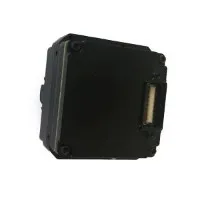

As a supplier of Uncooled Camera Cores, I've been deeply involved in the thermal imaging industry for years. One of the most common questions I encounter is about the low - frequency noise of uncooled camera cores. In this blog, I'll delve into what low - frequency noise is, its impact on uncooled camera cores, and how we address it.
Understanding Low - Frequency Noise
Low - frequency noise, also known as 1/f noise or flicker noise, is a type of electronic noise that has a power spectral density inversely proportional to the frequency. In simpler terms, as the frequency decreases, the noise level increases. This noise is present in many electronic devices, including uncooled camera cores.
In uncooled camera cores, low - frequency noise can manifest as a slow - varying signal fluctuation that degrades the image quality. It can cause a “drifting” appearance in the thermal images, making it difficult to accurately detect and analyze objects. Unlike high - frequency noise, which can often be reduced through simple filtering techniques, low - frequency noise is more challenging to eliminate because it affects the long - term stability of the camera core.


Sources of Low - Frequency Noise in Uncooled Camera Cores
There are several sources of low - frequency noise in uncooled camera cores. One of the primary sources is the thermal fluctuations within the detector elements. Uncooled camera cores rely on the change in resistance of microbolometers due to absorbed infrared radiation to generate an electrical signal. However, the temperature of the detector elements can also be affected by the ambient temperature and the self - heating of the device. These thermal fluctuations can introduce low - frequency noise into the signal.
Another source is the electronic components in the read - out integrated circuit (ROIC). The ROIC is responsible for amplifying and processing the signals from the detector elements. The transistors and other components in the ROIC can generate low - frequency noise due to factors such as carrier mobility fluctuations and trap - assisted tunneling.
Impact of Low - Frequency Noise on Image Quality
The presence of low - frequency noise can have a significant impact on the image quality of uncooled camera cores. It can reduce the signal - to - noise ratio (SNR), which is a measure of the strength of the useful signal compared to the background noise. A lower SNR means that it is more difficult to distinguish between objects and the background, especially in low - contrast situations.
Low - frequency noise can also cause non - uniformity in the image. Different detector elements may be affected by the noise to different degrees, resulting in a “patchy” appearance in the image. This non - uniformity can make it challenging to perform accurate temperature measurements and object recognition.
How We Address Low - Frequency Noise
As a supplier of Uncooled Camera Cores, we have developed several strategies to address low - frequency noise. One approach is to use advanced calibration techniques. By periodically measuring and compensating for the low - frequency drift of the detector elements, we can improve the long - term stability of the camera core.
We also invest in research and development to improve the design of the detector elements and the ROIC. For example, we use materials with better thermal stability and optimize the layout of the electronic components to reduce the generation of low - frequency noise.
In addition, we have developed sophisticated signal processing algorithms to filter out low - frequency noise. These algorithms can adapt to the characteristics of the noise and the signal, allowing for more effective noise reduction without sacrificing the useful information in the image.
Applications of Uncooled Camera Cores and the Importance of Low - Frequency Noise Reduction
Uncooled camera cores are widely used in a variety of applications, including surveillance, industrial inspection, and medical imaging. In surveillance applications, the ability to capture clear and stable thermal images is crucial for detecting intruders and monitoring critical infrastructure. Low - frequency noise can make it difficult to distinguish between real objects and false alarms, so reducing this noise is essential for reliable operation.
In industrial inspection, uncooled camera cores are used to detect heat leaks, monitor equipment temperature, and perform non - destructive testing. Low - frequency noise can interfere with the accurate measurement of temperature, which can lead to incorrect diagnoses and costly maintenance mistakes.
In medical imaging, thermal cameras can be used to detect inflammation and other abnormalities in the body. The presence of low - frequency noise can make it difficult to accurately identify and analyze these conditions, so reducing noise is vital for providing accurate medical diagnoses.
Our Product Portfolio
We offer a wide range of Thermal Camera Cores and Miniature Uncooled Infrared Camera Cores that are designed to minimize low - frequency noise. Our camera cores feature high - performance microbolometers and advanced signal processing technology to ensure clear and stable thermal images.
Whether you need a camera core for a small - scale surveillance system or a large - scale industrial inspection project, we have the right solution for you. Our products are known for their reliability, high image quality, and low cost of ownership.
Contact Us for Procurement and Collaboration
If you are interested in learning more about our uncooled camera cores or have specific requirements for your application, we encourage you to contact us. Our team of experts is ready to assist you in selecting the right camera core and providing technical support. We believe that by working together, we can overcome the challenges of low - frequency noise and achieve the best possible image quality for your thermal imaging needs.
References
- Smith, J. (2018). “Thermal Imaging Technology: Principles and Applications.” Springer.
- Johnson, R. (2019). “Low - Frequency Noise in Electronic Devices.” IEEE Transactions on Electron Devices.
- Brown, A. (2020). “Advances in Uncooled Infrared Detector Technology.” Proceedings of the SPIE.