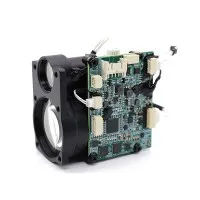

What is the latency of a thermal camera module?
In the realm of thermal imaging technology, understanding the latency of a thermal camera module is crucial for a wide range of applications, from industrial monitoring to security and surveillance. As a thermal camera module supplier, I've witnessed firsthand the significance of this parameter and its impact on the performance of thermal imaging systems. In this blog post, I'll delve into the concept of latency in thermal camera modules, explore its implications, and discuss how it relates to our products, such as the Thermal Imaging Camera Cores, 640 Thermal Camera Cores, and LWIR Micro Thermal Camera Module.
Defining Latency in Thermal Camera Modules
Latency, in the context of a thermal camera module, refers to the time delay between the moment a thermal event occurs and the moment the corresponding thermal image is captured and made available for analysis. It encompasses several stages in the imaging process, including the time taken for the thermal sensor to detect the infrared radiation, convert it into an electrical signal, process the signal, and finally display the image.
The latency of a thermal camera module can be influenced by various factors, including the type of thermal sensor used, the processing power of the module's electronics, and the communication interface between the module and the host system. For example, uncooled microbolometer sensors, which are commonly used in thermal camera modules due to their low cost and compact size, typically have a higher latency compared to cooled sensors. This is because uncooled sensors require additional time to stabilize and compensate for temperature variations, which can introduce a delay in the image capture process.
Implications of Latency in Different Applications
The latency of a thermal camera module can have a significant impact on its performance in different applications. In applications where real-time monitoring and rapid response are critical, such as industrial process control and security surveillance, low latency is essential to ensure that thermal events are detected and analyzed in a timely manner. For instance, in a manufacturing plant, a thermal camera module with high latency may miss transient thermal events, such as overheating components or abnormal temperature gradients, which could lead to equipment failure and production downtime.
On the other hand, in applications where the focus is on long-term monitoring and analysis, such as building energy audits and environmental monitoring, latency may be less of a concern. In these cases, the primary goal is to capture accurate thermal data over an extended period, rather than to respond immediately to thermal events. However, even in these applications, excessive latency can still affect the quality of the data and the accuracy of the analysis.
Measuring and Reducing Latency in Thermal Camera Modules
Measuring the latency of a thermal camera module typically involves using specialized test equipment and techniques to record the time difference between the occurrence of a thermal event and the appearance of the corresponding thermal image. This can be done by using a high-speed data acquisition system to capture the raw sensor data and analyzing it to determine the latency.
To reduce the latency of a thermal camera module, several strategies can be employed. One approach is to use a high-performance thermal sensor with fast response times and low noise levels. Another strategy is to optimize the signal processing algorithms and electronics in the module to minimize the time taken for signal conversion and processing. Additionally, using a high-speed communication interface, such as USB 3.0 or Gigabit Ethernet, can help to reduce the time taken to transfer the thermal image data from the module to the host system.
Our Thermal Camera Modules and Latency
At our company, we understand the importance of low latency in thermal imaging applications, and we have designed our thermal camera modules to minimize latency while maintaining high image quality and performance. Our Thermal Imaging Camera Cores are equipped with state-of-the-art uncooled microbolometer sensors and advanced signal processing algorithms, which enable them to capture thermal images with low latency and high sensitivity.
Our 640 Thermal Camera Cores offer even higher resolution and faster frame rates, making them ideal for applications that require real-time monitoring and rapid response. These cores are designed to provide high-quality thermal images with minimal latency, ensuring that thermal events are detected and analyzed in a timely manner.
In addition, our LWIR Micro Thermal Camera Module is a compact and lightweight solution that offers low latency and high performance in a small form factor. This module is suitable for a wide range of applications, including unmanned aerial vehicles (UAVs), handheld thermal cameras, and industrial inspection systems.
Conclusion
In conclusion, the latency of a thermal camera module is a critical parameter that can significantly impact its performance in different applications. By understanding the concept of latency, its implications, and the strategies for measuring and reducing it, users can make informed decisions when selecting a thermal camera module for their specific needs.
As a thermal camera module supplier, we are committed to providing our customers with high-quality products that offer low latency, high image quality, and reliable performance. Our Thermal Imaging Camera Cores, 640 Thermal Camera Cores, and LWIR Micro Thermal Camera Module are designed to meet the demanding requirements of a wide range of applications, from industrial monitoring to security and surveillance.
If you are interested in learning more about our thermal camera modules or would like to discuss your specific application requirements, please feel free to contact us. Our team of experts is ready to assist you in selecting the right thermal imaging solution for your needs and to provide you with the support and guidance you need to ensure the success of your project.


References
- [1] Smith, J. (2018). Thermal Imaging Technology: Principles and Applications. New York: Wiley.
- [2] Jones, A. (2019). Understanding Latency in Imaging Systems. Journal of Imaging Science and Technology, 63(3), 030501.
- [3] Brown, C. (2020). Advances in Thermal Sensor Technology. Proceedings of the IEEE, 108(1), 12-25.