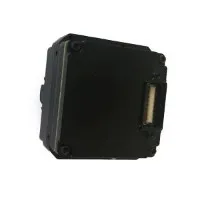

The field of view (FOV) of a thermal camera module is a crucial parameter that significantly impacts its performance and applicability across various industries. As a leading supplier of Thermal Camera Module, we understand the importance of this aspect and are committed to providing in - depth knowledge to our customers.

Understanding the Field of View
The field of view of a thermal camera module refers to the angular extent of the observable world that is captured by the camera's lens system at a given moment. It is typically measured in degrees, both horizontally and vertically. A wider field of view allows the camera to capture a larger area, while a narrower field of view provides a more detailed view of a smaller area.

Mathematically, the field of view is related to the focal length of the lens and the size of the detector array in the thermal camera module. The relationship can be approximated using the following formula:
[ \theta = 2\arctan\left(\frac{d}{2f}\right) ]
where (\theta) is the field of view, (d) is the size of the detector array (either horizontal or vertical dimension), and (f) is the focal length of the lens.
Types of Field of View
- Wide Field of View (WFOV):
WFOV thermal camera modules usually have a horizontal field of view greater than 60 degrees. These modules are ideal for applications where a large area needs to be monitored, such as perimeter security, wildlife monitoring, and large - scale industrial inspections. For example, in a wildlife reserve, a WFOV thermal camera can cover a wide area, allowing rangers to detect the movement of animals over a large expanse of land. Our Uncooled Thermal Camera Modules with wide fields of view are designed to provide reliable performance in such scenarios. - Medium Field of View (MFOV):
MFOV modules typically have a horizontal field of view between 30 and 60 degrees. They offer a balance between the coverage area and the level of detail. This type of field of view is commonly used in applications like building inspections, search and rescue operations, and some types of industrial monitoring. In a building inspection, an MFOV thermal camera can cover a reasonable portion of a wall or a room while still being able to detect small temperature differences that may indicate insulation problems. - Narrow Field of View (NFOV):
NFOV thermal camera modules have a horizontal field of view less than 30 degrees. They are designed for applications that require high - resolution imaging of a small area, such as scientific research, long - range surveillance, and precision industrial measurements. For instance, in long - range surveillance, an NFOV thermal camera can focus on a specific target at a great distance, providing detailed thermal information about that target.
Factors Affecting the Field of View
- Lens Design:
The design of the lens is the most significant factor affecting the field of view. Different lens geometries, such as fisheye lenses, can provide extremely wide fields of view, while telephoto lenses offer narrow fields of view. The quality of the lens also impacts the field of view, as a poorly designed lens may introduce distortion or reduced image quality at the edges of the field of view. - Detector Size:
The size of the detector array in the thermal camera module also plays a role in determining the field of view. A larger detector array, combined with a suitable lens, can result in a wider field of view. However, increasing the detector size may also increase the cost and power consumption of the module. - Optical Filters:
Some thermal camera modules use optical filters to enhance the performance of the camera in specific wavelength ranges. These filters can sometimes affect the field of view by altering the optical properties of the lens system.
Importance of Field of View in Different Applications
- Security and Surveillance:
In security and surveillance applications, the field of view determines the area that can be monitored. A wide - field - of - view thermal camera can cover a large perimeter, reducing the number of cameras required for a given area. This not only reduces the cost of installation but also simplifies the monitoring process. On the other hand, a narrow - field - of - view camera can be used for focused surveillance of specific areas or targets. - Industrial Inspections:
For industrial inspections, the appropriate field of view depends on the size of the object being inspected. A wide - field - of - view camera can quickly scan large industrial equipment, such as boilers or pipelines, to detect any potential hotspots or anomalies. A narrow - field - of - view camera may be used for more detailed inspections of small components, such as electrical connections. - Medical Applications:
In medical applications, thermal cameras are used for detecting abnormal temperature patterns in the human body. A medium - field - of - view camera is often sufficient to capture the relevant areas of the body, such as the face or a limb, while still providing enough detail to detect small temperature differences that may indicate a health issue.
Selecting the Right Field of View for Your Application
When choosing a thermal camera module, it is essential to consider the specific requirements of your application. Here are some steps to help you make the right decision:

- Define Your Application:
Clearly understand the purpose of using the thermal camera. Whether it is for security, industrial inspection, or medical diagnosis, this will help you determine the appropriate field of view. - Consider the Distance and Size of the Target:
If you need to monitor a large area at a relatively short distance, a wide - field - of - view camera may be suitable. If you are targeting a small object at a long distance, a narrow - field - of - view camera is a better choice. - Evaluate the Trade - offs:
Keep in mind that a wider field of view may come at the cost of reduced image detail, while a narrower field of view may limit the coverage area. You need to find the right balance based on your application requirements.
As a trusted supplier of Thermal Camera Cores and thermal camera modules, we offer a wide range of products with different fields of view to meet the diverse needs of our customers. Our team of experts is always ready to assist you in selecting the most suitable thermal camera module for your specific application. If you are interested in learning more about our products or have any questions regarding the field of view of thermal camera modules, please feel free to contact us for a detailed consultation and procurement discussion.
References
- Smith, J. (2018). Thermal Imaging Technology: Principles and Applications. Publisher XYZ.
- Johnson, A. (2020). Advances in Thermal Camera Design. Journal of Optics and Imaging, Vol. 15, Issue 2.