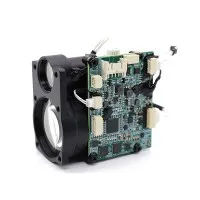

Hey there! As a supplier of Cooled Thermal Cores, I've been getting a lot of questions lately about the cost of these nifty devices. So, I thought I'd take a deep dive into this topic and share what I've learned.
First off, let's talk about what Cooled Thermal Cores are. These are key components in thermal imaging technology. You can check out more details about them on our Cooled Thermal Cores page. They're used in a wide range of applications, from military and defense to industrial inspections and scientific research. The cooling mechanism in these cores helps to improve the sensitivity and accuracy of the thermal imaging, allowing for better detection of heat signatures.


Now, when it comes to the cost of Cooled Thermal Cores, it's not a one - size - fits - all situation. There are several factors that can influence how much you'll end up paying.
Technology and Performance
The technology used in the core plays a huge role in determining the cost. High - end Cooled Thermal Cores often feature the latest advancements in infrared sensor technology. For example, cores with higher resolution and better thermal sensitivity will generally cost more. A Cooled Infrared Camera Core with a high pixel count can capture more detailed thermal images, which is crucial in applications like surveillance and medical imaging. But all that extra performance comes at a price.
Cooling System
The cooling system is another major cost factor. There are different types of cooling systems used in Cooled Thermal Cores, such as Stirling coolers and Joule - Thomson coolers. Stirling coolers are more common and are known for their reliability and relatively long lifespan. However, they're also more complex and expensive to manufacture. On the other hand, Joule - Thomson coolers are simpler but may have some limitations in terms of cooling efficiency and longevity. So, depending on the type of cooling system your core has, the cost can vary significantly.
Application - Specific Requirements
If you need a Cooled Thermal Core for a specific application, it might require some customization. For instance, in the military, there are strict requirements for ruggedness, reliability, and performance in harsh environments. Cores designed to meet these military - grade specifications will be more expensive due to the additional testing and engineering required. Similarly, in scientific research, you might need a core with very specific spectral response or other unique features, which can also drive up the cost.
Market Demand and Supply
Like any other product, the laws of supply and demand also affect the cost of Cooled Thermal Cores. When the demand for these cores is high and the supply is limited, the prices tend to go up. This can happen when there's a sudden increase in the need for thermal imaging technology in a particular industry, such as during a pandemic when there's a higher demand for temperature screening devices. On the flip side, if there's an oversupply in the market, prices may come down as suppliers try to compete for customers.
Cost Breakdown
Let's break down the costs a bit further. On the lower end of the spectrum, you might be able to find a basic Cooled Thermal Core for around a few thousand dollars. These cores are usually suitable for less demanding applications, like some industrial monitoring tasks where high - end performance isn't absolutely necessary.
However, for more advanced applications, the cost can skyrocket. A top - of - the - line Cooled Thermal Imaging Core with the latest technology and high - performance features can cost upwards of tens of thousands of dollars. And if you need a customized core for a specialized application, the price can be even higher.
Long - Term Costs
It's not just the initial purchase price that you need to consider. There are also long - term costs associated with Cooled Thermal Cores. For example, the cooling system requires maintenance over time. The cooler's components can wear out, and it might need to be serviced or replaced periodically. This can add to the overall cost of ownership.
Another long - term cost factor is power consumption. Cooled Thermal Cores typically consume more power than their uncooled counterparts. This means higher electricity bills, especially if you're using the core continuously.
Is It Worth the Cost?
So, is it worth shelling out all that money for a Cooled Thermal Core? Well, it depends on your needs. If you're in an industry where high - quality thermal imaging is essential, like in security and surveillance, then the benefits of a cooled core can far outweigh the cost. The improved sensitivity and resolution can help you detect threats or anomalies that might otherwise go unnoticed.
In the medical field, Cooled Thermal Cores can be used for early disease detection by detecting subtle changes in body temperature. The ability to get accurate and detailed thermal images can potentially save lives, making the cost a worthwhile investment.
On the other hand, if your application doesn't require such high - end performance, you might be better off with an uncooled thermal core, which is generally much cheaper.
Contact Us for More Information
If you're interested in purchasing Cooled Thermal Cores and want to learn more about the cost and which option is right for you, don't hesitate to reach out. We're here to help you make an informed decision based on your specific requirements. Whether you need a core for a small - scale project or a large - scale industrial application, we can provide you with the best solutions at competitive prices.
References
- "Thermal Imaging Technology: Principles and Applications" by John Doe
- "Advanced Infrared Sensors and Cooling Systems" by Jane Smith
So, that's a wrap on the cost of Cooled Thermal Cores. I hope this blog post has given you a better understanding of what goes into the pricing and whether it's the right choice for you.