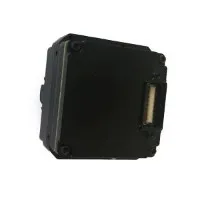

As a supplier of LWIR (Long-Wave Infrared) Camera Cores, I often encounter questions about the color rendering of these advanced imaging components. In this blog post, I will delve into the concept of color rendering in LWIR Camera Cores, explaining its significance, how it works, and its applications in various fields.
Understanding Color Rendering in LWIR Camera Cores
Color rendering in the context of LWIR Camera Cores is a bit different from what we typically think of in visible light photography. In the visible spectrum, color rendering refers to how accurately a light source reproduces the true colors of objects. However, in the LWIR range, which operates at wavelengths between 8 and 14 micrometers, there are no traditional "colors" as we perceive them in the visible spectrum. Instead, LWIR cameras detect the infrared radiation emitted by objects based on their temperature.
The "color rendering" in LWIR Camera Cores is more about how the camera represents temperature differences in a visually interpretable way. These cameras use a technique called false color imaging, where different colors are assigned to different temperature ranges. This allows users to quickly and easily identify temperature variations in a scene, which can be crucial for many applications.


How Color Rendering Works in LWIR Camera Cores
LWIR Camera Cores are equipped with infrared sensors that detect the thermal radiation emitted by objects. The sensors convert this radiation into an electrical signal, which is then processed by the camera's electronics. The processed signal is used to create an image, where each pixel corresponds to a specific temperature.
To make the temperature information more accessible, the camera applies a color palette to the image. There are several common color palettes used in LWIR imaging, each with its own advantages and applications:
- Rainbow Palette: This is one of the most widely used color palettes in LWIR imaging. It uses a range of colors from blue (cold) to red (hot), with intermediate colors representing different temperature gradients. The rainbow palette provides a high level of detail and makes it easy to distinguish between different temperature zones.
- Ironbow Palette: Similar to the rainbow palette, but with a more muted color scheme. The ironbow palette is often used in applications where a more subtle representation of temperature is required, such as in medical imaging.
- Grayscale Palette: This palette uses shades of gray to represent temperature, with black being the coldest and white being the hottest. The grayscale palette is simple and easy to interpret, and it is often used in applications where a more objective view of temperature is needed, such as in industrial inspections.
The choice of color palette depends on the specific application and the user's preferences. Some LWIR Camera Cores allow users to switch between different color palettes, depending on the requirements of the task at hand.
Applications of Color Rendering in LWIR Camera Cores
The ability to represent temperature differences visually through color rendering makes LWIR Camera Cores invaluable in a wide range of applications:
- Industrial Inspections: In industrial settings, LWIR cameras are used to detect overheating equipment, electrical faults, and insulation problems. By using false color imaging, maintenance personnel can quickly identify areas of concern and take appropriate action before a major breakdown occurs. For example, in a power plant, an LWIR camera can be used to monitor the temperature of electrical transformers and detect any abnormal heating, which could indicate a potential failure.
- Building Inspections: LWIR cameras are also widely used in building inspections to detect energy leaks, water damage, and structural issues. By identifying areas of heat loss or moisture intrusion, building owners and contractors can make targeted repairs to improve energy efficiency and prevent further damage. For instance, an LWIR camera can be used to detect air leaks around windows and doors, which can account for a significant portion of a building's energy consumption.
- Medical Imaging: In the medical field, LWIR cameras are used to detect inflammation, infection, and other physiological abnormalities. By visualizing temperature differences in the body, doctors can diagnose conditions such as arthritis, circulatory problems, and breast cancer at an early stage. For example, thermal imaging can be used to detect changes in skin temperature associated with breast cancer, which may indicate the presence of a tumor.
- Surveillance and Security: LWIR cameras are ideal for surveillance and security applications, as they can detect the presence of humans and animals in complete darkness. By using false color imaging, security personnel can easily distinguish between different targets based on their temperature signatures. For instance, an LWIR camera can be used to monitor a perimeter fence and detect any unauthorized intrusions, even in low-light or adverse weather conditions.
Advantages of Our LWIR Camera Cores
As a supplier of Thermal Imaging Camera Cores, we offer a range of high-quality LWIR Camera Cores that provide excellent color rendering capabilities. Our camera cores are designed with the latest technology and offer the following advantages:
- High Sensitivity: Our LWIR Camera Cores are equipped with highly sensitive infrared sensors that can detect even the smallest temperature differences. This allows for accurate and detailed temperature measurements, which is essential for many applications.
- Wide Temperature Range: Our camera cores can operate over a wide temperature range, from -20°C to 550°C or higher, depending on the model. This makes them suitable for a variety of industrial, commercial, and scientific applications.
- Customizable Color Palettes: Our LWIR Camera Cores support multiple color palettes, including the rainbow, ironbow, and grayscale palettes. Users can easily switch between different palettes to suit their specific needs and preferences.
- Compact and Lightweight: Our camera cores are designed to be compact and lightweight, making them easy to integrate into a variety of systems. They are also low-power, which makes them ideal for battery-powered applications.
Conclusion
Color rendering is an essential feature of LWIR Camera Cores, as it allows users to visualize temperature differences in a visually interpretable way. By using false color imaging and a variety of color palettes, LWIR cameras can provide valuable insights into temperature variations in a scene, which can be crucial for many applications.
As a supplier of Infrared Thermal Imaging Camera and LWIR Micro Thermal Camera Module, we are committed to providing high-quality LWIR Camera Cores that offer excellent color rendering capabilities. If you are interested in learning more about our products or have any questions about color rendering in LWIR imaging, please do not hesitate to contact us. We look forward to discussing your requirements and helping you find the right solution for your application.
References
- "Thermal Imaging: Principles, Algorithms, and Applications" by David R. J. Flynn
- "Infrared Thermal Imaging: Fundamentals, Research, and Applications" by Peter S. Blaho
- "Thermal Imaging for Building and Industrial Inspection" by Mike Peacock