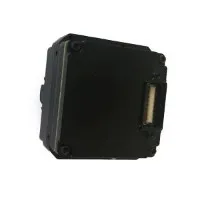

Yo, folks! As a supplier of LWIR (Long-Wave Infrared) Camera Cores, I've been getting a ton of questions about how these bad boys work in dusty environments. So, I thought I'd break it down for you in this blog post.


Let's start with the basics. LWIR camera cores are pretty awesome devices. They operate in the long-wave infrared spectrum, which is around 8 - 14 micrometers. Unlike visible light cameras, they detect the heat radiated by objects rather than the light reflected off them. This gives them a major edge, especially in conditions where visibility is poor, like in dusty environments.
How LWIR Camera Cores Work
Before we dive into dusty conditions, let's quickly go over how LWIR camera cores work in general. These cores are made up of an array of tiny sensors, each of which can detect infrared radiation. When an object emits infrared radiation, it hits these sensors, and they convert the radiation into an electrical signal.
This electrical signal is then processed by a built - in circuit. The circuit analyzes the signal and creates an image based on the heat distribution of the objects in the field of view. The warmer parts of an object show up as brighter areas in the image, while the cooler parts are darker.
Now, this is all well and good in normal conditions, but what happens when there's a whole bunch of dust in the air?
Challenges in Dusty Environments
Dust can be a real pain in the you - know - what for any imaging device. For LWIR camera cores, there are a few main challenges.
First off, dust particles can scatter and absorb the infrared radiation. When radiation is scattered, it means that the direction of the infrared rays is changed. This can make it difficult for the sensors in the camera core to accurately detect the radiation coming from the objects of interest. And when the radiation is absorbed by the dust, well, the sensors don't get the full signal, which can lead to a loss of information in the image.
Another issue is that dust can accumulate on the lens of the camera. A dirty lens can distort the image and reduce its clarity. Just like how a smudged pair of glasses makes it hard to see clearly, a dusty lens on an LWIR camera core can mess up the image quality.
How LWIR Camera Cores Overcome These Challenges
But don't worry, our LWIR camera cores are built tough. We've designed them to handle these dusty situations.
One of the key features is the advanced signal processing algorithms. These algorithms are like little digital wizards that can filter out the noise caused by the scattered and absorbed radiation. They analyze the incoming signals and try to separate the useful information from the interference caused by the dust. This helps in creating a clearer and more accurate image.
We also use special anti - dust coatings on the lenses of our camera cores. These coatings are designed to repel dust particles, so they don't stick to the lens as easily. Even if a little dust does land on the lens, it's easier to clean off compared to a regular lens.
In addition, our camera cores have a high sensitivity. This means they can detect even small amounts of infrared radiation. So, even if some of the radiation is lost due to dust scattering and absorption, the camera can still pick up enough signal to create a decent image.
Real - World Applications in Dusty Environments
There are plenty of real - world scenarios where our LWIR camera cores shine in dusty conditions.
In mining operations, for example, there's a ton of dust flying around all the time. Our camera cores can be used for safety monitoring. They can detect the presence of people and equipment in the mine, even when visibility is extremely poor due to dust. This helps prevent accidents and keep the workers safe.
Construction sites are another place where dust is a big problem. Our camera cores can be installed on construction vehicles to help the drivers see better in dusty areas. This improves the overall safety and efficiency of the construction process.
Our Product Range
We offer a wide range of LWIR camera cores that are suitable for various applications in dusty environments. Check out our Thermal Camera Cores page to see the full selection.
If you need a high - resolution option, our 640 Thermal Camera Cores are a great choice. They provide detailed and clear images, even in challenging conditions.
And for those looking for an energy - efficient and cost - effective solution, our Uncooled Thermal Imaging Core is a top pick. It doesn't require a cooling system, which makes it more reliable and easier to maintain in dusty environments.
Contact Us for Purchasing
If you're in the market for LWIR camera cores for your dusty - environment applications, we'd love to hear from you. Whether you're in the mining, construction, or any other industry that deals with dust, our camera cores can provide the imaging solution you need.
Just reach out to us, and we can have a chat about your specific requirements. We'll work with you to find the best camera core for your situation and provide you with all the support you need.
References
- "Infrared Thermal Imaging: Fundamentals, Research and Applications" by Madhusanka Liyanage
- "Thermal Imaging Systems Design" by Roger A. Fry
- Industry reports on the use of LWIR camera cores in harsh environments.