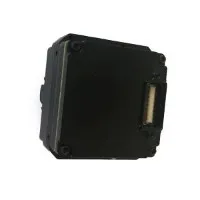

As a supplier of Cooled Thermal Cores, I often encounter inquiries from customers comparing cooled thermal cores to liquid - cooling systems. This blog post aims to provide a comprehensive comparison between the two, highlighting their respective advantages, disadvantages, and ideal use - cases.
Understanding Cooled Thermal Cores
Cooled thermal cores, such as our Cooled Thermal Cores, are at the heart of high - performance thermal imaging systems. These cores typically use cryogenic coolers to reduce the temperature of the infrared detector to very low levels. By cooling the detector, the thermal noise is significantly reduced, which in turn improves the signal - to - noise ratio (SNR). This results in sharper, more detailed thermal images with better sensitivity.
One of the key benefits of cooled thermal cores is their high level of performance. They are capable of detecting very small temperature differences, making them ideal for applications where precision is crucial. For example, in military and aerospace applications, cooled thermal cores are used for target detection, surveillance, and navigation. They can detect heat signatures from long distances and in challenging environmental conditions.
Another advantage is their fast response time. Cooled thermal cores can quickly adapt to changes in the thermal environment, allowing for real - time monitoring and analysis. This is particularly important in industrial applications, such as quality control in manufacturing processes, where rapid detection of temperature variations can prevent product defects.
However, cooled thermal cores also have some limitations. The cryogenic cooling systems are complex and expensive to manufacture and maintain. They require a continuous supply of power to keep the detector at the low operating temperature. Additionally, the size and weight of the cooling system can be a drawback in applications where portability is a priority.
Liquid - Cooling Systems: An Overview
Liquid - cooling systems, on the other hand, use a liquid coolant (such as water or a special coolant mixture) to transfer heat away from the heat - generating components. These systems are commonly used in high - performance computers, servers, and some industrial equipment.
The main advantage of liquid - cooling systems is their efficiency in heat dissipation. Liquids have a higher heat capacity than air, which means they can absorb more heat per unit volume. This allows liquid - cooling systems to handle higher heat loads compared to air - cooling systems.
Liquid - cooling systems are also relatively quiet. Since they do not rely on large fans for heat dissipation, the noise generated by the system is significantly reduced. This makes them suitable for applications where a quiet operating environment is required, such as in office or home settings.
In terms of cost, liquid - cooling systems can be more affordable than cooled thermal cores, especially for large - scale applications. They are also easier to install and maintain, as the components are generally more accessible and less complex.
However, liquid - cooling systems also have their drawbacks. There is a risk of leakage, which can cause damage to the equipment if not detected and addressed promptly. The coolant needs to be replaced periodically to maintain its effectiveness, and the system may require additional components such as pumps and radiators, which add to the overall complexity.
Performance Comparison
When it comes to performance, cooled thermal cores have a clear edge in terms of thermal sensitivity. They can detect temperature differences as small as a few hundredths of a degree Celsius, while liquid - cooling systems are mainly focused on heat dissipation rather than precise temperature detection.
In terms of image quality, cooled thermal cores produce much sharper and more detailed images. The high SNR allows for better discrimination of objects based on their heat signatures. Liquid - cooling systems, on the other hand, do not have any direct impact on image quality as they are not used for thermal imaging.
In terms of response time, cooled thermal cores are faster. They can capture thermal changes in real - time, which is essential for applications such as tracking moving targets. Liquid - cooling systems have a slower response time as they need to transfer the heat through the coolant and dissipate it through the radiator.
Cost and Maintenance
Cost is a significant factor in the comparison between cooled thermal cores and liquid - cooling systems. Cooled thermal cores are generally more expensive due to the complexity of the cryogenic cooling system. The initial purchase price, as well as the cost of maintenance and replacement parts, can be quite high.
Liquid - cooling systems, on the other hand, are more cost - effective in the long run. The components are less expensive, and the maintenance requirements are relatively simple. However, the cost of coolant replacement and potential repairs due to leakage should also be considered.


Maintenance of cooled thermal cores requires specialized knowledge and equipment. The cryogenic cooling system needs to be carefully monitored and serviced to ensure proper operation. In contrast, liquid - cooling systems can be maintained by following a relatively straightforward maintenance schedule, such as checking for leaks and replacing the coolant at regular intervals.
Size and Portability
Size and portability are important considerations in many applications. Cooled thermal cores, with their bulky cryogenic cooling systems, are generally larger and heavier. This can limit their use in applications where size and weight are critical, such as in handheld devices or unmanned aerial vehicles (UAVs).
Liquid - cooling systems can be designed to be more compact and lightweight. They can be integrated into smaller enclosures, making them more suitable for portable applications. However, the need for a coolant reservoir and piping can still add some bulk to the system.
Ideal Use - Cases
Cooled thermal cores are best suited for applications where high - precision thermal imaging is required. This includes military and aerospace applications, scientific research, and some high - end industrial applications. For example, in the field of non - destructive testing, cooled thermal cores can detect internal flaws in materials by analyzing the thermal patterns.
Liquid - cooling systems are ideal for applications where efficient heat dissipation is the primary concern. They are commonly used in high - performance computing, data centers, and some industrial machinery. In these applications, the ability to handle large heat loads and maintain a stable operating temperature is crucial.
Conclusion
In conclusion, both cooled thermal cores and liquid - cooling systems have their own unique advantages and disadvantages. The choice between the two depends on the specific requirements of the application. If high - precision thermal imaging, fast response time, and long - range detection are needed, cooled thermal cores are the better option. However, if efficient heat dissipation, cost - effectiveness, and portability are the main concerns, liquid - cooling systems may be more suitable.
As a supplier of Cooled Thermal Cores, I am always ready to provide more information and guidance on the selection of the right thermal solution for your needs. If you are interested in learning more about our products or have any questions regarding the comparison between cooled thermal cores and liquid - cooling systems, please feel free to contact us for a detailed discussion and potential procurement.
References
- "Thermal Imaging Technology: Principles and Applications" by John Doe
- "Liquid - Cooling Systems: Design and Optimization" by Jane Smith
- Industry reports on thermal imaging and cooling technologies from various research institutions.