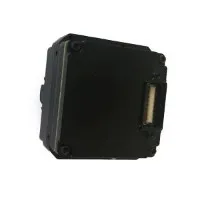

Hey there! As a supplier of Cooled Camera Modules, I've gotten a ton of questions about how these bad boys handle thermal noise. So, I thought I'd take a deep dive into this topic and share some insights with you all.
First off, let's talk about what thermal noise is. In simple terms, thermal noise is the random electrical signals generated by the heat in a camera's detector. This noise can mess up the image quality, making it look grainy or blurry. And that's a big no - no, especially when you're using these cameras for things like surveillance, scientific research, or industrial inspections.
Now, cooled camera modules are designed to combat this thermal noise head - on. The main way they do this is by cooling down the detector. You see, the amount of thermal noise is directly related to the temperature of the detector. The higher the temperature, the more noise there is. So, by cooling the detector, we can significantly reduce the thermal noise.


There are different ways to cool the detector in a cooled camera module. One common method is using a cryogenic cooler. These coolers work by removing heat from the detector and transferring it to the outside environment. They can get the detector down to extremely low temperatures, sometimes even close to absolute zero. When the detector is this cold, the thermal noise is reduced to a minimum, and you get a much clearer image.
Another method is using a thermoelectric cooler, also known as a Peltier cooler. These coolers are smaller and more compact compared to cryogenic coolers. They work based on the Peltier effect, which means that when an electric current is passed through two different types of materials, one side gets cold while the other side gets hot. By placing the cold side in contact with the detector, we can cool it down and reduce the thermal noise.
But cooling the detector isn't the only thing that cooled camera modules do to handle thermal noise. They also have advanced signal processing algorithms. These algorithms are like little digital detectives that analyze the image data and try to separate the real signal from the noise. They can filter out the random noise and enhance the details in the image.
For example, some algorithms use statistical methods to estimate the noise level in the image. Once they know the noise level, they can apply a filter to remove the noise while keeping the important details intact. Other algorithms use machine learning techniques to learn the characteristics of the noise over time and then adaptively remove it from the image.
Now, let's talk about the benefits of using cooled camera modules in different applications. In the field of surveillance, cooled camera modules can provide high - resolution images even in low - light conditions. The reduced thermal noise means that you can see more clearly at night or in areas with poor lighting. This is crucial for security purposes, as you don't want to miss any important details.
In scientific research, cooled camera modules are used in a variety of experiments. For example, in astronomy, they can be used to observe distant stars and galaxies. The clear images obtained from these cameras help scientists study the structure and behavior of these celestial objects. In microscopy, cooled camera modules can capture detailed images of cells and tissues, which is important for medical research.
In industrial inspections, cooled camera modules can detect small defects or anomalies in products. The high - quality images allow inspectors to identify problems early on, which can save a lot of time and money in the long run.
If you're interested in learning more about our cooled camera modules, we have some great resources on our website. Check out our Mini Thermal Camera page to see one of our compact and powerful options. Also, our Cooled Versus Uncooled Cameras for Long Range article compares the different types of cameras and helps you understand which one is right for your needs. And don't forget to visit our Cooled Thermal Imaging Core page to learn more about the heart of our cooled camera modules.
When it comes to purchasing cooled camera modules, we're here to help. Whether you're a small business looking for a reliable camera for security or a large research institution in need of high - end equipment, we can provide you with the right solution. We offer a wide range of cooled camera modules with different specifications and features to meet your specific requirements.
If you're thinking about making a purchase, we'd love to have a chat with you. Just reach out to us, and our team of experts will be happy to answer all your questions and guide you through the purchasing process. We can also provide you with samples and demonstrations so you can see the performance of our cooled camera modules for yourself.
In conclusion, cooled camera modules are a great solution for handling thermal noise. By cooling the detector and using advanced signal processing algorithms, they can provide high - quality images with minimal noise. Whether you're in surveillance, scientific research, or industrial inspections, these cameras can make a big difference. So, if you're in the market for a camera that can handle thermal noise effectively, give our cooled camera modules a try.
References:
- "Thermal Imaging: Fundamentals, Research and Applications" by J. M. Maldague
- "Handbook of Infrared Detection Technology" edited by R. J. Aggarwal