
Can LWIR Camera Cores be used for research purposes?
In the realm of scientific research, the demand for advanced imaging technologies has been steadily increasing. Long-Wave Infrared (LWIR) camera cores have emerged as a powerful tool with the potential to revolutionize various research fields. As a leading supplier of LWIR camera cores, I am excited to explore the question: Can LWIR camera cores be used for research purposes? The answer is a resounding yes, and in this blog, I will delve into the reasons why LWIR camera cores are invaluable for research and showcase their diverse applications.
Understanding LWIR Camera Cores
Before we explore their research applications, let's briefly understand what LWIR camera cores are. LWIR cameras operate in the long-wave infrared spectrum, typically between 8 and 14 micrometers. This spectral range allows them to detect the thermal radiation emitted by objects, regardless of ambient light conditions. Unlike visible light cameras, which rely on reflected light, LWIR cameras can "see" in complete darkness, through smoke, fog, and some types of camouflage.
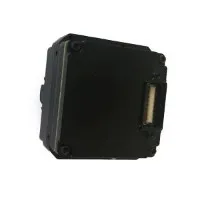
LWIR camera cores are the heart of these cameras, containing the infrared detector and associated electronics. They are available in various formats, including uncooled and cooled designs. Uncooled LWIR camera cores are more common and cost-effective, as they do not require a cryogenic cooling system. They are suitable for a wide range of applications, from industrial inspections to research. Cooled LWIR camera cores, on the other hand, offer higher sensitivity and resolution but are more expensive and require more maintenance.
Advantages of LWIR Camera Cores for Research
There are several key advantages that make LWIR camera cores well-suited for research purposes:


-
Non-contact Temperature Measurement: One of the most significant advantages of LWIR camera cores is their ability to measure temperature without physical contact. This is particularly useful in research where direct contact with the object being studied may not be possible or may alter the object's behavior. For example, in materials science, LWIR cameras can be used to study the thermal properties of materials during heating or cooling processes without disturbing the sample.
-
Real-time Imaging: LWIR camera cores can provide real-time thermal images, allowing researchers to observe dynamic processes as they occur. This is crucial in fields such as biology, where researchers can study the heat generation and dissipation in living organisms, or in fluid dynamics, where thermal imaging can reveal the flow patterns and heat transfer in fluids.
-
High Sensitivity and Resolution: Modern LWIR camera cores offer high sensitivity and resolution, enabling researchers to detect small temperature differences and capture fine details. This is essential in applications such as astronomy, where LWIR cameras can be used to study the thermal emissions of celestial objects, or in microelectronics, where they can detect hotspots in integrated circuits.
-
Versatility: LWIR camera cores can be used in a wide range of research environments, from laboratory settings to field studies. They can be mounted on drones, robots, or other platforms, allowing researchers to access difficult-to-reach areas. Additionally, LWIR cameras can be combined with other imaging technologies, such as visible light cameras or hyperspectral imagers, to provide a more comprehensive view of the research subject.
Applications of LWIR Camera Cores in Research
The versatility of LWIR camera cores makes them applicable in numerous research fields. Here are some examples:
-
Biological and Medical Research: In biology, LWIR cameras can be used to study the thermoregulation of animals, the metabolic activity of cells, and the spread of diseases. For example, researchers can use thermal imaging to detect early signs of inflammation in patients, or to monitor the body temperature of animals in their natural habitats. In medical research, LWIR cameras can be used to study the blood flow in tissues, the healing process of wounds, and the effects of drugs on the body's temperature regulation.
-
Materials Science and Engineering: LWIR camera cores are widely used in materials science to study the thermal properties of materials, such as thermal conductivity, specific heat, and thermal expansion. They can also be used to detect defects and anomalies in materials, such as cracks, voids, and delaminations. For example, in the aerospace industry, LWIR cameras can be used to inspect composite materials for damage, while in the automotive industry, they can be used to study the heat transfer in engines and exhaust systems.
-
Environmental Science: In environmental science, LWIR cameras can be used to study the heat exchange between the Earth's surface and the atmosphere, the thermal properties of soils and vegetation, and the impact of climate change on the environment. For example, researchers can use thermal imaging to monitor the temperature of glaciers and ice sheets, or to detect heat sources in urban areas, such as power plants and industrial facilities.
-
Astronomy and Astrophysics: LWIR cameras play a crucial role in astronomy and astrophysics, allowing researchers to study the thermal emissions of celestial objects, such as stars, planets, and galaxies. They can be used to detect newly formed stars, study the composition of interstellar dust, and search for exoplanets. For example, the James Webb Space Telescope, which is equipped with a LWIR instrument, is expected to revolutionize our understanding of the early universe.
-
Defense and Security Research: In defense and security research, LWIR camera cores are used for surveillance, target detection, and identification. They can be used to detect hidden objects, such as weapons and explosives, and to monitor the movement of people and vehicles in low-light conditions. For example, military forces can use LWIR cameras to detect enemy troops and vehicles, while border control agencies can use them to detect illegal border crossings.
Our LWIR Camera Cores for Research
As a supplier of LWIR camera cores, we offer a range of products that are specifically designed for research purposes. Our Uncooled Thermal Camera Modules are cost-effective and easy to integrate into research systems, while our Thermal Imaging Module provides high-performance thermal imaging for demanding applications. We also offer Infrared Thermal Camera solutions that are optimized for specific research fields, such as biology, materials science, and environmental science.
Our LWIR camera cores are known for their high sensitivity, resolution, and reliability. They are equipped with advanced features, such as digital signal processing, image enhancement, and temperature calibration, to provide accurate and detailed thermal images. We also offer technical support and customization services to ensure that our products meet the specific needs of our research customers.
Conclusion
In conclusion, LWIR camera cores are a powerful tool for research purposes. Their ability to provide non-contact temperature measurement, real-time imaging, high sensitivity and resolution, and versatility make them suitable for a wide range of research fields, from biology and medicine to materials science and astronomy. As a supplier of LWIR camera cores, we are committed to providing high-quality products and services to support the research community.
If you are a researcher interested in using LWIR camera cores for your research, we invite you to contact us to discuss your specific needs. Our team of experts will be happy to provide you with more information about our products and help you choose the right solution for your research project.
References
- Smith, J. (2019). Long-Wave Infrared Imaging: Principles and Applications. Springer.
- Jones, A. (2020). Thermal Imaging in Biological and Medical Research. Elsevier.
- Brown, C. (2021). Materials Science and Engineering: Thermal Imaging Techniques. Wiley.