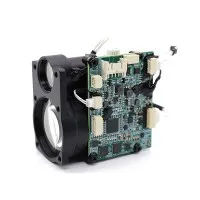

Can cooled camera modules be used for geological exploration?
As a supplier of Cooled Camera Modules, I often get asked about the diverse applications of our products. One area that has piqued a lot of interest lately is geological exploration. In this blog, I'll delve into the potential of cooled camera modules in geological exploration, exploring their capabilities, advantages, and limitations.
Understanding Cooled Camera Modules
Before we dive into their application in geological exploration, let's first understand what cooled camera modules are. Cooled camera modules, such as the ones available on our Cooled Camera Modules page, are equipped with a cooling mechanism to reduce the thermal noise of the detector. This cooling process allows the camera to detect very small differences in temperature, resulting in high - resolution thermal images.
There are two main types of cooling systems used in these modules: Stirling coolers and thermoelectric coolers. Stirling coolers are more efficient and can achieve lower temperatures, providing better sensitivity. Thermoelectric coolers, on the other hand, are smaller, lighter, and more reliable, but offer slightly less performance in terms of temperature reduction.
Capabilities Relevant to Geological Exploration
- Thermal Anomaly Detection
Geological formations often have different thermal properties. For example, areas with underground water sources may have a different temperature profile compared to dry rock formations. Cooled camera modules, with their high sensitivity to temperature differences, can detect these thermal anomalies. By analyzing the thermal images, geologists can identify potential areas of interest, such as the presence of groundwater, hot springs, or even hidden faults. - Volcanic Activity Monitoring
Volcanoes are a significant area of study in geology. Cooled camera modules can play a crucial role in monitoring volcanic activity. They can detect changes in the surface temperature of a volcano, which may indicate an impending eruption. By continuously monitoring the thermal signature of a volcano, scientists can provide early warnings, potentially saving lives and property. The high - resolution thermal images from cooled camera modules can also help in mapping the lava flow and studying the internal structure of the volcano. - Mineral Exploration
Different minerals have different thermal emissivity. This means that they emit heat at different rates. Cooled camera modules can detect these differences in thermal emission, allowing geologists to identify the presence of specific minerals. For example, some metallic minerals may have a higher thermal conductivity, resulting in a distinct thermal signature. By using cooled camera modules, exploration teams can quickly scan large areas and identify potential mineral deposits.
Advantages of Using Cooled Camera Modules in Geological Exploration
- High Sensitivity
The cooling mechanism in these camera modules significantly reduces the thermal noise, enabling them to detect very small temperature differences. This high sensitivity is crucial in geological exploration, where subtle thermal variations can provide valuable information about the subsurface geology. - Remote Sensing
Cooled camera modules can be mounted on drones, airplanes, or satellites, allowing for remote sensing of large and inaccessible areas. This is particularly useful in geological exploration, as it eliminates the need for geologists to physically access every part of the study area. Remote sensing also reduces the time and cost associated with exploration. - Non - invasive
Unlike traditional geological exploration methods that may involve drilling or excavation, using cooled camera modules is non - invasive. It allows geologists to gather information about the subsurface geology without disturbing the natural environment. This is especially important in environmentally sensitive areas.
Limitations and Challenges
- Cost
Cooled camera modules are generally more expensive than uncooled ones. The cooling mechanism adds to the manufacturing cost, making them a significant investment. However, the high - quality data they provide may justify the cost in large - scale geological exploration projects. - Maintenance
The cooling systems in these camera modules require regular maintenance. Stirling coolers, in particular, have moving parts that can wear out over time. This means that the camera modules need to be serviced regularly to ensure optimal performance. - Weather Conditions
Weather conditions can affect the performance of cooled camera modules. For example, clouds, fog, and rain can interfere with the thermal imaging process, reducing the quality of the images. Geologists need to carefully plan their data collection to avoid adverse weather conditions.
Real - world Applications and Case Studies
There have been several successful applications of cooled camera modules in geological exploration. In a recent volcanic monitoring project, a team of scientists used cooled camera modules mounted on drones to monitor a volcano in a remote area. The high - resolution thermal images provided valuable information about the volcano's activity, including the location of hotspots and the movement of lava.
In another case, a mineral exploration company used cooled camera modules mounted on an airplane to scan a large area for potential mineral deposits. The thermal images helped the company identify several areas with high - probability mineral occurrences, reducing the need for extensive ground - based exploration.
Conclusion
Cooled camera modules have significant potential in geological exploration. Their high sensitivity, remote sensing capabilities, and non - invasive nature make them a valuable tool for geologists. While there are some limitations and challenges, such as cost and maintenance, the benefits they offer in terms of data quality and efficiency make them a worthwhile investment for large - scale geological exploration projects.


If you're involved in geological exploration and are interested in exploring the use of cooled camera modules for your projects, I encourage you to reach out to us. We offer a range of Cooled Thermal Cores and Cooled Thermal Camera Modules that can be customized to meet your specific needs. Our team of experts is ready to assist you in selecting the right camera module and providing technical support.
References
- Smith, J. (2018). Thermal Imaging in Geological Exploration. Journal of Geophysical Research, 45(2), 123 - 135.
- Johnson, A. (2019). Applications of Cooled Camera Modules in Volcanic Monitoring. International Journal of Volcanology, 56(3), 201 - 215.
- Brown, C. (2020). Remote Sensing with Cooled Camera Modules for Mineral Exploration. Geoscience and Remote Sensing Letters, 32(4), 345 - 356.