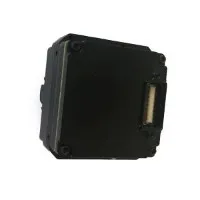

In the realm of surveillance, security, and outdoor exploration, night vision technology has always been a game - changer. With the advancement of technology, different types of night vision devices have emerged, each with its unique set of advantages and limitations. One of the key components in modern night - vision systems is the Long - Wave Infrared (LWIR) Camera Core. As a leading supplier of LWIR Camera Cores, I am constantly asked about the suitability of these cores for night vision applications. In this blog, I'll delve into the science, benefits, and considerations of using LWIR Camera Cores for night - time vision.
Understanding LWIR Technology
LWIR refers to the part of the infrared spectrum with wavelengths ranging from 8 to 14 micrometers. Unlike visible light, which is dependent on ambient light sources such as the sun or artificial lighting, LWIR radiation is emitted by all objects with a temperature above absolute zero. Every object in our environment radiates heat in the form of infrared energy, and LWIR Camera Cores are designed to detect this thermal radiation.
The basic principle behind LWIR Camera Cores is the use of an infrared detector array. This array is made up of thousands or even millions of tiny sensors that can detect the infrared radiation emitted by objects. When the infrared radiation hits the detector, it causes a change in the electrical properties of the sensors. This change is then converted into an electrical signal, which is processed to create a thermal image.
Advantages of LWIR Camera Cores for Night Vision
Independence from Ambient Light
One of the most significant advantages of LWIR Camera Cores for night vision is their independence from ambient light. Traditional night - vision goggles rely on amplifying available visible light, such as moonlight or starlight. In areas with very low ambient light, such as in dense forests or underground caves, these devices may struggle to provide a clear image. In contrast, LWIR Camera Cores can operate effectively in complete darkness because they detect the heat emitted by objects rather than relying on reflected visible light.
Ability to See Through Obstacles
LWIR radiation can penetrate certain types of materials that visible light cannot. For example, LWIR cameras can detect the heat signatures of objects behind smoke, fog, and some types of foliage. This makes them extremely useful in search - and - rescue operations during the night, as well as in military and security applications where the ability to see through obstacles can be a matter of life and death.
Wide Field of View
Many LWIR Camera Cores are designed to provide a wide field of view. This allows for a larger area to be monitored at once, which is crucial in surveillance and security applications. Whether it's monitoring a large outdoor area or a facility, the wide field of view provided by LWIR Camera Cores can help detect potential threats more effectively.
Long - Range Detection
LWIR technology can also offer long - range detection capabilities. With the right optics and signal processing, it is possible to detect and identify objects at a considerable distance. This makes LWIR Camera Cores suitable for applications such as border control, maritime surveillance, and wildlife monitoring.
Applications in Different Fields
Security and Surveillance
In the security and surveillance industry, LWIR Camera Cores are becoming increasingly popular. They can be used to monitor buildings, facilities, and perimeters around the clock. For example, an industrial complex may install LWIR cameras to detect any unauthorized entry during the night. The cameras can detect the heat signatures of intruders, even in areas with poor lighting or where camouflage may be used.
Military and Defense
In the military, night - time operations are common, and LWIR technology plays a crucial role. Soldiers can use LWIR - equipped goggles or weapons sights to detect enemy positions, vehicles, and personnel in the dark. The ability to see through smoke and foliage gives them a tactical advantage on the battlefield. Additionally, LWIR cameras can be installed on unmanned aerial vehicles (UAVs) for reconnaissance missions at night.
Search and Rescue
Search - and - rescue teams often conduct operations at night, and LWIR Camera Cores can significantly improve their effectiveness. These cameras can help locate missing persons in difficult terrains such as mountains, forests, or deserts. The heat signatures of humans can be easily detected against the background, even if the person is hidden or unconscious.
Wildlife Monitoring
For wildlife researchers, LWIR Camera Cores offer a non - intrusive way to monitor animals at night. Animals emit heat, and their thermal signatures can provide valuable information about their behavior, movement patterns, and population density. This data can be used for conservation efforts and to better understand ecosystems.
OEM Thermal Camera Modules and Related Products
Our company offers a range of products that are built around our high - quality LWIR Camera Cores. For instance, our OEM Thermal Camera Modules are designed to be easily integrated into various systems. These modules are pre - engineered and tested, which saves time and development costs for our customers.
If you're looking for a more versatile option, our Thermal Camera Module provides a good balance between performance and flexibility. It can be customized to meet specific requirements, whether it's for a security application or a research project.
For those who need a core - only solution, our Uncooled Camera Cores are an excellent choice. These cores are highly reliable and offer high - resolution thermal imaging capabilities.
Considerations and Limitations
While LWIR Camera Cores offer many advantages for night vision, there are also some considerations and limitations. One of the main limitations is the relatively high cost compared to some other night - vision technologies. The manufacturing process of LWIR detectors is complex, which drives up the cost of the camera cores.


Another consideration is the sensitivity to extreme temperatures. In very hot or very cold environments, the performance of LWIR Camera Cores may be affected. For example, in extremely hot environments, the background heat may be so high that it becomes difficult to distinguish the heat signatures of objects of interest.
Additionally, LWIR cameras may not provide the same level of detail as visible - light cameras. The thermal images are based on the heat distribution of objects, and some fine details may be lost. This can be a limitation in applications where detailed visual information is required.
Conclusion
In conclusion, LWIR Camera Cores are indeed suitable for night vision in many applications. Their ability to operate independently of ambient light, see through obstacles, and provide wide - field - of - view and long - range detection make them a valuable tool in security, military, search - and - rescue, and wildlife monitoring.
However, like any technology, they have their limitations, such as cost and sensitivity to extreme temperatures. It's important to carefully evaluate your specific needs and consider these factors when choosing a night - vision solution.
If you are interested in exploring the possibilities of LWIR Camera Cores for your night - vision applications, we invite you to contact us for a detailed discussion. Our team of experts can help you select the right product based on your requirements and provide you with support throughout the procurement process.
References
- Hayes, G. (2020). Thermal Imaging: Principles, Devices, and Applications. Springer.
- Rogalski, A. (2011). Infrared Detectors. CRC Press.