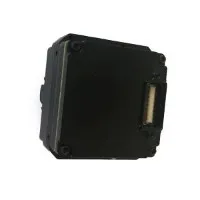

Hey there! As a supplier of LWIR (Long-Wave Infrared) Camera Cores, I've been getting a lot of questions lately about whether these bad boys are suitable for mobile applications. So, I thought I'd take a deep dive into this topic and share my thoughts with you all.
First off, let's talk about what LWIR Camera Cores are. These are basically the heart of an infrared thermal imaging system. They can detect the infrared radiation emitted by objects and convert it into an electrical signal that can be processed into a visible image. This technology is super useful because it allows you to "see" in the dark, through smoke, and even detect heat signatures.
Now, when it comes to mobile applications, there are a few things we need to consider. The first is size and weight. Mobile devices are all about portability, so any component that goes into them needs to be small and light. LWIR Camera Cores have come a long way in this regard. Modern uncooled LWIR Camera Cores are much smaller and lighter than their predecessors. For example, our Uncooled Camera Cores are designed to be compact, making them a great fit for mobile applications. They can easily be integrated into mobile devices without adding too much bulk or weight.


Another important factor is power consumption. Mobile devices run on batteries, and we all know how precious battery life is. LWIR Camera Cores used to be power-hungry beasts, but again, technology has improved. Uncooled LWIR Camera Cores consume significantly less power compared to cooled ones. This means that they won't drain your mobile device's battery too quickly, allowing you to use the camera for longer periods without having to worry about constantly charging.
Image quality is also a big deal. When using a mobile device, you want clear and detailed images. The good news is that LWIR Camera Cores now offer high-resolution imaging capabilities. Our 640 Thermal Camera Cores, for instance, can provide sharp and clear thermal images, which is essential for many mobile applications. Whether you're using it for security surveillance, building inspection, or even wildlife observation, you can expect to get good-quality images.
Cost is always a consideration, especially in the consumer market. In the past, LWIR Camera Cores were quite expensive, which made it difficult to integrate them into mobile devices. However, as the technology has matured and production volumes have increased, the cost has come down significantly. This has made it more feasible for mobile device manufacturers to include LWIR Camera Cores in their products.
So, are LWIR Camera Cores suitable for mobile applications? In my opinion, absolutely! They've got the right combination of size, power consumption, image quality, and cost to be a great addition to mobile devices.
Let's take a look at some of the potential mobile applications for LWIR Camera Cores.
Security and Surveillance
With a LWIR Camera Core in a mobile device, you can turn it into a powerful surveillance tool. You can monitor your home or office remotely, even at night. The thermal imaging capabilities allow you to detect intruders or any abnormal heat sources. It's a lot more convenient than having to set up multiple fixed surveillance cameras.
Building Inspection
Architects and building inspectors can use mobile devices equipped with LWIR Camera Cores to quickly and easily detect insulation problems, water leaks, and electrical issues. They can simply walk around the building with their mobile device and see the thermal image of the walls and other structures. This saves a lot of time and effort compared to traditional inspection methods.
Wildlife Observation
For nature lovers and researchers, a mobile device with a LWIR Camera Core can be a game-changer. You can detect wildlife in the dark or in thick foliage. It's a great way to observe animals without disturbing them.
Medical Applications
In the medical field, LWIR Camera Cores on mobile devices can be used for things like detecting inflammation or blood circulation problems. Doctors can quickly scan a patient's body and get a thermal image to aid in diagnosis.
However, there are still some challenges that need to be addressed. One of the main challenges is software integration. You need to have the right software to process the thermal images and display them on the mobile device's screen. This requires some development work to ensure that the camera and the device work seamlessly together.
Another challenge is the user interface. The user needs to be able to easily control the camera, adjust the settings, and view the images. Designing an intuitive and user-friendly interface is crucial for the success of LWIR Camera Cores in mobile applications.
Despite these challenges, the future looks bright for LWIR Camera Cores in mobile applications. The demand for these types of applications is only going to increase as people become more aware of the benefits of thermal imaging.
If you're a mobile device manufacturer or someone interested in incorporating LWIR Camera Cores into your projects, I'd love to chat with you. We've got a wide range of Infrared Thermal Camera products that can meet your needs. Whether you're looking for high-resolution imaging, low power consumption, or a compact design, we've got you covered. Don't hesitate to reach out to us for more information and to discuss your specific requirements. We're here to help you make the most of this exciting technology.
References
- Various industry reports on thermal imaging technology
- Technical specifications of LWIR Camera Cores