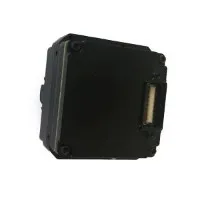

Hey there! As a supplier of LWIR Camera Cores, I often get asked about whether these camera cores are affected by infrared interference. It's a pretty common concern, especially for those who rely on these cameras for various applications. So, let's dive right into it and explore this topic in detail.
First off, let's understand what LWIR Camera Cores are. LWIR stands for Long-Wave Infrared. These camera cores are designed to detect and capture infrared radiation in the long-wave spectrum, typically ranging from about 8 to 14 micrometers. They're widely used in a variety of fields, including security, surveillance, industrial inspection, and even in some scientific research.


Now, let's talk about infrared interference. Infrared interference can come from a variety of sources. One of the most common sources is other infrared-emitting devices. For example, if there are other infrared cameras or sensors in the vicinity, they can potentially emit infrared radiation that may interfere with the operation of our LWIR Camera Cores. Additionally, natural sources of infrared radiation, such as the sun or hot objects in the environment, can also cause interference.
So, are LWIR Camera Cores affected by infrared interference? The answer is yes, but it's not as straightforward as it might seem. In some cases, the interference can be minimal and may not have a significant impact on the performance of the camera core. However, in other cases, the interference can be severe enough to cause issues with image quality or even prevent the camera core from functioning properly.
One of the factors that determine the extent of the interference is the intensity of the interfering infrared radiation. If the interfering radiation is relatively weak, the LWIR Camera Core may be able to filter it out and still produce a clear image. On the other hand, if the interfering radiation is strong, it can saturate the detector in the camera core, leading to overexposed or distorted images.
Another factor is the spectral characteristics of the interfering radiation. LWIR Camera Cores are designed to be sensitive to a specific range of infrared wavelengths. If the interfering radiation has a different spectral distribution, the camera core may be less affected by it. However, if the interfering radiation has a similar spectral distribution to the wavelengths that the camera core is designed to detect, it can cause more significant interference.
At our company, we've taken several steps to minimize the impact of infrared interference on our LWIR Camera Cores. One of the ways we do this is by using advanced filtering techniques. Our camera cores are equipped with filters that are designed to block out unwanted infrared radiation while allowing the desired wavelengths to pass through. This helps to reduce the amount of interference that reaches the detector and improves the overall image quality.
We also conduct extensive testing on our camera cores to ensure that they can perform well in different environmental conditions. During the testing process, we expose the camera cores to various sources of infrared interference and measure their performance. This allows us to identify any potential issues and make the necessary adjustments to improve the camera core's resistance to interference.
In addition to these technical measures, we also provide our customers with detailed instructions on how to install and operate our LWIR Camera Cores to minimize the risk of infrared interference. For example, we recommend that the camera cores be installed in a location where they are not directly exposed to other infrared-emitting devices. We also suggest using shielding materials to block out any unwanted infrared radiation.
Now, let's take a look at some of the products we offer. We have a wide range of Uncooled Thermal Imaging Core that are designed to meet the needs of different applications. These cores offer high sensitivity, excellent image quality, and low power consumption. They're also very reliable and easy to integrate into existing systems.
We also have Uncooled Camera Cores that are specifically designed for use in harsh environments. These cores are ruggedized and can withstand extreme temperatures, vibrations, and shocks. They're ideal for applications such as military, aerospace, and industrial inspection.
If you're looking for a more compact and lightweight solution, we have LWIR Micro Thermal Camera Module. These modules are small in size but still offer high performance. They're perfect for applications such as drones, handheld devices, and wearable technology.
In conclusion, while LWIR Camera Cores can be affected by infrared interference, there are ways to minimize its impact. At our company, we're committed to providing our customers with high-quality camera cores that are resistant to interference and offer excellent performance. If you're interested in learning more about our products or have any questions about infrared interference, please don't hesitate to contact us. We'd be happy to discuss your specific needs and help you find the right solution for your application.
References:
- "Infrared Imaging Systems" by John C. Doty
- "Thermal Imaging: Principles, Practice, and Applications" by Eric M. Smith