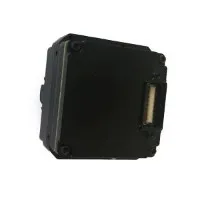

Hey there! As a supplier of Thermal Camera Modules, I often get asked about the differences between a Thermal Camera Module and an infrared camera. It's a common question, and I'm here to break it down for you in a way that's easy to understand.
Let's start with the basics. Both thermal camera modules and infrared cameras work with infrared radiation, but they have some key differences that set them apart.
How They Work
First off, let's talk about how these two types of cameras operate. Infrared cameras, in general, are designed to detect infrared light that's emitted or reflected by objects. Infrared light is a part of the electromagnetic spectrum that we can't see with our naked eyes. There are different types of infrared cameras, and they can detect different wavelengths of infrared light.
On the other hand, a thermal camera module is a more specialized type of infrared camera. It focuses specifically on detecting the infrared radiation that's emitted due to the heat of an object. Every object with a temperature above absolute zero (-273.15°C) emits infrared radiation. The hotter an object is, the more infrared radiation it emits. A thermal camera module can pick up these differences in infrared radiation and convert them into a visible image that shows the temperature distribution of the object.
Image Output
The image output is another area where thermal camera modules and infrared cameras differ. Infrared cameras can produce images that show the presence of infrared light, but these images might not necessarily give you information about the temperature of the objects in the frame. For example, an infrared camera used in a security system might just show a bright spot where there's a source of infrared light, but it won't tell you if that source is hot or just reflecting infrared light from another source.
In contrast, a thermal camera module produces images that clearly show the temperature differences between objects. These images are often called thermograms. In a thermogram, different colors are used to represent different temperature ranges. For instance, hotter areas might be shown in red or yellow, while cooler areas are shown in blue or purple. This makes it very easy to identify hotspots and cold spots in an image, which can be extremely useful in many applications.
Applications
The applications of thermal camera modules and infrared cameras also vary quite a bit.
Infrared cameras are commonly used in security and surveillance systems. They can detect the presence of people or animals in the dark because humans and animals emit infrared radiation. Infrared cameras are also used in night vision goggles, allowing users to see in low - light conditions. Additionally, they're used in some industrial applications for detecting leaks in pipes or for inspecting electrical components for signs of overheating.
Thermal camera modules, on the other hand, have a wider range of applications. In the building industry, they're used for energy audits. By using a thermal camera module, inspectors can identify areas in a building where heat is escaping, such as around windows or through the roof. This helps in improving the energy efficiency of the building.
In the medical field, thermal camera modules can be used to detect inflammation or other health issues. Since inflamed areas of the body are often warmer than the surrounding tissue, a thermal camera module can pick up these temperature differences and help doctors diagnose problems.
They're also used in the automotive industry for driver assistance systems. Thermal camera modules can detect pedestrians or animals on the road even in complete darkness, which can help prevent accidents.
Cost and Complexity
When it comes to cost and complexity, thermal camera modules are generally more expensive and complex than infrared cameras. The technology required to accurately measure temperature and produce a thermogram is more advanced and costly. Thermal camera modules often require more sophisticated sensors and signal processing algorithms to convert the detected infrared radiation into a meaningful temperature - based image.
Infrared cameras, on the other hand, can be simpler and more affordable. They can be designed to just detect the presence of infrared light, which doesn't require as much precision or advanced technology.
Our Thermal Camera Modules
As a supplier of Thermal Camera Modules, we offer high - quality products that are suitable for a wide range of applications. Our LWIR Micro Thermal Camera Module is a great example. It's compact, lightweight, and provides excellent thermal imaging performance. It's perfect for applications where size and portability are important, such as in handheld devices or unmanned aerial vehicles (UAVs).
We also have a range of Thermal Imaging Camera Cores that can be integrated into different types of cameras and systems. These cores are designed to provide accurate temperature measurements and high - resolution thermograms.
If you're looking for a more general - purpose infrared thermal imaging solution, our Infrared Thermal Imaging Camera is a great option. It combines the benefits of infrared detection with thermal imaging capabilities, giving you a versatile tool for various applications.
Conclusion
In conclusion, while both thermal camera modules and infrared cameras work with infrared radiation, they have distinct differences in how they work, the type of images they produce, their applications, and their cost and complexity. Understanding these differences can help you choose the right camera for your specific needs.


If you're interested in learning more about our Thermal Camera Modules or have any questions about which product is right for you, we'd love to hear from you. Whether you're in the building industry, medical field, automotive industry, or any other sector that could benefit from thermal imaging technology, we're here to help. Feel free to reach out to us to start a conversation about your requirements and how our products can meet them.
References
- "Infrared and Thermal Imaging Handbook" by John C. Laszlo
- "Thermal Imaging for Building Diagnostics" by Paul W. Mayhew