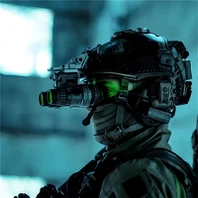


Hunting is an activity that requires high standards in both equipment and environment. When the light is insufficient, traditional night vision equipment is difficult to use, and this is when thermal imaging monoculars can play an important role. This article will introduce the basic characteristics, working principles, main performance parameters of thermal imaging monoculars, and how to choose a product that suits your hunting needs.
1. What is a thermal imaging monocular?
2. Working principle of thermal imaging monocular
3. Advantages of using thermal imaging monoculars in hunting
4. Key parameters to pay attention to when choosing a thermal imaging monocular
5. Brief analysis of several common thermal imaging monoculars
6. How to choose equipment according to target environment and needs
7. Usage suggestions and safety precautions
8. Recommended high-quality suppliers: Hangzhou Huirui Technology Co., Ltd.

1. What is a thermal imaging monocular?
A thermal imaging monocular is a handheld observation tool that relies on infrared sensors to detect the thermal radiation generated by the target. It does not rely on visible light environment, and can export the target image display even in complete darkness or complex environments such as dense fog and grass. Unlike traditional night vision equipment, thermal imagers show the outline of animals through temperature differences, so they are particularly suitable for long-distance observation and latent tracking in hunting.
2. Working principle of thermal imaging monocular
The device has a built-in sensor unit that can capture infrared radiation and convert the received thermal signal into a visible image through a processor. The image is generally displayed in black and white or false color: the target with higher temperature is bright, and the low temperature area is dark or cold. Many products offer a variety of color schemes, including white hot/black hot/red hot maps, which allows users to flexibly switch according to the environmental background or personal habits to obtain the best recognition effect.
3. Advantages of using thermal imaging monoculars in hunting
All-weather recognition capability
Whether at night or during the day, prey can be detected in dense vegetation, complex shadows, or dense fog.
Greater detection distance
Compared with ordinary night vision, thermal imaging monoculars can identify the outline and position of animals at a long distance.
Improved safety
When encountering other humans or obstacles in the hunting area, they can be discovered in advance to reduce misfires and accidents.
Quickly track moving targets
For animals running and moving around, their heat signals change significantly, making it easier for hunters to locate and track them in real time.
4. Key parameters to pay attention to when choosing a thermal imaging monocular
1. Detection Range
Detection range is an important indicator to measure the performance of the device. For close-range environments such as dense forests and shrubs, 200-500 meters may be enough; but if it is in open grasslands or valleys, a detection distance of nearly 1,000 meters or even more is more ideal. Before selecting a product, you should consider the typical range of the main hunting environment.
2. Thermal imaging resolution
Resolution directly determines image clarity. Currently, common infrared sensor resolutions are 320×240 and 640×480 pixels. The higher the resolution, the more detailed the outline and details, which helps to identify the type and size of animals. If the budget is sufficient, it is recommended to give priority to models with higher resolution.
3. Refresh rate
The refresh rate reflects the speed of image update. Generally, at least 30Hz is required, and 50Hz-60Hz is ideal under normal conditions to ensure smooth images and low latency when tracking fast-moving targets. Lower refresh rates may cause image lag, which is not conducive to capturing dynamic prey.
4. Field of View
The width of the field of view determines the area that can be observed at one time. A wide field of view is suitable for scanning open areas, but it may sacrifice some magnification; a small field of view has advantages in detail magnification and precise positioning. A balance between the two should be found according to the hunting terrain and activity mode.
5. Battery Life
Hunting often takes several hours or even all night, so battery life is crucial. The ideal product should support at least 5-10 hours of continuous operation, preferably with a replaceable battery or support USB charging function to ensure uninterrupted use.
6. Durability & Waterproof
Hunting environments are usually accompanied by harsh conditions such as mud, rain, and cold. Therefore, choosing equipment with a certain waterproof and dustproof rating (such as IP67/IP68) and an impact-resistant shell can ensure stable performance in harsh environments.

5. Brief analysis of several common thermal imaging monoculars
Lightweight entry-level products
The detection distance is about 100-200 meters, the resolution is low (such as 160×120), the frame rate is about 9Hz, and it weighs about tens of grams, which is suitable for beginners to experience.
Mid-range practical models
The detection distance is about 1,000 meters, the resolution is 320×240, the frame rate is about 30-50Hz, and the battery life is 5-7 hours, which is suitable for medium-budget users.
High-end professional equipment
Detection distance exceeds 1,200 meters, resolution is increased to 640×480 or higher, frame rate supports 60Hz, battery life exceeds 8 hours, and has expansion functions, suitable for senior hunters and professional purposes.
6. How to choose equipment according to target environment and needs
Terrain environment:
Dense forests and mountains: No need for too high detection distance, choose equipment with wide field of view and good battery life;
Open plains: Priority should be given to models with high detection distance and high resolution.
Prey type and behavior:
Small animals with agility, give priority to models with high frame rate and keen recognition;
Large animals are relatively slow-moving, so focus on detection distance and image details.
Frequency of use and budget:
Occasional short-distance users: Choose lightweight and low-cost products;
Frequent, long-term hunters: It is recommended to invest in high-end equipment with long-lasting batteries and rich performance.
Additional function requirements:
If remote observation, video sharing and other functions are required, models that support Wi-Fi connection, SD card storage, and mobile phone App can be given priority.
7. Usage suggestions and safety precautions
Be familiar with the operation of the equipment: Before actual hunting, be sure to master the operation of functions such as switching, color adjustment, zooming and recording to avoid misoperation in the wild.
Reasonable maintenance and storage: Avoid leaving the battery in the device for a long time, clean the lens and shell, and avoid moisture accumulation that affects performance.
Legal and compliant hunting: Different regions may have relevant regulations on whether night hunting is allowed and the use of thermal imaging equipment. Be sure to use it within the legal framework.
Environmental protection and ethical awareness: Respect the ecological environment and animal rights, and ensure that hunting behavior complies with the principles of sustainability and safety.
8. Recommended high-quality suppliers: Hangzhou Huirui Technology Co., Ltd.
In the field of thermal imaging technology, Hangzhou Huirui Technology Co., Ltd. is a professional enterprise worthy of attention. Founded in 2013 and headquartered in Hangzhou, China, the company focuses on the research and development of infrared thermal imaging technology and solution provision. With its leading technology accumulation and continuous innovation capabilities, Huirui Infrared is committed to providing customers with high-performance thermal imaging cameras and customized services to meet the actual application needs of multiple scenarios and multiple industries.
Overview of corporate advantages:
Strong technical strength: Relying on advanced infrared detection technology, it has developed a variety of thermal imaging products suitable for hunting, security, industrial detection and other fields, with clear images and fast response.
Customer customization service: In addition to standard products, it also provides personalized customization capabilities to quickly respond to specific application scenarios and functional requirements of different customers.
Whether it is an individual hunter or a commercial purchaser, choosing a partner with stable R&D capabilities, a good service network and a strong technical background is of great significance for long-term application and technical support. Hangzhou Huirui Technology is gradually becoming an important brand in the infrared thermal imaging industry with its professional level and international vision.
9. Summary
In short, thermal imaging monoculars are extremely valuable auxiliary tools for hunting at night and in complex environments. Its core advantages are:
Completely free from visible light dependence, providing all-weather target detection capabilities;
High detection distance, clearer thermal imaging images;
Improved safety and environmental adaptability.
To choose a suitable thermal imaging monocular, it is necessary not only to evaluate technical parameters such as detection distance, resolution, endurance, field of view, refresh frame rate, but also to combine factors such as usage scenarios, usage frequency, budget and additional functions. Entry-level users are suitable for lightweight budget products; while long-term, professional users should focus on the performance of high-end models.
Whether you are a beginner hunting enthusiast or an experienced hunter, mastering the relationship between the core functions of the equipment and the hunting environment can truly improve hunting efficiency and experience. I hope you can choose a practical and reliable thermal imaging monocular according to your own needs to add a lot of color to your future hunting trip.