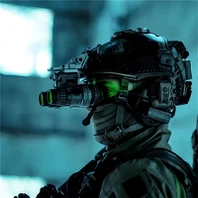


In today's world, where innovation drives progress and security is paramount, Thermal Night Vision stands tall as a pinnacle of technological advancement. This cutting-edge technology, leveraging the infrared spectrum, has revolutionized various fields, from military operations to wildlife conservation and law enforcement. Its relevance and significance cannot be overstated.
At its core, Thermal Night Vision functions by detecting the heat signatures emitted by objects, people, or animals, thereby creating a detailed image even in complete darkness or adverse weather conditions. Unlike traditional night vision technologies, which rely on ambient light sources, thermal imaging provides unparalleled visibility irrespective of lighting conditions. This attribute alone underscores its indispensability in myriad applications.
In the realm of military operations, Thermal Night Vision has reshaped tactics and strategies, offering troops a decisive advantage on the battlefield. With the ability to detect enemy movements, hideouts, and even concealed weapons with remarkable clarity, soldiers equipped with thermal imaging devices gain a heightened situational awareness that can turn the tide of battle in their favor. Moreover, its effectiveness in identifying improvised explosive devices (IEDs) and monitoring border areas enhances troop safety and operational efficiency.
Beyond the battlefield, Thermal Night Vision finds extensive utility in law enforcement activities. From search and rescue missions to surveillance operations, police forces worldwide rely on this technology to apprehend criminals, locate missing persons, and prevent illicit activities under the cover of darkness. Its ability to detect body heat signatures enables law enforcement officers to track suspects efficiently, even in densely populated urban areas or remote wilderness.
Moreover, Thermal Night Vision is a boon to wildlife conservation efforts, facilitating the monitoring and protection of endangered species. Conservationists utilize thermal imaging to track animal movements, conduct population surveys, and combat poaching activities. By providing real-time data on animal behavior and habitat usage, this technology enables conservationists to implement targeted conservation measures effectively.
In addition to its tactical and security applications, Thermal Night Vision has found its way into the civilian domain, enriching recreational activities such as hunting, camping, and outdoor exploration. Outdoor enthusiasts benefit from its ability to enhance nighttime visibility, ensuring safety and expanding the possibilities of nocturnal adventures.
Looking ahead, the relevance of Thermal Night Vision technology is poised to grow exponentially as advancements continue to enhance its capabilities and drive down costs, making it more accessible to a broader range of users. With ongoing research and development efforts focused on improving resolution, range, and affordability, the potential applications of thermal imaging technology are virtually limitless.
In conclusion, Thermal Night Vision technology stands as a testament to human ingenuity and innovation, transcending boundaries to empower individuals and organizations across various sectors. Its unmatched ability to provide clear, actionable intelligence in low-light conditions has cemented its status as a game-changer in the realms of defense, security, and conservation. As we navigate an increasingly complex and dynamic world, the brilliance of Thermal Night Vision illuminates the path forward, ensuring safety, security, and progress for generations to come.