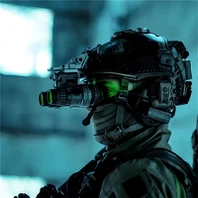


The viewing distance of a thermal monocular depends on several factors, including the device's resolution, the size of the thermal sensor, the lens quality, and environmental conditions. Generally, thermal monoculars can detect heat signatures from hundreds of meters to several kilometers away. Here, we explore the key factors and provide an in-depth understanding of their influence on the detection range.
Key Factors Affecting Viewing Distance
- Resolution: Higher resolution sensors provide more detailed images, allowing users to detect smaller objects at greater distances. For example, a thermal monocular with a resolution of 640x480 pixels will typically provide a clearer and more detailed image compared to one with 320x240 pixels. This higher resolution can extend the detection range by providing finer thermal detail.
- Lens Quality and Focal Length: The quality and focal length of the lens significantly impact the viewing distance. A high-quality lens with a longer focal length can capture more distant thermal radiation, thus increasing the detection range. Lenses with a focal length of 50mm or more are common in long-range thermal monoculars.
- Sensor Sensitivity: The sensitivity of the thermal sensor, often expressed as NETD (Noise Equivalent Temperature Difference), determines how small temperature differences the sensor can detect. A lower NETD value indicates higher sensitivity, which improves the ability to detect subtle thermal variations at long distances.
- Environmental Conditions: Atmospheric conditions, such as humidity, rain, fog, and temperature, can affect the thermal monocular's performance. Clear and dry conditions provide optimal performance, while adverse weather can reduce the effective range.
Practical Examples
- Hunting and Wildlife Observation: Thermal monoculars used for hunting or wildlife observation typically have a detection range of 300 to 1,000 meters. Devices with higher resolution and better lenses can detect larger animals, such as deer, at distances over a kilometer. For instance, the Pulsar Helion 2 XP50 Pro, a high-end thermal monocular, can detect a human-sized object up to 1,800 meters away under optimal conditions.
- Search and Rescue: In search and rescue operations, the ability to detect human heat signatures from long distances is crucial. Thermal monoculars used in these scenarios often need to detect individuals at distances exceeding 1,000 meters. The FLIR Scout III 640, known for its high resolution and advanced sensor, can detect human presence up to 1,240 meters away.
- Security and Surveillance: For security applications, thermal monoculars are used to monitor large perimeters and detect intruders from afar. Devices like the AGM Global Vision Taipan TM19-384 can detect human movement up to 1,500 meters away, making them suitable for extensive property monitoring and border security.
Enhanced Features
Modern thermal monoculars come equipped with additional features that enhance their usability and extend their effective range:
- Digital Zoom: Many thermal monoculars offer digital zoom capabilities, allowing users to magnify the thermal image and identify objects at greater distances. However, excessive digital zoom can degrade image quality, so it is best used in moderation.
- Image Enhancement Algorithms: Advanced image processing algorithms can improve image clarity and contrast, aiding in the detection of objects at the edge of the monocular's range. Technologies like FLIR's "UltraMax" and Pulsar's "Image Boost" are examples of such enhancements.
- Wireless Connectivity: Some thermal monoculars can connect to smartphones or tablets, providing a larger display and the ability to analyze thermal images in more detail. This feature is particularly useful for professional applications where precise identification is required.
Limitations
While thermal monoculars are powerful tools, they have limitations. They rely on temperature differences to create images, which means that objects with minimal thermal contrast to their surroundings can be challenging to detect. Additionally, thermal monoculars cannot see through solid objects like walls, though they can detect heat leaks or individuals near surfaces.
The effective viewing distance of a thermal monocular varies based on resolution, lens quality, sensor sensitivity, and environmental conditions. High-end thermal monoculars can detect human-sized objects at distances exceeding 1,500 meters, making them valuable tools for hunting, search and rescue, and security applications. However, the specific detection range can vary widely depending on the exact specifications of the device and the conditions in which it is used.