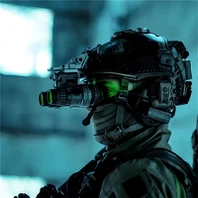


Electro-optic infrared (EO/IR) systems are advanced sensor technologies that integrate optical principles and electronic engineering to detect, track, and identify targets across the infrared spectrum. Unlike traditional optical systems limited by visible light, EO/IR systems leverage the infrared radiation emitted by all objects with a temperature above absolute zero-enabling them to operate reliably in low-light, total darkness, and harsh environmental conditions such as fog, rain, and smoke. This unique capability makes them indispensable for critical applications like target acquisition, real-time monitoring, and precision identification across industries.
A key advantage of EO/IR systems lies in their dual strength of accuracy and real-time performance. They deliver high-resolution images and data instantaneously, supporting rapid decision-making in scenarios where timing and precision are mission-critical. At the core of every EO/IR system are three essential components: the IR detector, which converts captured infrared radiation into electrical signals; the focusing lens, which concentrates IR radiation onto the detector for clear signal acquisition; and the display/imaging device, which translates electrical signals into visible, actionable images or data for end-users.
Electro-Optic Infrared System Design Challenges
Developing high-performance EO/IR systems requires addressing multiple complex challenges, each directly impacting the system's reliability, efficiency, and applicability:
●Performance stability across environments: EO/IR systems must maintain consistent detection and tracking capabilities in variable weather (e.g., heavy rain, dense fog) and lighting conditions (day, night, low visibility), which demands robust adaptation to external interference.
●SWaP (Size, Weight, and Power) constraints: Many EO/IR applications-such as military aircraft-mounted sensors, satellite payloads, and handheld field devices-require compact, lightweight designs with low power consumption. Balancing performance with SWaP limits is a critical design priority.
●Cost optimization: From component development to manufacturing, EO/IR systems often involve high R&D and production costs. Designers must balance technical performance with cost efficiency to ensure commercial viability.
●System complexity and integration: EO/IR systems comprise multiple subsystems (optics, detectors, electronics, software) that must work in seamless harmony. Integrating these components while ensuring compatibility and reliability requires rigorous testing and optimization.
●Specialized manufacturing requirements: Precision components like high-sensitivity IR detectors and anti-interference lenses demand advanced manufacturing processes. Controlling process consistency and quality is essential to avoid performance deviations.
These challenges must be systematically addressed during the design phase to ensure the final EO/IR system meets the needs of its intended application-whether for military defense, industrial monitoring, or emergency response.
Professional Solutions for EO/IR System Development
To overcome EO/IR design challenges, a suite of specialized tools and technologies has been developed to optimize every stage of the system lifecycle-from initial design to final validation. These solutions enable engineers to simulate, analyze, and refine EO/IR systems with precision:
●Environmental performance simulation: Tools that replicate real-world conditions (fog, rain, atmospheric turbulence) allow designers to test system performance under extreme scenarios, identifying and resolving vulnerabilities early in development.
●Optical component optimization: Advanced optical design software supports the refinement of focusing lenses and light paths, ensuring maximum IR radiation capture and minimal signal loss-critical for enhancing detection range and image clarity.
●SWaP efficiency analysis: Dedicated tools model the size, weight, and power consumption of system components, helping engineers select lightweight, low-power parts without compromising performance (e.g., for satellite or handheld applications).
●System integration testing: Comprehensive simulation platforms enable end-to-end testing of subsystems, verifying compatibility between detectors, optics, and display devices to ensure smooth operation in real-world use.
By leveraging these solutions, designers can accelerate development cycles, reduce trial-and-error costs, and deliver EO/IR systems that meet the highest standards of reliability and performance.
Huirui Infrared: Leading EO/IR Technology with Strength and Innovation

When it comes to translating EO/IR technology into practical, high-value solutions, Huirui Infrared (https://www.huirui-ir.com/) stands out as a trusted leader with robust technical capabilities and a customer-centric approach. Founded in 2013 and headquartered in Hangzhou, China, Huirui has deep expertise in infrared imaging core technologies, focusing on optimizing EO/IR systems for precision, adaptability, and real-world applicability.
Huirui's EO/IR systems excel in three key areas that define technical excellence:
●Multispectral integration capability: By combining optoelectronic and infrared technologies, Huirui's systems achieve long-range target detection, accurate identification, and stable tracking-even in low-visibility or complex environments, making them ideal for military reconnaissance and critical infrastructure security.
●Customized solution design: Unlike one-size-fits-all approaches, Huirui tailors EO/IR systems to specific industry needs. For example, its systems for energy facilities include 24/7 perimeter monitoring and temperature anomaly alerts, while those for urban security leverage fog-penetrating and night-vision capabilities to detect hidden threats.
●Proven real-world performance: Huirui's EO/IR technology has been validated in global projects-from securing Saudi Arabian oil pipelines and Ukrainian energy sites (increasing security response speed by 70%) to enhancing Berlin's airport and port security. These cases demonstrate the systems' reliability in high-stakes scenarios.
Complementing its EO/IR expertise, Huirui offers a full portfolio of infrared products (thermal imaging cameras, binoculars, drones, and core modules) and end-to-end services-from initial R&D and design to installation, testing, and post-sales support. With a focus on innovation and quality, Huirui continues to set benchmarks for EO/IR technology, providing businesses and organizations with the tools to enhance safety, efficiency, and situational awareness.