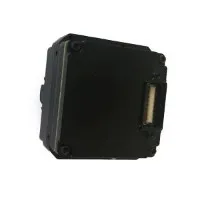

Hey there! As a supplier of Uncooled Camera Cores, I often get asked about the power consumption of these nifty devices. So, let's dive right in and break it down.


First off, what are uncooled camera cores? Well, they're an essential part of thermal imaging technology. Unlike cooled camera cores that need cryogenic cooling systems to operate, uncooled camera cores can work at room temperature. This makes them more cost - effective, smaller, and more reliable for a wide range of applications, from security and surveillance to industrial inspections and automotive safety.
Now, onto the main topic: power consumption. The power consumption of uncooled camera cores can vary quite a bit depending on several factors. One of the key factors is the resolution of the core. Higher resolution cores typically need more power because they have more pixels that need to be processed. For example, a low - resolution uncooled thermal camera core with a pixel count like 160x120 may consume around 0.5 - 1 watt of power. On the other hand, a high - resolution core with 640x512 pixels can consume anywhere from 2 - 3 watts or even more.
Another important factor is the frame rate. If you need a high frame rate, say 60 frames per second, the core has to process a lot of data quickly. This means more power is required. A lower frame rate, like 10 or 25 frames per second, will generally result in lower power consumption. Let's say you're using an uncooled camera core for a simple monitoring task where a lower frame rate is sufficient. You can save a fair amount of power compared to a situation where you need real - time, high - speed imaging.
The type of sensor technology also plays a role. Some uncooled sensor technologies are more power - efficient than others. For instance, microbolometer - based uncooled camera cores are quite popular. They work by detecting changes in the resistance of a microbolometer material due to infrared radiation. Different manufacturers may have different designs and improvements in their microbolometer sensors that can impact power consumption. Some newer designs are optimized to use less power while still maintaining good performance.
Operating conditions can also affect power consumption. If the temperature is very high or very low, the core may need to spend extra power to maintain its optimal performance. In extremely cold environments, the electronics in the core may need to be heated slightly to function properly, which uses additional power. Similarly, in hot environments, the core may need to dissipate heat more effectively, and this can also increase power usage.
So, why does power consumption matter? Well, for battery - powered applications, it's crucial. Think about handheld thermal imaging devices, drones, or wildlife monitoring cameras. If the uncooled camera core uses too much power, the battery life will be short, and you'll have to recharge or replace the batteries frequently. This can be a real hassle, especially in remote areas or when you're in the middle of an important task.
For industrial applications, power consumption can affect operating costs. Running a large number of thermal imaging cameras in a factory or on a construction site can add up in terms of electricity bills. Lower power consumption means more cost - effective operation in the long run.
Let's take a look at some real - world examples. In the security and surveillance industry, uncooled camera cores are widely used in CCTV cameras for night - time monitoring. These cameras are often powered by a continuous power supply, but lower power consumption still means less heat generation. Less heat can lead to a longer lifespan of the components and fewer maintenance issues.
In the automotive industry, uncooled thermal imaging is being increasingly used for driver assistance systems. The power consumption of these camera cores needs to be carefully managed so that it doesn't put too much strain on the vehicle's electrical system. A power - efficient uncooled camera core can contribute to the overall energy efficiency of the vehicle.
If you're looking for reliable uncooled camera cores, I can recommend checking out our Uncooled Thermal Camera Modules. These modules are designed with power efficiency in mind without compromising on performance. We also have Uncooled Thermal Imaging Core options that are suitable for a variety of applications. And of course, our Thermal Camera Cores are built to the highest standards.
If you're interested in learning more about our uncooled camera cores or are looking to make a purchase, we're here to help. Whether you're a small business owner, a researcher, or part of a large - scale industrial project, we can provide the right solutions for your needs. Just reach out to us, and we can have a detailed discussion about your requirements, power consumption needs, and how our products can fit into your applications.
In conclusion, the power consumption of uncooled camera cores is a complex topic influenced by multiple factors such as resolution, frame rate, sensor technology, and operating conditions. However, with the right knowledge and the right products, you can optimize power usage and get the most out of thermal imaging technology. So, don't hesitate to contact us if you want to explore our range of uncooled camera cores and find the perfect fit for your project.
References:
- Industry reports on thermal imaging technology
- Manufacturer specifications of uncooled camera cores