


Products
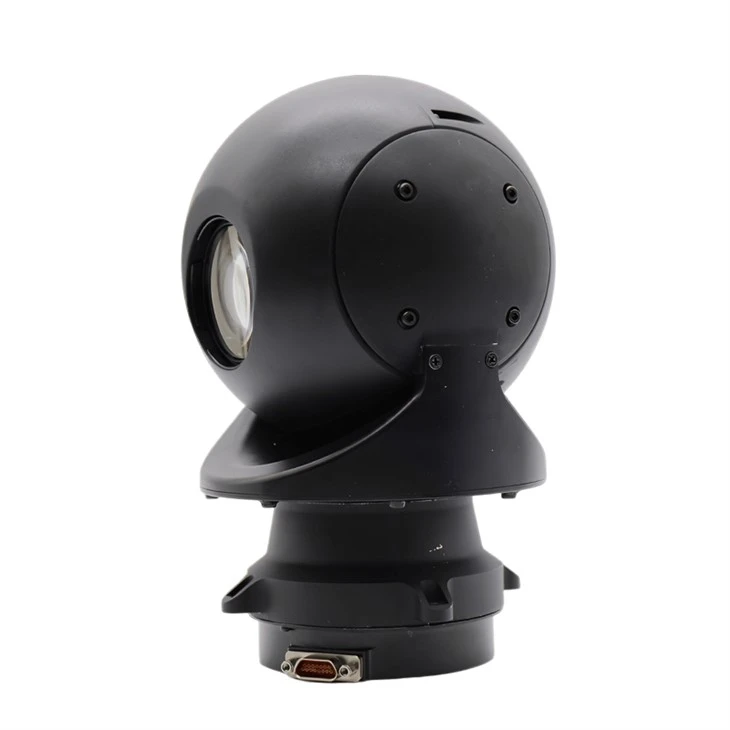
Thermal Night Vision Security Camera
What is Thermal Night Vision
Thermal night vision is a type of technology that allows users to see in complete darkness by detecting and visualizing the infrared radiation emitted by living organisms, objects or the environment. It works by detecting heat signatures and converting them into a visible image, making it an effective tool for surveillance, hunting, navigation and military operations. Unlike traditional night vision that uses ambient light sources to produce visible images, thermal night vision can operate in complete darkness, fog, smoke, and through most types of obstacles.
Advantages of Thermal Night Vision
1. Enhanced vision
Thermal night vision enables a clear view of the surroundings even in complete darkness, without the need for any ambient light. This ensures that there is no glare or reflection from any additional light sources, making it easy to detect any movement or objects even in challenging environments.
2. Detection of hidden objects
Thermal imaging allows the detection of objects hidden behind walls or other obstacles. This can be useful in various applications like security and surveillance, search and rescue operations, hunting, and military surveillance.
3. High accuracy
Thermal night vision provides high accuracy when detecting and distinguishing between objects. The system operates on the principle of heat signatures emitted by an object, making it easier to differentiate between objects based on their temperature differences.
4. Unaffected by weather conditions
Thermal night vision works well even in adverse weather conditions such as fog, rain, and snow. It is also unaffected by daylight, and ambient light environments, allowing for reliable use in all situations.
5. Long-range capability
Thermal night vision can detect heat signatures from long distances, which makes it ideal for surveillance and search and rescue operations. This capability allows users to detect and track objects from a safe distance, which is critical in dangerous situations.
6. Improved safety
Thermal night vision can enhance safety, especially in hazardous environments, by detecting potential hazards like fires or gas leaks. This ability makes it an essential tool in firefighting and industrial safety.


Why Choose Us
Our certificate
All of our thermal imaging camera past the CE certificate and the good quality acceptance by our EU customers. In China, we also match the ISO9000 series quality standard.
High quality products
We always put customer needs and expectations in the first place, refine on, continuous improvement, to seek every opportunity to do better, to provide customers with their expectations of quality products, to provide customers with the most satisfactory service at anytime.
Competitive prices
We offer our products at competitive prices, making them affordable for our customers. We believe that high-quality products should not come at a premium, and we strive to make our products accessible to all.
Professional team
We have a team of skilled and experienced professionals who are well-versed in the latest technology and industry standards. Our team is dedicated to ensuring that our customers get the best service and support possible.
Types of Thermal Night Vision
Uncooled thermal imaging
In uncooled thermal imaging, a microbolometer sensor detects infrared radiation emitted by objects and converts it into an image. These sensors are not temperature controlled and do not require a cryogenic cooler.
Cooled thermal imaging
In cooled thermal imaging, a highly sensitive sensor is cooled to a very low temperature using a cryogenic cooler. This results in even greater sensitivity to infrared radiation. Cooled thermal imaging systems are more expensive and require more maintenance than uncooled systems, but they provide higher resolution and greater detection range.
Fusion thermal imaging
This type of system combines both thermal and image intensification technologies. It uses two sensors to create an image that overlays the thermal image onto a standard visible image. This provides users with a more thorough understanding of their surroundings.
Let's start considering the principle of operation with classical night vision devices. At the beginning of the process, the optics lens captures all available light in the area where the user directs it. The source material is collected after the light fluxes from various celestial bodies are reflected from all environmental objects. If there is insufficient light, then an IR illuminator comes into play. It generates light changes and replaces them with natural light. The resulting light is then focused and enters the IIT. Here, photons are instantly converted into a stream of electrons, with which all further manipulations are carried out. In a photomultiplier, the number of particles sharply increases, due to which their flux increases. At the next stage, the electrons enter the luminescent anode, where photons are knocked out under the influence of an electric charge. The latter forms a new multiplied stream that contains the original information. As a result of such actions, the original image becomes brighter, more transparent, and more contrasting. It is transferred to the display, where the owner can see it of NVDs.


With thermal imaging devices, the whole conversion process is different. At its first stage, the optics lens collects infrared radiation from any environmental objects (living and inanimate). It is focused and captured by the device's IR detectors. Due to their increased sensitivity, these design details do not lose sight of any beam, which allows you to get a complete image in the future. The so-called thermogram is formed from the obtained source material. It displays the temperature readings at every point in the terrain that the owner of the optics is examining. After that, various manipulations allow you to turn the thermogram into electrical impulses. They are sent to the electronic system of the thermal imager, where they are subjected to multiple influences. As a result, the device forms a thermal image and redirects it to the eyepiece of the optics, which are often combined with the display.
1. Essential recommendation. Read your device manual. It says it all. As simple as it sounds, many users neglect this advice and look into it only when they need to contact a repair shop. The manufacturer is quite clear about the conditions under which you need to use the UAV and how it can fail. Avoid tampering with the device yourself, even if it seems like a minor malfunction. Manufacturers specify in the user manuals of different models a list of technical tasks and the regularity of performance of each. Undoubtedly, the intensity of operation between servicing means a lot. But simply following the manufacturer's instructions is surprisingly effective as well.
2. Preparing for the hunt. Before you go out into the night, you should check the device's condition and mounting, clean it from dust, and wipe the body with a soft rag and expensive lenses with special wipes that do not leave streaks on the glass. Check the operability of night vision devices by selecting the reference point for aiming.
Important! At removal and installation of supervision devices, be careful, excluding the possibility of blows on optical elements.
3. Hunting. Remember, the most common causes of failure of a night vision device, not counting mechanical damage, are moisture entering the device. Ensure that the battery compartment covers and external power connectors are tightly closed. After disconnecting the external battery, hunters often forget to close the connector cap, and the device gets water when exposed to rain. Of course, it is better not to change the batteries under running water. And one more basic rule - keep the NV unit with lens cap attached. You should get in the habit of leaving the equipment switched off with the lens cap on. Running your night vision device during the day without the cap will damage the sensitive optics and require repair or, in some cases, purchase a new one.
4. Important points. Take it, as a rule, to switch your equipment off when you are not using it. Treat it carefully: don't drop it, and don't leave your night vision device switched on during the day, even with the lens cap on. Use only regular rechargeable batteries, check their condition systematically, and, if necessary, recharge or replace them. If you use "store-bought" batteries for power, use batteries from reputable manufacturers. Check the expiration date and the date of issue of the batteries. To maximize battery life, always turn off devices when not in use. Even if you plan to go somewhere again tomorrow, take them out anyway. Otherwise, it so happens: the trip did not take place, but the batteries remained in the device for more than one month, or even more.
Our Factory
HUIRUI INFRARED, established in 2013 in the prestigious city of Hangzhou, leads the frontier of infrared thermal technology. Our expertise lies in leveraging advanced tech to offer unparalleled thermal camera solutions and personalized services. Our product range includes Thermal Imaging Systems, Cameras (both uncooled and cooled variants), Binoculars, and Monoculars, all crafted with cutting-edge technology to deliver superior thermal imaging capabilities. We take pride in our commitment to innovation and customization, providing tailored solutions that meet the unique needs of our customers, setting new benchmarks in the realm of thermal imaging technology.


FAQ
Q: Can thermal night vision be used in archeology?
Q: How does thermal night vision work?
Q: Is thermal night vision better than traditional night vision?
Q: What is the range of thermal night vision?
Q: What kind of technology is used in thermal night vision devices?
Q: What kind of objects can be detected using thermal night vision?
Q: Can thermal night vision see through walls?
Q: Is thermal night vision legal for civilian use?
Q: How much does a thermal night vision device cost?
Q: Do thermal night vision devices require any special training to use?
Q: Is thermal night vision affected by weather conditions?
Q: Can thermal night vision be used for hunting?
Q: Can thermal night vision be used for search and rescue?
Q: Is thermal night vision safe for the eyes?
Q: How long do thermal night vision devices typically last on a single charge?
Q: Do thermal night vision devices require maintenance?
Q: Can thermal night vision be mounted on firearms?
Q: Can thermal night vision be used for surveillance?
Q: Can thermal night vision be used in the military?
Q: Can thermal night vision be used for weather forecasting?
Hot Tags: thermal night vision security camera, China thermal night vision security camera manufacturers, suppliers, factory


