

Products

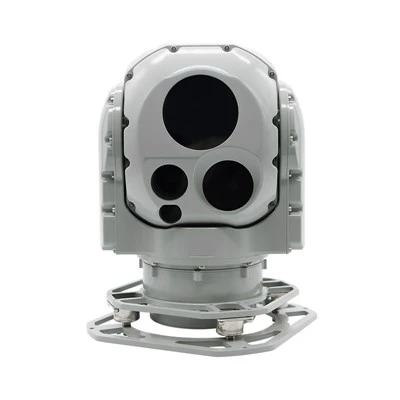
Security Thermal Imaging Cameras
What is Thermal Imaging Camera
A thermal imaging camera is a type of camera that captures infrared radiation emitted by objects and converts it into images. These images show the temperature distribution of the objects in different colors, allowing users to visualize and detect thermal patterns in real-time. They are commonly used in areas such as industrial inspections, building inspections, firefighting, and medical diagnosis, as they provide a non-invasive and accurate method for detecting temperature changes.
Advantages of Thermal Imaging Camera
Non-cContact temperature measurement - Thermal cameras enable non-contact temperature measurement, allowing operators to monitor temperature variations from a safe distance without physically touching the object or surface.
Early dDetection of anomalies - Thermal imaging cameras can detect anomalies such as overheating components in electrical systems, potential water leaks, and insulation deficiencies, enabling early intervention before more serious issues arise.
Enhanced safety - In industries like firefighting and search and rescue operations, thermal cameras help locate people or animals in low visibility environments, increasing safety for both responders and those in need of assistance.
Energy efficiency - Thermal imaging cameras can identify areas of heat loss or energy inefficiencies in buildings, helping to optimize HVAC systems and reduce energy consumption.
Predictive maintenance - By monitoring equipment and machinery for abnormal temperature patterns, thermal imaging helps prevent unexpected downtime and costly breakdowns by allowing maintenance to be scheduled before failure occurs.
Electrical system inspection - Thermal cameras can quickly identify hotspots in electrical panels, connections, and components, helping to prevent electrical fires and ensuring the overall safety of electrical systems.
Quality control - In manufacturing processes, thermal cameras can detect defects or inconsistencies in products by identifying temperature variations that might indicate issues with materials or production techniques.
Law enforcement and security - Thermal imaging cameras assist law enforcement and security personnel in tracking suspects, detecting intruders, and identifying potential threats even in low light or complete darkness.


Why Choose Us
Our certificate
All of our thermal imaging camera past the CE certificate and the good quality acceptance by our EU customers. In China, we also match the ISO9000 series quality standard.
High quality products
We always put customer needs and expectations in the first place, refine on, continuous improvement, to seek every opportunity to do better, to provide customers with their expectations of quality products, to provide customers with the most satisfactory service at anytime.
Competitive prices
We offer our products at competitive prices, making them affordable for our customers. We believe that high-quality products should not come at a premium, and we strive to make our products accessible to all.
Professional team
We have a team of skilled and experienced professionals who are well-versed in the latest technology and industry standards. Our team is dedicated to ensuring that our customers get the best service and support possible.
Types of Thermal Imaging Camera
Short wavelength cameras
Short wavelength thermal imaging cameras capture infrared wavelengths in the range of 0.9 to 1.7 microns. These cameras have a high resolution as compared to the visible light spectrum in terms of shadow contrast and detail.
Mid wavelength cameras
Mid wavelength cameras capture infrared wavelengths in the range of 2 to 5 microns with higher resolution and accuracy. These cameras are typically used for extreme high-temperature readings such as scanning boiler applications and ballasted, single-ply roofing systems.
Long wavelength cameras
Long wavelength infrared cameras capture infrared wavelengths in the range of 7 to 12 microns. These cameras generate highly detailed images due to low atmospheric absorption.

How do thermal imaging cameras work
Thermal imaging cameras, also called infrared cameras, detect heat naturally given off by all object or person. Thermal imaging cameras have lenses, just like any other cameras but in this case the lens focuses only on heat waves present in objects. Thousands of sensors convert the energy readings into an electrical signal which creates a video image forming a "thermal profile". The hotter a subject the more heat it produces. Thermal cameras can see this heat and convert it to an image we can then see with our eyes. For example, you'll notice in the photo the person is covered in shades of red, orange, and yellow. That's because in this illustration the person is warmer than the surrounding air and appears "brighter" while the cooler surrounding air and buildings appear in varying "cooler" shades of purple and blue. Again colder temperatures are shades of blue, purple, or green, while warmer temperatures appear in shades of red, orange, or yellow.
What is Thermal Imaging Used For
Thermal imaging, a technology that translates thermal energy (heat) into visible light, is used to analyze a particular object or scene. Using a thermal camera or infrared camera, this technique captures the temperature profile of an area, displaying it as a thermal image, which is essentially a heat map.
The applications of thermal imaging are vast and diverse. In the industrial sector, thermal imaging cameras are used for preventive maintenance. By detecting overheating in machinery or electrical circuits, these cameras can help prevent costly equipment failures and enhance safety.
In the building industry, thermal imaging is used to detect heat loss, poor insulation, and water leaks, making it a vital tool in energy audits and building inspections. In the medical field, thermal imaging cameras can detect changes in body temperature, aiding in the early detection of conditions like breast cancer.
Thermal imaging also plays an essential role in security and surveillance. A thermal imager or infrared imager can detect heat signatures, making it possible to identify people or animals in low light or dark conditions.
What You Should Look for in Thermal Imaging Equipment
Like many other monitors, resolution describes the total number of pixels - for example, a 160x120 monitor consists of 19,200 pixels. Each individual pixel has thermal data associated with it, so larger displays produce sharper images.
Thermal sensitivity is the threshold of difference that the imager can detect. For example, if a device has a sensitivity of 0.01°, it can distinguish objects with a temperature difference of one hundredth of a degree. Minimum and maximum temperature ranges are also important.
Thermal imaging cameras have some basic limitations: for example, they cannot see through glass due to the reflective properties of the material. They can also see through walls, but cannot penetrate them. Nonetheless, thermal imaging has proven useful in many applications.
Components of Thermal Imaging Camera
1. Infrared sensor array
The heart of a thermal imaging camera is its infrared sensor array. This array consists of numerous tiny detectors, each sensitive to a specific range of infrared wavelengths. When exposed to infrared radiation, these detectors produce electrical signals proportional to the intensity of the radiation.

2. Optics and lens
Thermal security cameras have specialized optics and lenses that focus the infrared radiation onto the sensor array. These lenses are often made of materials that are transparent to infrared wavelengths.
3. Image processor
The electrical signals from the sensor array are processed by an image processor, which converts the signals into a visual representation of temperature variations. This processed image is typically displayed on the camera's screen in real-time.


4. Display
The thermal camera features a display screen that shows the thermal image. This display allows users to observe and analyze the temperature patterns of the objects and surfaces within the camera's field of view.
5. Color mapping
To make the temperature differences more interpretable, thermal images are often color-mapped. Different colors represent different temperature ranges, with hotter areas appearing as brighter or warmer colors (like red, orange, or yellow), and cooler areas appearing as darker or cooler colors (like blue or purple).

9 Factors When Choosing the Best Thermal Imaging Camera
1. Detector resolution
Detector Resolution is one of the most important factors when choosing a thermal imaging camera. The detector resolution, in simpler terms, is the number of pixels that the thermal imager can fill in a particular frame, and simple math says that the more pixels, the more detailed the image will be.
2. Exposure time
Exposure time is the ability of the camera how quickly it can capture a single frame of data which is similar to shutter speed in traditional visible light cameras. This may also be known as shutter interval. The large interval shutter cameras are capable of outputting a clear image and accurate temperature measurements.
3. Temperature range
Temperature range is defined by how cold or hot an object can be in a particular scene. It is quite possible that you may find two extremes of hotness and coldness in one scene. The ability to distinguish between two temperature ranges is a very important factor when choosing a thermal camera.An aircraft standing idle on the runway will have a body temperature of 25-30°C while the temperature around the engines of the aircraft will have a whopping temperature of 500°C.
4. Temperature resolution/thermal sensitivity
Another important factor when choosing is the temperature resolution of the camera. Temperature resolution is the smallest temperature difference that is measurable and is commonly known as the temperature sensitivity of the camera.
5. Frame rate
Most IR cameras have a frame rate of 9hz which means that the camera is capable of producing 9 images per second to give the user an almost fluent video. Industrial grade thermal cameras have more frame rate ranges depending upon the usage and application where thermography is being applied.
6. Standard + thermal image (Image Fusion)
Another quality of thermal imaging cameras is their ability to capture a standard image alongside a thermal image for better understanding. In some cases, it is proven to be extremely helpful in understanding a complex scene.
7. Focus
When capturing thermal imagery, accurate focus is required to get a sharp image of the object and reliably measure temperature. Thermal cameras can be fixed focus, autofocus, or manual focusing. However, high-performing thermal imaging cameras are usually auto or manually focused.
8. Color palettes
Thermal imaging cameras are grayscale cameras, but high quality and better results can be achieved using a thermal camera that outputs the thermal imagery in different colors and hues. High-performing cameras produce colored output in the rainbow, greyscale, and iron oxide red colors.
9. Battery type and battery life
This is an important factor when choosing a thermal camera which is often ignored at large. Having a camera with a large battery and battery indicator on the output screen of the camera is a useful feature. No one wants to stand on the inspection site with no idea of the battery status.
Our Factory
HUIRUI INFRARED, established in 2013 in the prestigious city of Hangzhou, leads the frontier of infrared thermal technology. Our expertise lies in leveraging advanced tech to offer unparalleled thermal camera solutions and personalized services. Our product range includes Thermal Imaging Systems, Cameras (both uncooled and cooled variants), Binoculars, and Monoculars, all crafted with cutting-edge technology to deliver superior thermal imaging capabilities. We take pride in our commitment to innovation and customization, providing tailored solutions that meet the unique needs of our customers, setting new benchmarks in the realm of thermal imaging technology.


FAQ
Q: How do I choose the right thermal imaging camera for my application?
Q: How does a thermal imaging camera work?
Q: What are the different types of thermal imaging cameras?
Q: What are the applications of thermal imaging cameras?
Q: What is the resolution of a thermal imaging camera?
Q: Can a thermal imaging camera see through walls?
Q: What is the accuracy of a thermal imaging camera?
Q: What is the range of a thermal imaging camera?
Q: Can thermal imaging cameras be used in extreme temperatures?
Q: Can thermal imaging cameras measure temperature?
Q: What is the cost of a thermal imaging camera?
Q: Do thermal imaging cameras require special training to use?
Q: Can thermal imaging cameras be used at night?
Q: Can thermal imaging cameras detect gas leaks?
Q: How long do thermal imaging cameras last?
Q: How is a thermal imaging camera different from a night vision camera?
Q: Can thermal imaging cameras be used in medical applications?
Q: What is the field of view of a thermal imaging camera?
Q: Can thermal imaging cameras be used underwater?
Q: Can thermal imaging cameras be used to detect electrical faults?
Hot Tags: security thermal imaging cameras, China security thermal imaging cameras manufacturers, suppliers, factory