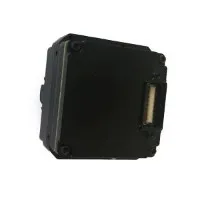

As a provider of uncooled camera cores, I understand the critical role that software development kits (SDKs) play in unlocking the full potential of our products. These SDKs serve as powerful tools that enable developers, engineers, and researchers to integrate our uncooled camera cores into a wide range of applications with ease and efficiency. In this blog post, I will explore the various software development kits available for uncooled camera cores and highlight their features, benefits, and applications.
Understanding Uncooled Camera Cores
Before delving into the SDKs, let's briefly review what uncooled camera cores are and why they are so widely used. Uncooled camera cores are infrared imaging devices that operate without the need for cryogenic cooling. This makes them more compact, lightweight, and cost-effective compared to their cooled counterparts. They are capable of detecting infrared radiation emitted by objects and converting it into visible images, allowing users to see in complete darkness, through fog, smoke, and other obscurants.
Uncooled camera cores find applications in a diverse range of industries, including security and surveillance, automotive, industrial inspection, medical imaging, and research and development. They are used for tasks such as night vision, perimeter monitoring, driver assistance systems, fault detection, temperature measurement, and more.
Available Software Development Kits
Manufacturer-Specific SDKs
Most uncooled camera core manufacturers offer their own SDKs to facilitate the integration of their products into custom applications. These SDKs typically provide a set of APIs (Application Programming Interfaces) that allow developers to communicate with the camera core, control its functions, and retrieve image data. They also include libraries, sample code, and documentation to help developers get started quickly.
For example, [Our Company] offers a comprehensive SDK for our range of uncooled camera cores. Our SDK provides a high-level API that simplifies the process of configuring the camera, capturing images, and processing the data. It supports a variety of programming languages, including C, C++, Python, and Java, making it accessible to a wide range of developers. The SDK also includes advanced features such as image enhancement, temperature measurement, and object detection, which can be customized to meet the specific requirements of our customers.
Open-Source SDKs
In addition to manufacturer-specific SDKs, there are also several open-source SDKs available for uncooled camera cores. These SDKs are developed and maintained by the open-source community and are freely available for use. They offer a great alternative for developers who want more flexibility and control over the development process.
One popular open-source SDK for uncooled camera cores is OpenCV (Open Source Computer Vision Library). OpenCV is a widely used library for computer vision and machine learning applications. It provides a rich set of functions and algorithms for image processing, feature extraction, object detection, and more. OpenCV can be used to develop custom applications for uncooled camera cores, such as video surveillance systems, autonomous vehicles, and robotics.
Another open-source SDK is GStreamer, which is a multimedia framework for building streaming applications. GStreamer allows developers to capture, process, and display video and audio data from a variety of sources, including uncooled camera cores. It supports a wide range of codecs and protocols, making it suitable for both local and networked applications.
Third-Party SDKs
There are also several third-party SDKs available for uncooled camera cores that provide additional functionality and features. These SDKs are developed by independent software vendors and are designed to work with specific camera core models or brands.
For example, some third-party SDKs offer advanced image processing algorithms for enhancing the quality of infrared images. These algorithms can improve the contrast, sharpness, and clarity of the images, making it easier to detect and analyze objects. Other SDKs provide integration with other technologies, such as GPS, accelerometers, and gyroscopes, to enable more advanced applications, such as navigation and tracking.
Features and Benefits of SDKs
The software development kits available for uncooled camera cores offer a wide range of features and benefits that make them essential tools for developers and engineers. Here are some of the key features and benefits:
Ease of Integration
SDKs provide a standardized interface for communicating with the camera core, which simplifies the integration process. Developers can use the provided APIs and libraries to quickly and easily incorporate the camera into their applications without having to deal with the low-level details of the hardware.


Customization
SDKs allow developers to customize the behavior of the camera core to meet the specific requirements of their applications. They can configure parameters such as resolution, frame rate, exposure time, and gain, and implement custom image processing algorithms to enhance the quality of the images.
Performance Optimization
SDKs often include optimized algorithms and libraries that can improve the performance of the camera core. They can reduce the processing time, increase the frame rate, and improve the image quality, allowing developers to achieve better results with less computing power.
Compatibility
SDKs are designed to be compatible with a wide range of operating systems, programming languages, and development platforms. This makes them accessible to developers using different technologies and allows them to integrate the camera core into their existing applications.
Support and Documentation
Most SDKs come with comprehensive documentation and support from the manufacturer or the open-source community. This includes user manuals, sample code, tutorials, and forums where developers can get help and share their experiences.
Applications of SDKs for Uncooled Camera Cores
The SDKs for uncooled camera cores enable a wide range of applications across various industries. Here are some of the common applications:
Security and Surveillance
Uncooled camera cores are widely used for security and surveillance applications, such as perimeter monitoring, intrusion detection, and video analytics. SDKs allow developers to integrate the camera into security systems, customize the detection algorithms, and generate real-time alerts when suspicious activity is detected.
Automotive
In the automotive industry, uncooled camera cores are used for driver assistance systems, such as night vision, pedestrian detection, and collision avoidance. SDKs enable developers to integrate the camera into the vehicle's electronics system, process the image data in real-time, and provide feedback to the driver to improve safety.
Industrial Inspection
Uncooled camera cores are used for industrial inspection applications, such as non-destructive testing, predictive maintenance, and quality control. SDKs allow developers to develop custom inspection systems that can detect defects, monitor temperature variations, and ensure the quality of products.
Medical Imaging
In the medical field, uncooled camera cores are used for applications such as thermography, which is a non-invasive technique for detecting and analyzing temperature variations in the body. SDKs enable developers to integrate the camera into medical devices, process the image data, and generate diagnostic reports.
Research and Development
Uncooled camera cores are also used in research and development applications, such as environmental monitoring, wildlife tracking, and scientific imaging. SDKs provide researchers with the tools they need to collect and analyze data from the camera, develop new algorithms, and conduct experiments.
Conclusion
In conclusion, software development kits are essential tools for unlocking the full potential of uncooled camera cores. They provide developers, engineers, and researchers with the means to integrate the camera into a wide range of applications, customize its behavior, and optimize its performance. Whether you are developing a security system, an automotive application, an industrial inspection system, a medical device, or a research project, there is an SDK available that can meet your needs.
If you are interested in exploring the possibilities of using our uncooled camera cores in your applications, we encourage you to contact us for more information. Our team of experts can help you choose the right camera core and SDK for your specific requirements and provide you with the support and resources you need to succeed.
References
- [1] "Uncooled Thermal Camera Modules," [Our Website]. [Online]. Available: /thermal-imaging-cores/uncooled-thermal-imaging-cores/uncooled-thermal-camera-modules.html
- [2] "Miniature Uncooled Infrared Camera Cores," [Our Website]. [Online]. Available: /thermal-imaging-cores/uncooled-thermal-imaging-cores/miniature-uncooled-infrared-camera-cores.html
- [3] "Thermal Imaging Camera Cores," [Our Website]. [Online]. Available: /thermal-imaging-cores/uncooled-thermal-imaging-cores/thermal-imaging-camera-cores.html